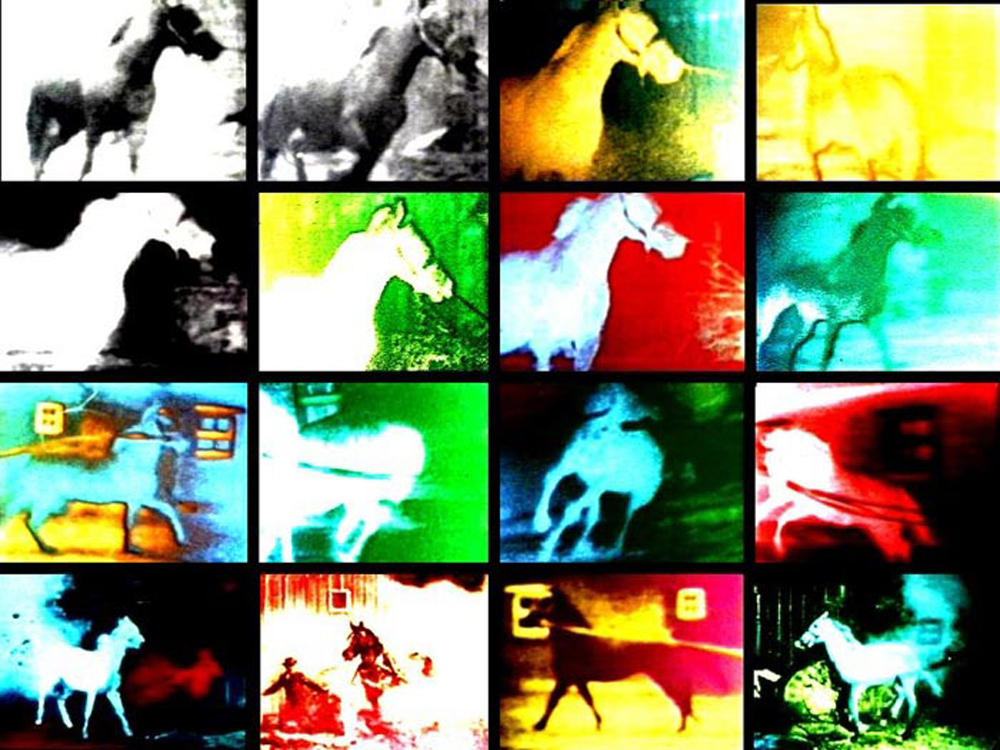
Lineage for a Multiple-Monitor Work-station
Sondra Perry
A celebration of our overabundant social entanglement and complicity, that remind us of how we can see ourselves, stripped of powers’ attempts to grasp us.
Arika have been creating events since 2001. The Archive is space to share the documentation of our work, over 600 events from the past 20 years. Browse the archive by event, artists and collections, explore using theme pairs, or use the index for a comprehensive overview.
A celebration of our overabundant social entanglement and complicity, that remind us of how we can see ourselves, stripped of powers’ attempts to grasp us.
This event honoured those individuals who achieved the status of Icon during the period of 1986-1990.
Taking over the gallery spaces at Dundee Contemporary Arts, the first Kill Your Timid Notion presented a 3 day programme of live immersive experiences and specially curated film programmes.
Dundee. Progressive rhythmical guitar squall vs. post-highland discorporate dusk-jockey.
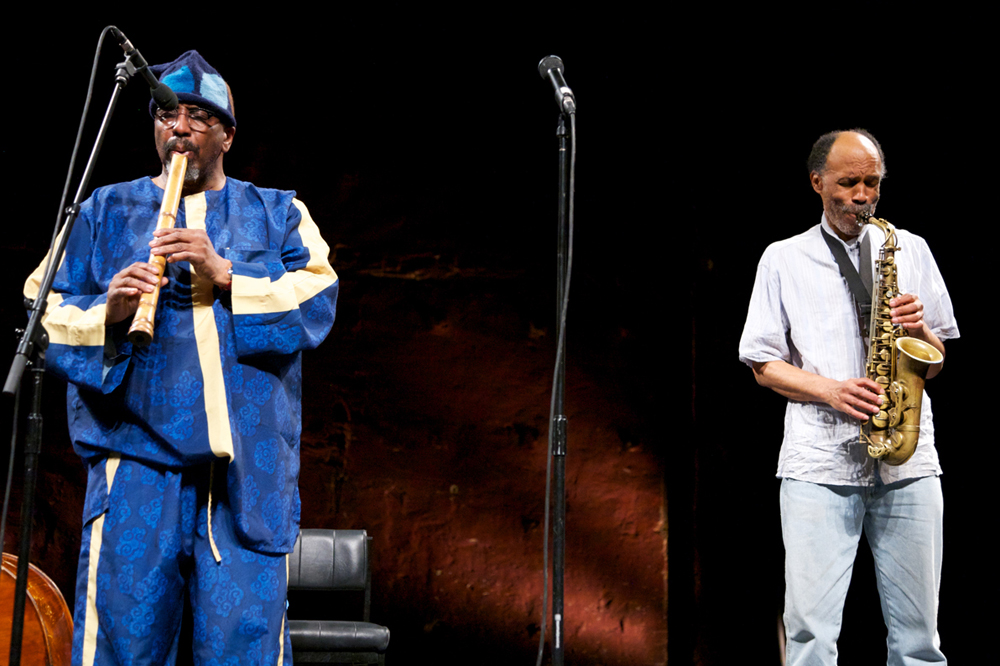
How might two of the great musicians working within contrasting traditions of freedom collaborate? What might this produce: musically, socially, allegorically?
Paul Sharits is one of our all time heroes, and one of the great artist filmmakers of the 20th Century.
Patented 60 cycle hums, static pops, and terse electron pinpricks mutated into perfect, post-techno grooves and synaesthesic video
A community of those without community, for a community to come. A schizo-scenic video-collage of the disturbing ‘normality’ of Moby Dick.
Intriguing, underground, Berlin based musicians interested in the borders between music and theatre, language, the visual arts, politics.
Every aspect of every film is always about more than just film. Or, as Godard said: a tracking shot is a moral issue. A cross between a festival, magazine and discussion about experimental artists’ films.
Expansive and considered, inclusive and deeply human minimalism: Antoine Beuger, Radu Malfatti, Manfred Werder.
Final workshop exploring work, care and class. Does the ‘care industry’ summon forth its own class? Can this ‘affective class’, in their ability to care for others, militate against the carelessness of self-interest?