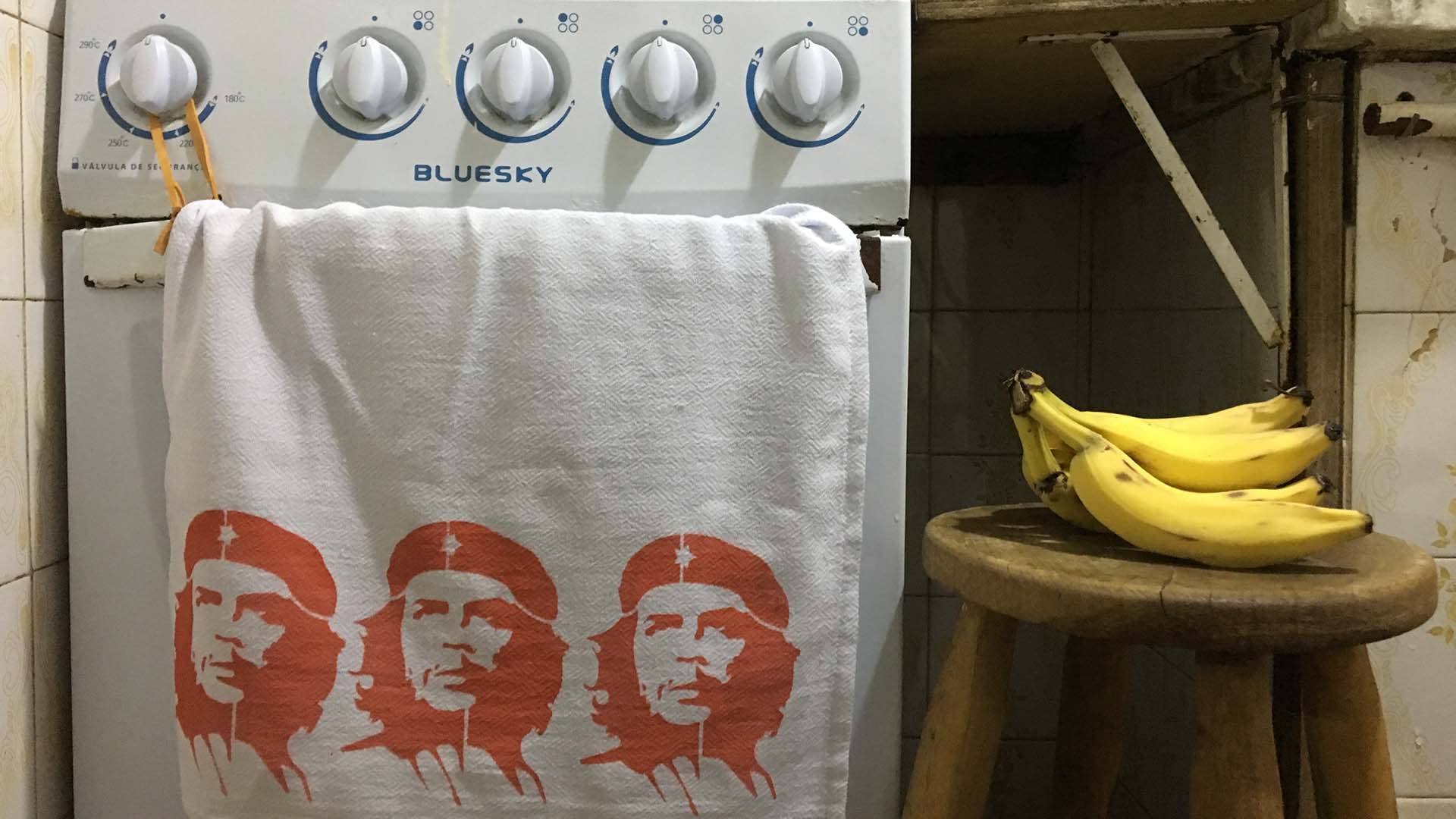
Che Guevara on a dishcloth
Che Guevara on a dishcloth
A book launch and conversation with JAMAC: an insurgent art project in São Paulo who visually embed stories into drawn patterns used towards processes of community self-determination. They have done the set design for Episode 12.
Overview
JAMAC are a collective, insurgent, community craft project in the periphery of São Paulo. Join us for a conversation with four of their core members, focused around a small publication we are launching together that reflects on their work and methods; and taking in their set design for the Episode and workshops with friends at Rumpus Room.
JAMAC describe their practice as “a house | that is a cultural space | that is a cinema | that is a school | that is a clinic | that is a garden | that is a library | that is a print workshop | that is a publisher | that is an ongoing work of art”.
Collaborating with community organisers and activists, school teachers and educators, syndicalists and union organisers, communities labouring under the oppressions of race, gender, poverty, and with children and women’s groups – they transform testimonies and stories into images, which then become patterns. Through being stencilled or screen printed across fabrics, ceramics, t-shirts, or even houses and whole streets, these memories are transformed into archetypical collective signs which re-member and manifest their community’s shared history. Patterns become an aesthetic means by which to better understand collective needs and desires.
Leda Maria Martins, who is taking part in Episode 12 HERE and HERE rejects the reductive Western understanding of a person as an individual in favour of a pattern of patterns. We have come to think of JAMAC not as an artist’s collective, but rather a pattern of patterns obsessed with patterns and the patterns these can animate through insurgent social counter-patterning.
Context
We met JAMAC earlier in 2026, as part of a research trip organised with our close friend and collaborator Amilcar Packer. We love how Amilcar describes them and what we hope our booklet with them can address:
Read“I met Mônica Nador in 1999 when our work started to be shown together in different contexts and countries. Since then, we engaged in conversations, nurtured friendship, and unfolded several collaborations. I was present in some of the early meetings before JAMAC became JAMAC, have been following what they do since their beginning, and I see resonance in our pathways for critically engaged practices based in sociality, and strengthening the production of communities.
JAMAC was initiated as an extension of Mônica’s work. It follows her desires to be implicated in a situated territory and experiment with what a painting practice engaged with social transformation could do in the context of Jardim Miriam, at the time one neighbourhoods in São Paulo facing intense colonial/capitalist brutality, but also a region embedded in amazing traditions and histories, notably of resistance. This move also followed frustrations with the art world’s predominant alliances with capitalistic systems and hegemonic structures for accumulation of power and wealth, which privilege and sediment individual practices and adversarial behaviour.
Painting, patterns and stencils, walls, papers, fabric, installation, screens, films, conversations, workshops, publications, being together—these are too often reduced to visual outcomes, measured only for their aesthetic value. Yes, the work of JAMAC is visually AMAZING, but I also see this as a lazy reading which lacks a more complex engaged approach. It is also an attempt of/from the art world and some of their agents, to frame JAMAC’s work within very narrow understandings of aesthetic dimensions; an attempt to neutralize its radical transformative and unsettling operations.
I believe that the open-ended experimental methodologies of JAMAC resonate what can be described as radical pedagogy, similar for instance to Paulo Freire’s pedagogy of the oppressed. Its collective and collectivising drive makes it a singular ongoing experiment of sociality open to active listening, improvisation and radical (self)transformation. To make it short, I think that JAMAC needs to be experienced in several entangled dimensions and speeds. Hopefully this conversation, the booklet, and the set design at Episode 12 have the potency to contribute with this.”
Amilcar Packer
BIOS
The Jardim Miriam Arte Clube—JAMAC is a collective organized around a cultural space located in the southern zone of São Paulo. It was founded in 2004 by artist Mônica Nador and has since been managed collectively by artists from various fields, along with educators. Rooted in community-based practices, JAMAC brings together art, education, and social activism, promoting formative actions that intertwine art and life, aesthetics and politics.
The space offers workshops, open classes, discussion circles, and exhibitions, always focusing on citizenship, the right to the city, environmental justice, and cultural memory. Over the years, JAMAC has supported the emergence of other local initiatives and continues to work in network with different collectives and movements from São Paulo’s southern periphery.
JAMAC develops projects using a variety of techniques such as screen printing, stencil, artisanal graphics, and film, supporting diverse creative processes that are always free and open to the public. Its participatory and collaborative practices have contributed to rethinking urban space as a field for shared creation, resistance, and transformation.
Amilcar Packer was born in Santiago de Chile, 1974, and lives and works in São Paulo, Brazil. Packer unfolds an experimental and non-disciplinary art and collaborative research-based practice, informed by curatorial and editorial operations, in view of transformative social justice. His work seeks to intervene in artistic, political and social imaginaries by the means of mid and long-term public programs, presentations and debates, workshops, study groups, online platforms and archives, research trips, and editing, translation and free distribution of texts and publications (printed and online). He graduated in Philosophy at USP (1999), has a MA in Clinical Psychology at PUC-SP (2015), and is currently enrolled in a PhD at the Gender, Race, Sexuality and Social Justice, at the University of British Columbia.
As a curator, he organised exhibitions in institutions such as the Centre Rhénan d’Art Contemporain (Altkirch, France, 2022/2023), Museu de Arte Moderna da Bahia (Salvador 2018), Centro de Arte Hélio Oiticica (Rio de Janeiro, Brazil, 2017/ 18), Ludlow 38, New York, USA; He co-organized artistic-curatorial initiatives and platforms such as Ventres da Mata Atlântica (2018/2022) and EhChO (2020/2022), and was co-director of the artistic residency program CAPACETE, Rio de Janeiro, Brazil between 2012/2013.
As an artist, he has participated in group shows and festivals such as: “Rio de janeiro Int’l Film Festival” (Rio de Janeiro, 2024); “Abduction” (Oslo, Norway, 2020), “Incerteza Viva”, 32nd São Paulo Biennial (2016); “Modifiy as Needed”, MOCA, Miami, USA. (2011); “Práxis: Art in Times of Uncertainty – 2nd Thessaloniki Biennale of Art” (Thessaloniki, Grécia, 2009); “Farewell Postcolonialism – 3rdGuangzhou Triennial, China” (2008); “On Reason and Emotion”, 14th Sydney Biennale, Australia (2004).
Part of his practice takes place in educational and art mediation programs at institutions such as The Royal Danish Academy of Fine Arts, Copenhagen, Denmark (2024; 2023; 2022; 20217); ENSBA, Paris, France (2013); “History Matter” (2012), CCA-Lagos, Nigeria; Hobart and Launceston Schools of Arts, Tasmania, Australia; “1st Pernambucan Week of the Arts” (2001), Recife, Brazil. Packer was one of the guests of Episode 11, in 2024.
Panel
Panel is a curatorial arts organisation based in Glasgow. They create projects about design and making in relation to particular histories, archives and collections and commission and collaborate with artists, designers and makers to produce new work, often in partnership with local industry.
Uncovering and layering material from public and private archives and collections, their projects subjectively examine, through design and making, the dynamic ways in which alternative viewpoints and perspectives can be presented and recast through culture. Across Scotland, in both urban and rural places, they are committed to finding spaces beyond the traditionally cultural, from gym hall to swimming pool to factory floor, in order to present exhibitions, events and publishing.
Access
Live Captions
Live Stream
See general Access information for Episode 12: From the Rivers to the Seas event
Artists
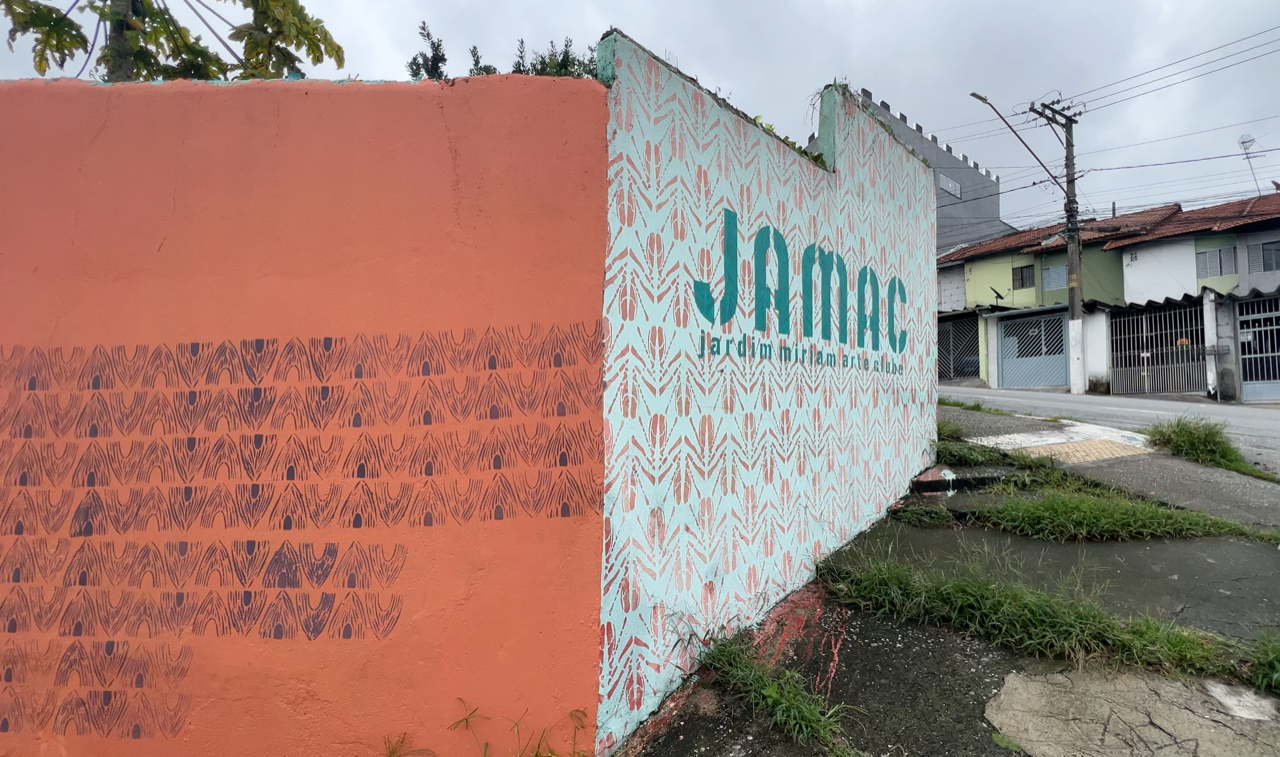
Jardim Miriam Arte Clube (JAMAC)