Set Design
Set Design
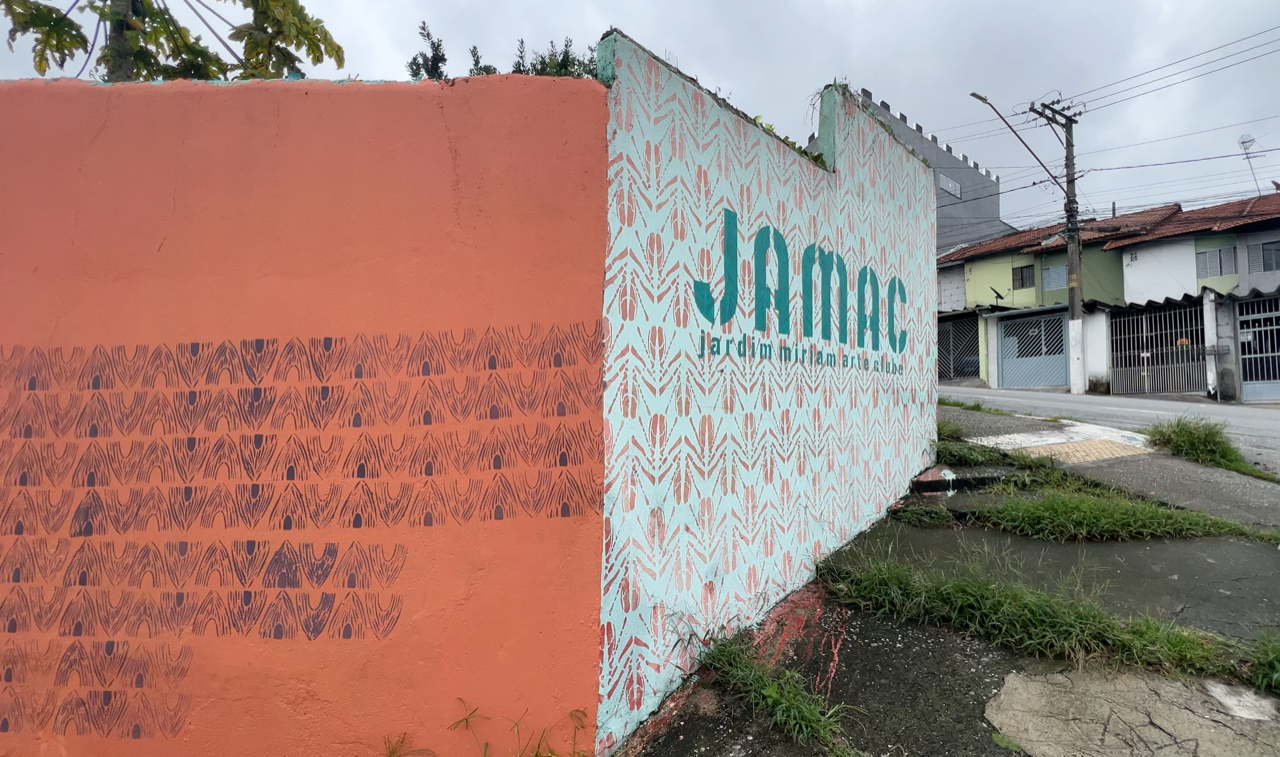
The São Paulo collective JAMAC visually manifests community histories and desires into patterns: for fabric, houses, ceramics, dishcloths… They have developed the set design for Episode 12 with participating artists and workshops locally.
Overview
JAMAC describe their practice as “a house | that is a cultural space | that is a cinema | that is a school | that is a clinic | that is a garden | that is a library | that is a print workshop | that is a publisher | that is an ongoing work of art”.
Established in 2004 in the South of São Paulo, JAMAC’s history manifests a firm commitment to exit the commodified art world; a turn away from capitalist extraction and settler dispossession, towards the aesthetic registers of a common sociality. They describe their way of working as mutirão, the Brazilian linguistic formation for the Tupi-Guarani expression moty’rõ, which is used to describe collaborative, communal and reciprocal activities – such as building a house, preparing the soil, harvesting crops, or cleaning up a neighbourhood. It’s a concept deeply rooted in places like the Jardim Miriam neighbourhood, where Afro-Brazilian, Indigenous, migrant communities from the Brazilian Northeast and working class sociality, joy, spirituality and culture of struggle intersect through reciprocity, solidarity, and self-organisation.
Through a film club, publishing house, and regular educational programmes, they work with and for their neighbourhood and local communities. Collaborating with syndicalists and union organisers, children and women’s groups – they transform testimonies and stories into images, which then become patterns. Through being stencilled or screen printed across fabrics, ceramics, t-shirts, or even the wall of houses, sometimes of whole streets. These memories are transformed into archetypical collective signs which re-member and manifest their community’s shared history. Patterns become an aesthetic means by which stories are told, and facilitate understanding collective needs and desires; they become the aesthetic ground for processes of communal archive and self-representation and self-determination.
In March 2026 we visited their studio and fell in love with their deeply communal and politically engaged approach to craft and art making.
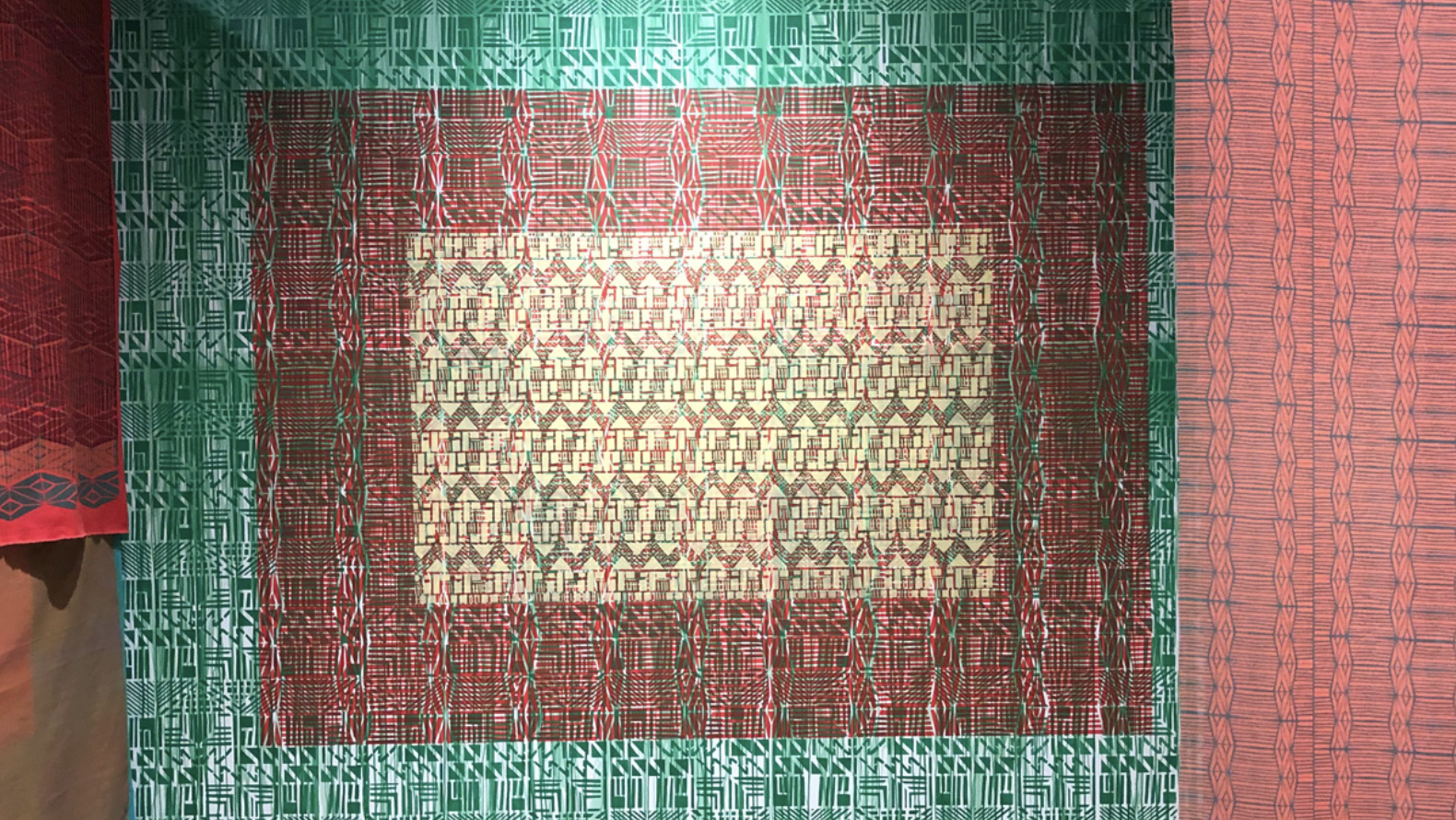
JAMAC will work with Panel and artist Rob Kennedy, creating a set design for the Episode. Dressing both the theatres and public spaces of Tramway with a collection of original patterns created in collaboration with Episode 12’s participants – highlighting the varied struggles of refusal they take part in.
Throughout their time in Glasgow, JAMAC will also run a series of private workshops with our friends at Rumpus Room working with their Queer Makers and Young Artists Committee. They have also contributed to the graphic design of the Episode, in a collaboration with our designer Marcus Alasović.
Context
Leda Maria Martins, who is taking part in Episode 12 HERE and HERE has this notion that instead of the reductive Western understanding of a person as an individual, we think of them as a pattern of patterns. Inspired by this, we have come to think of JAMAC not as an artists collective, but rather a pattern of patterns obsessed with patterns and the patterns these can animate through insurgent social counter-patterning.
Our designer Marcus Alasović has collaborated with JAMAC to create the graphic identity for Episode 12. JAMAC created a stencilled version of our usual font, and went back through their archive of patterns to suggest ones that spoke to the themes of the Episode. These include a key pattern and one made up of suitcases. In speaking to friends attending the Episode, the keys came to represent the Palestinian insistence of return, exemplified by families holding onto the keys of houses they have been cleared from. Whilst the suitcases recall exile, but are also suggestive of the Jeanson network. A movement written about by Houria Bouteldja; in which French nationals became ‘suitcase carriers’, using their ability to cross borders to smuggle money and military plans to the National Liberation Front (FLN) during the Algerian War of Independence.
Textile work by JAMAC commissioned by Arika and Panel.
ReadBIOS
The Jardim Miriam Arte Clube—JAMAC is a collective organized around a cultural space located in the southern zone of São Paulo. It was founded in 2004 by artist Mônica Nador and has since been managed collectively by artists from various fields, along with educators. Rooted in community-based practices, JAMAC brings together art, education, and social activism, promoting formative actions that intertwine art and life, aesthetics and politics.
The space offers workshops, open classes, discussion circles, and exhibitions, always focusing on citizenship, the right to the city, environmental justice, and cultural memory. Over the years, JAMAC has supported the emergence of other local initiatives and continues to work in a network with different collectives and movements from São Paulo’s southern periphery.
JAMAC develops projects using a variety of techniques such as screen printing, stencil, artisanal graphics, and film, supporting diverse creative processes that are always free and open to the public. Its participatory and collaborative practices have contributed to rethinking urban space as a field for shared creation, resistance, and transformation.
Panel
Panel is a curatorial arts organisation based in Glasgow. They create projects about design and making in relation to particular histories, archives and collections and commission and collaborate with artists, designers and makers to produce new work, often in partnership with local industry.
Uncovering and layering material from public and private archives and collections, their projects subjectively examine, through design and making, the dynamic ways in which alternative viewpoints and perspectives can be presented and recast through culture. Across Scotland, in both urban and rural places, they are committed to finding spaces beyond the traditionally cultural, from gym hall to swimming pool to factory floor, in order to present exhibitions, events and publishing.
Artists