Translation
Achim Wollscheid Kenneth Goldsmith
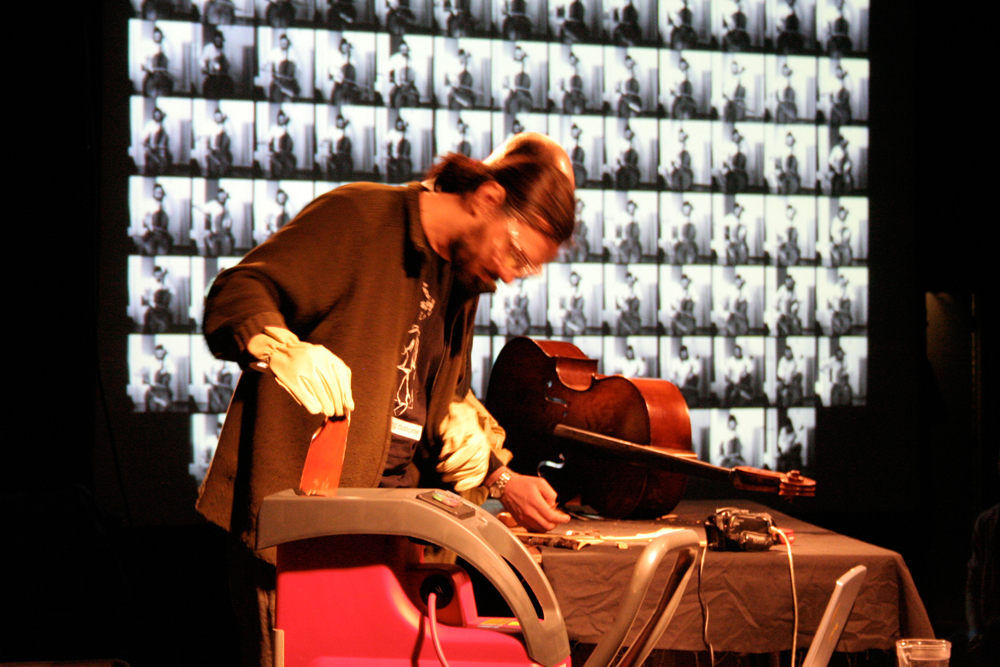
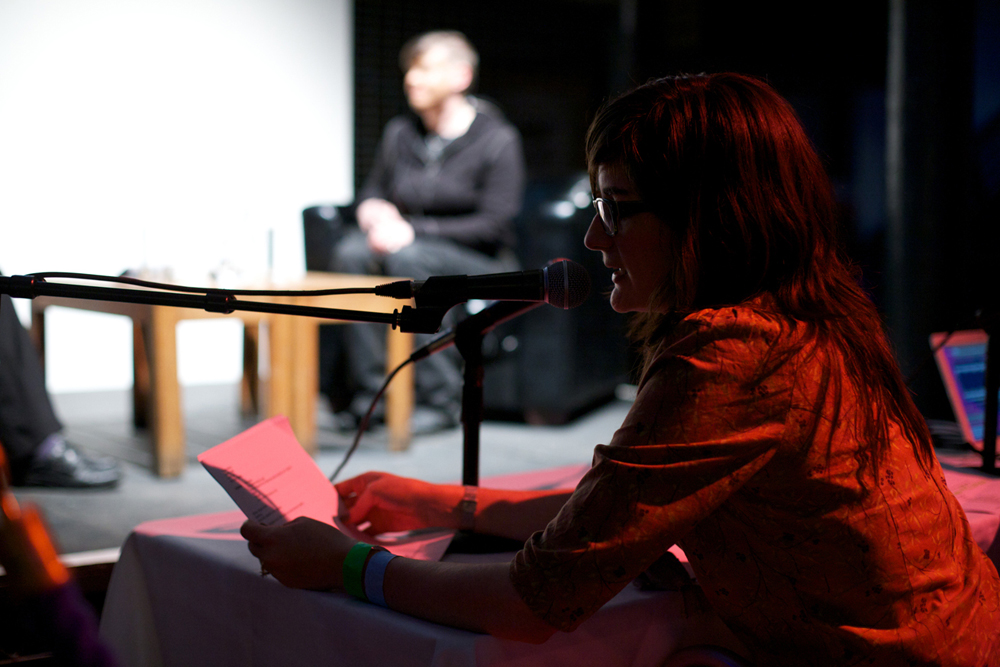
Kenneth Goldsmith reads extracts of his conceptual poetry and Achim Wollscheid manipulates mobile phone signals.
Arika have been creating events since 2001. The Archive is space to share the documentation of our work, over 600 events from the past 20 years. Browse the archive by event, artists and collections, explore using theme pairs, or use the index for a comprehensive overview.
Kenneth Goldsmith reads extracts of his conceptual poetry and Achim Wollscheid manipulates mobile phone signals.
Each film in this programme celebrates process; the decay of emulsion, the properties of dust and dirt, the manipulation of time. Post the dawn of the digital age, we reflect on our love of the film form, celluloid as an object, a medium and a physical entity.
A performed installation by one of Germany’s most interesting visual artists, based on edited transcripts of the 1961 trial of Adolf Eichmann in Jerusalem and the writings of Hannah Arendt
Two bottomless brunch writing workshops—with readings—speculating the relationship between space, infrastructure, technologies and sex.
Usurper jamming live in a skip at the site of Bud’s Neill’s Lobey Dosser statue on Woodlands Road.
Ecstatic, intensely joyous experimental club music: like “the sound of our water ceremonies…40 bands playing their melodies at once to recreate the cacophony of the first aurora and the call of the morning star Venus”.
Austrian guitarist who specialises in a warm digital deconstruction of guitar noise
Equal parts spectacle, installation and performance, his set for us is a specially developed work, ‘turning’, which features an orchestra of multiple turntables, 4 projections and a collection of old, and, quite probably, misfiring analogue kit.
This programme is a celebration of Charlemagne Palestine; passionate, extravagant, visceral. Including two sections from Ritual dans le Vide, an extension of his ‘running camera’ works of the 70’s and Pip Chodorov’s vibrant workout of a live version of Strumming Music.
In a moment of social exhaustion, we want to ask how we might care for each other differently. We Can’t Live Without Our Lives is a 5-day exploration of care as a form of struggle and resistance, with communities who embody it.
Instead of the one-way monologue of normal performance, what would be the result of an actual collective dialogue? Where would it go?
Can a collective performance of NourbeSe’s poem of black life as it exceeds containment enact alternative forms of selfhood that emerge in and out of African diasporic experience?