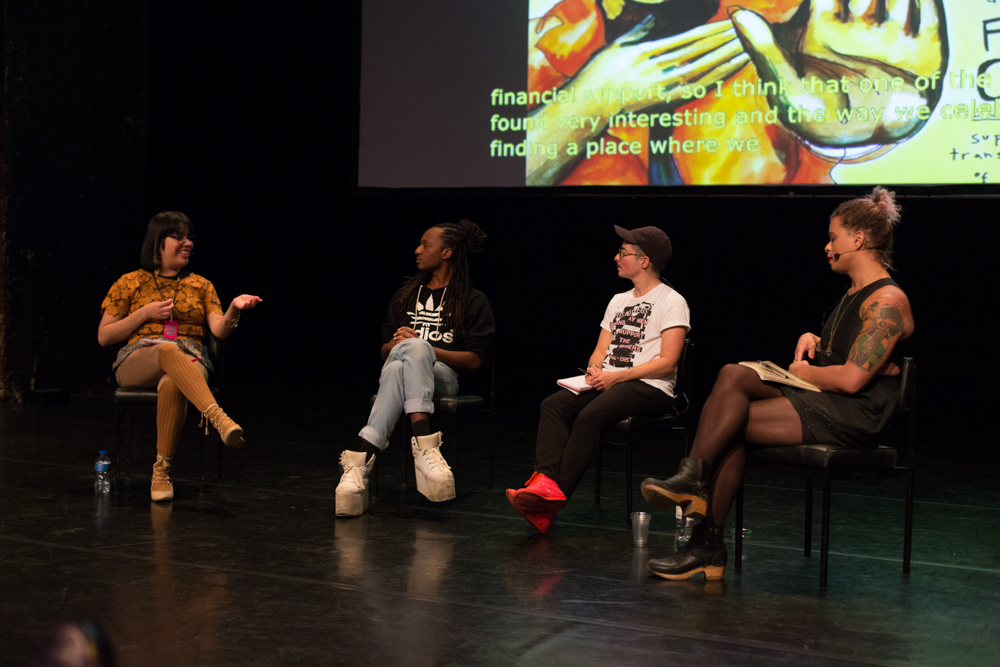
Queer Liberation: No Prisons, No Borders
Dean Spade Hope Dector Tourmaline
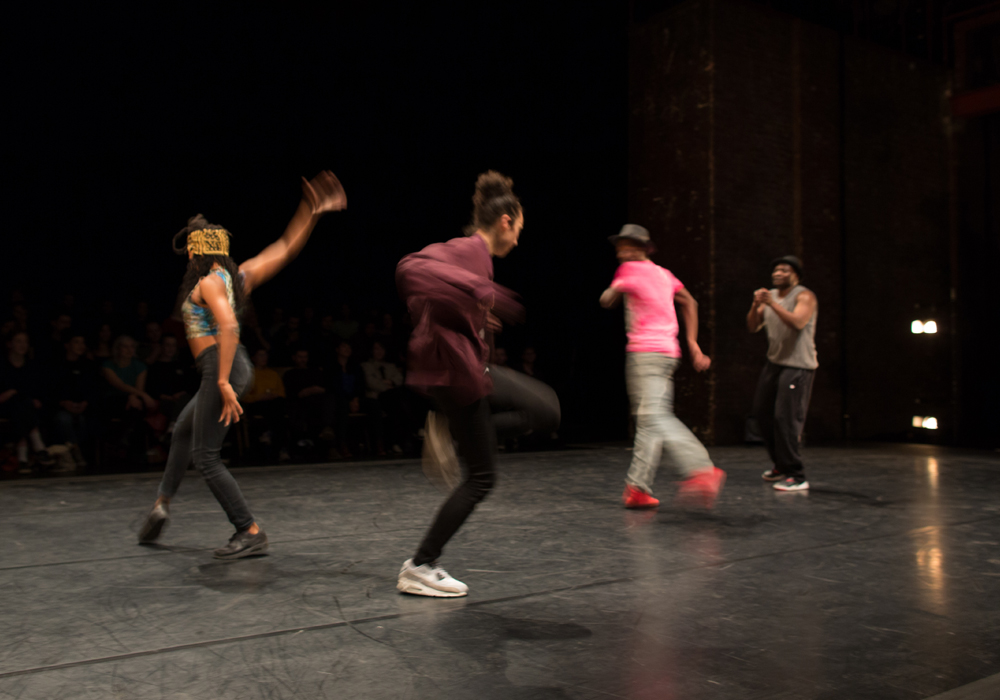
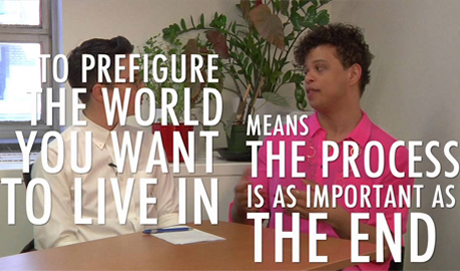
A crash-course in pre-figurative, radical, queer, anti-racist, anti-police, anti-prison, anti-deportation abolitionist politics and trans-resistance.
Arika have been creating events since 2001. The Archive is space to share the documentation of our work, over 600 events from the past 20 years. Browse the archive by event, artists and collections, explore using theme pairs, or use the index for a comprehensive overview.
A crash-course in pre-figurative, radical, queer, anti-racist, anti-police, anti-prison, anti-deportation abolitionist politics and trans-resistance.
An immersive live performance for multiple 16mm film and bass clarinet, taking in the whole gallery, submerging the audience.
Austrian guitarist who specialises in a warm digital deconstruction of guitar noise
Is there a link between the ways we’re caged and exiled by the prison-industrial complex and the ways people’s bodies are violently categorised and segregated by race, class, gender or ability?
Kenneth Goldsmith reads extracts of his conceptual poetry and Achim Wollscheid manipulates mobile phone signals.
Lo-fidelity sheets of parinirvanic mangled tone get driven into oblivion by two longstanding gurus of the Northern England primitivist noise.
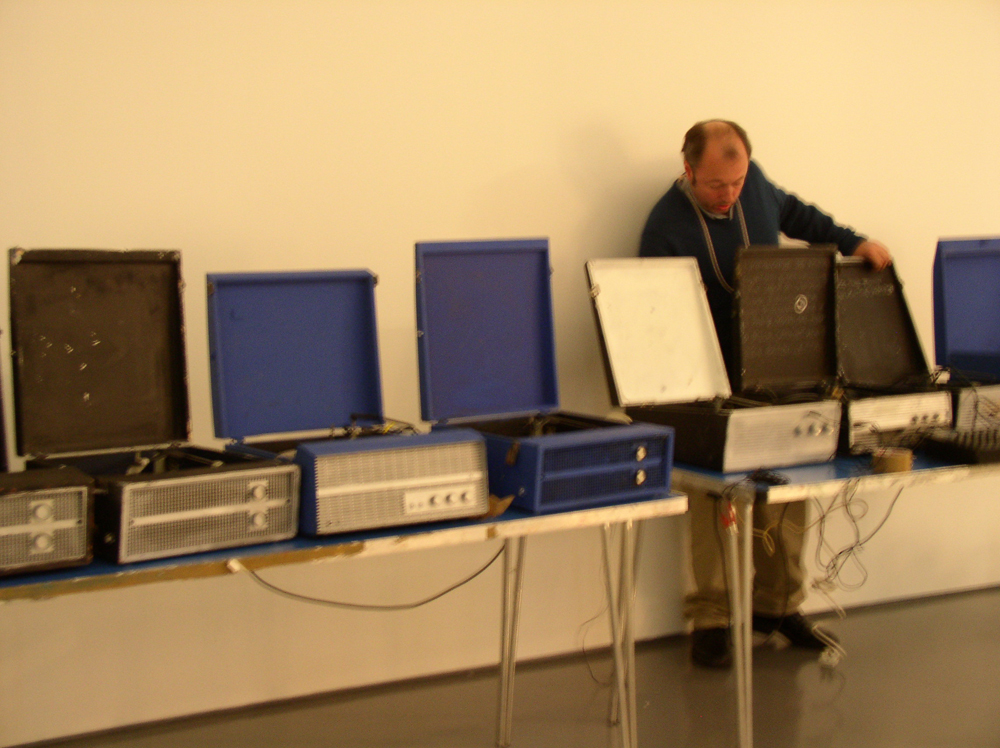
Equal parts spectacle, installation and performance, his set for us is a specially developed work, ‘turning’, which features an orchestra of multiple turntables, 4 projections and a collection of old, and, quite probably, misfiring analogue kit.
A short chat about what we (Arika) might be trying to do with our program for the Biennial.
UK conceptual/ drone/ noise artist, who is seriously posing what might seem to be unanswerable questions of music.
Repetitive, mesmerizing rhythmic workouts, to pieces of stark and rigorous introspection, where notes picked and slid in isolation, scatter like mercury around the listener.
In which Storyboard P and members of Project X pick a song, freestyle to it, chat with us about what dancing means to them, then pick another song, freestyle, chat, repeat…
How can we imagine bodies not as an end in themselves, but as a medium through which we can become one another’s means?