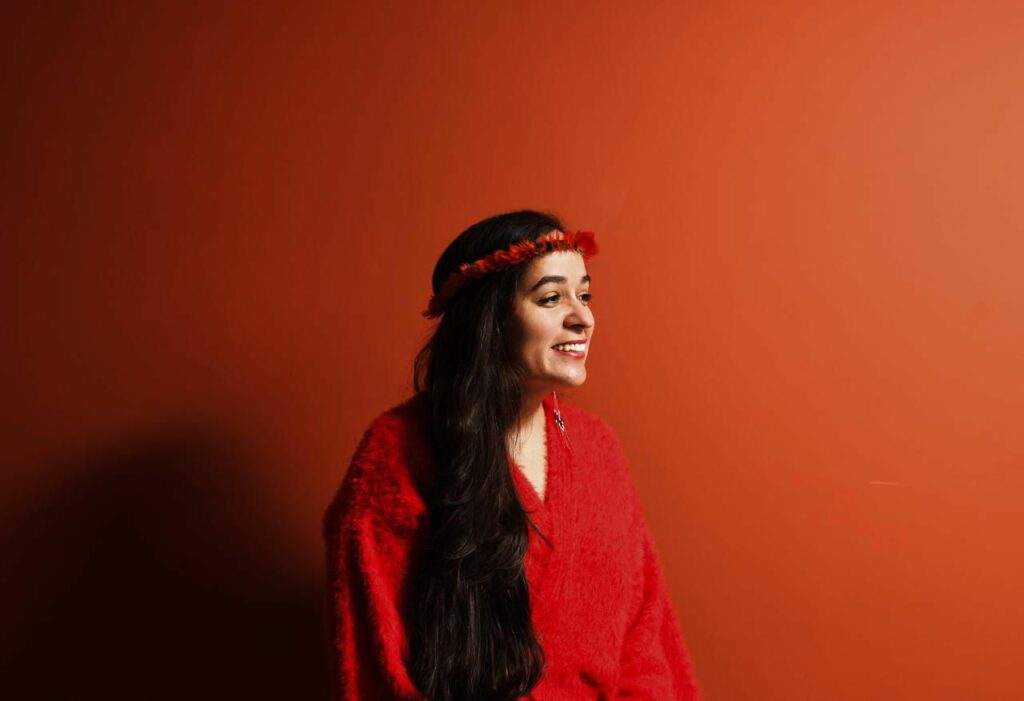
Trans Breakfast at the End of the World
Mijke van der Drift Nat Raha
An informal conversation, over breakfast, about how abolition and movement work structures Mijke and Nat’s approach to transfeminism, ahead of their new book Trans Femme Futures.
Arika have been creating events since 2001. The Archive is space to share the documentation of our work, over 600 events from the past 20 years. Browse the archive by event, artists and collections, explore using theme pairs, or use the index for a comprehensive overview.
An informal conversation, over breakfast, about how abolition and movement work structures Mijke and Nat’s approach to transfeminism, ahead of their new book Trans Femme Futures.
Ever wondered about the roadside festoons which are the innards of discarded cassette tapes? All will be revealed in this methodical and insightful documentary by UK luminary John Smith and sound artist cohort Graeme Miller.
This programme takes human subjects as the focus for sound and image construction. And it includes a couple of masterpieces of experimental film: Paul Sharits’ deeply empathetic interpretation of epilepsy and Peter Kubelka’s Webern inspired abstract portrait of Arnulf Rainer.
Journalist and underground music champion Alan Cummings talks to Keiji Haino about his career and his performance the previous evening.
Brother and sister stumble over the early morning horizon in a spectral haze of emotionally devastating lunar vocals and oblique, lithium-soaked folk.
Somewhere between performance, stripped down theatre and an intense kind of public learning or maybe even a public hearing.
A fully transcribed, described, and open-captioned film screening that’s nothing short of their actual open heart.
The struggle for sex workers’ rights and how we can understand it in the continuum of care work and other forms of invisibilised and precarious work.
A performance by Storyboard P – one of the greatest Afrofuturist dancers on the planet.
Real-time video feedback loops submerged in laminal sheets of sound soaked in gauzy timbral detail and multi-valenced, buzzing overtones.
Nina’s going to talk about November, by Hito Steyerl: what and how the film thinks, or about what and how it might makes us think (which is connected, but not the same thing), by watching, and it discussing (with you?).
A double bill. A simple first person, Dundee-specific tracking shot that approaches the cinema/ screen/ space the film will eventually be shown in and in Brazilian opera house, a fixed camera gazes at a local audience from the stage: a choir, hidden in the orchestra pit, sings and gradually fades to silence.