Paragon Ensemble / David Fennessy
Paragon Ensemble
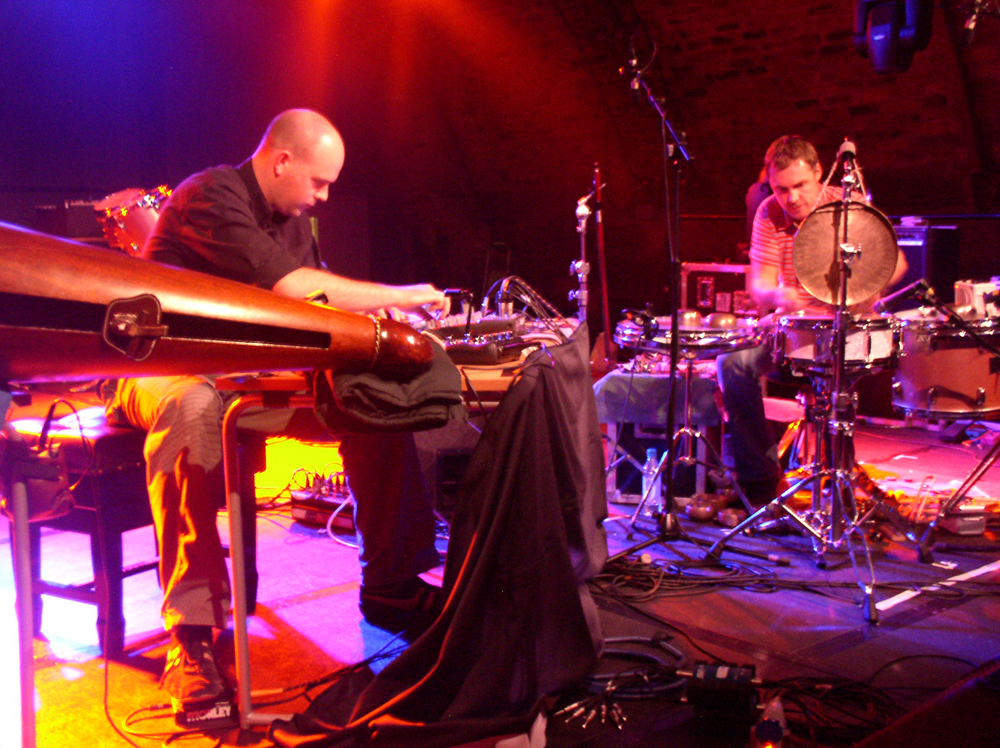
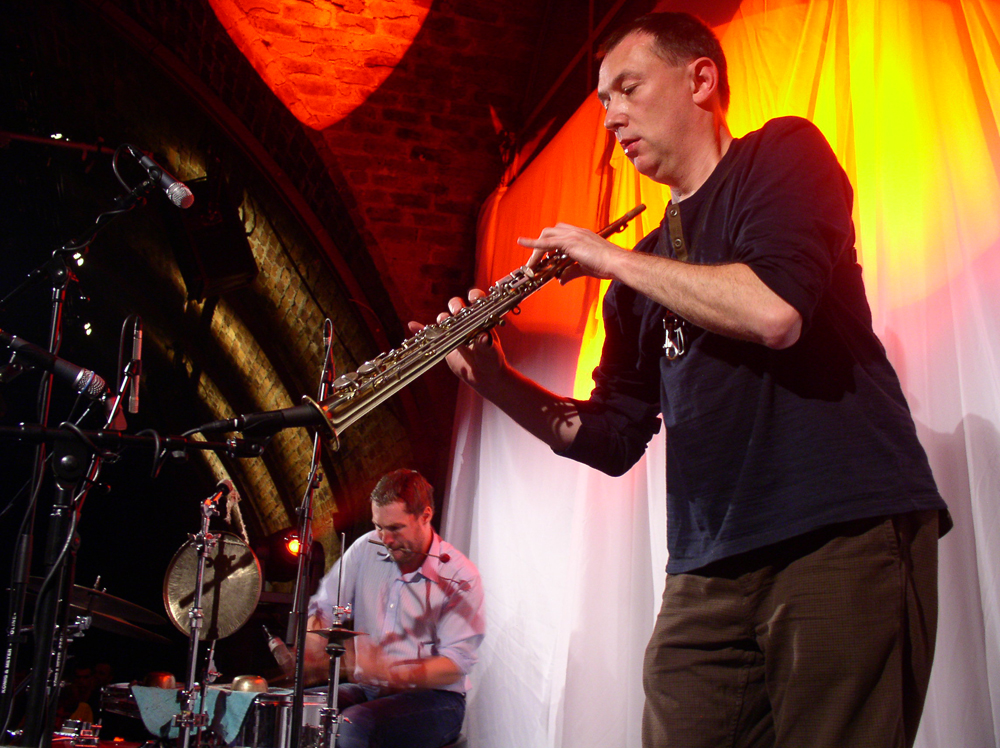
The Scottish based Paragon Ensemble has commissioned David Fennessy to compose music for Instal, which will be performed during the evening.
Arika have been creating events since 2001. The Archive is space to share the documentation of our work, over 600 events from the past 20 years. Browse the archive by event, artists and collections, explore using theme pairs, or use the index for a comprehensive overview.
The Scottish based Paragon Ensemble has commissioned David Fennessy to compose music for Instal, which will be performed during the evening.
Italian duo of brothers Maurizio and Roberto Opalio utilising an array of acoustic and electric guitars, various toy-instruments and toy-microphones.
‘Ten Pieces in the Form of Painful Variations’ for piano, an impossible score that looks like a grapeshot musical stave, a text of barbed loathing and doubt – an anti-composition.
Can a musician create a sonic photograph; something with a depth of field, where you can hear sounds and their interconnections, much as you see objects and their relationships in a photo? Could a filmmaker use musical concepts to represent landscape?
An original and beautifully simple performed installation forging a direct link between sound and image.
A programme of discontinuity between narration, text and image. Including Manual Saiz’s employment of John Malkovich’s Spanish dubbing double and Peter Rose’s absurdly hilarious concrete poetry subtitling chaos.
Listening to people listening to their own homes. Musicians and actors will listen back to recordings made in local peoples homes on headphones, and interpret/ translate what they are hearing.
Dave will lead a session created for teenagers and designed to stimulate a supportive environment for artistic exploration through music improvisation.
One of the most arresting and unique improvisers in Japan, creating an original and powerful body of free music.
This performance brings together film, text and speech and temporarily constructs a filmic space to think through questions of resistance, and the choice and consequence of action vs. inaction: what does it mean to choose to not take part?
The Songspiels take on a mode of musical theatre developed by playwright Bertolt Brecht and composer Kurt Weill in the early twentieth century, presenting political and social concerns through the accessible and (often funny) form of song.
A collaborative performance where sound and image are created, performed and mediated by light, water and glass.