Undefeated Dreams of Communism in the Indian Ocean
Undefeated Dreams of Communism in the Indian Ocean
The great decolonial feminist thinker and activist Françoise Vergès will be in conversation with Lara Sheehi, to talk about and share 3 newly restored militant films commissioned by her father as leader of the Réunion Communist Party in the 60’s. Banned for decades, these films document the insurgent resistance of the Réunionese people.
Screening
Sucre amèr
Yann Le Masson, 1963, France, 23 minutes, French with English subtitles
Réunion 67
Jean-Michel Humeau, 1967, 23 min, French with English subtitles
Maloya pour la liberté
Jacqueline Meppiel, 1979, 57’ (excerpts shown here), French with English subtitles
Overview
Françoise Vergès’ work has been foundational in reframing feminism beyond its liberal Eurocentric limitations, refocusing it on the central interactions of race, capitalism and colonialism in women’s oppression globally.
Françoise grew up in Réunion and Algeria, and her life and family are entangled with revolutionary struggle in both. Her father Paul Vergès led the Communist party and her mother established the Union of Women of Réunion. In Algeria her uncle, the lawyer Jacques Vergès, defended Algerian National Liberation Front (FLN) militants, and her aunt Djamila Bouhired is known as a heroine of the Battle of Algiers. Surveilled from an early age, Françoise experienced State repression and the solidarity of Reunion people, notably when her father was underground for two years, her youth in was shaped by revolutionary fugitivity and refusal.
While under arrest in France, Paul Vergès saw J’ai Huit Ans (screening at the Episode here), and invited the director Yann Le Masson to film the Communist party’s campaign against a colonial stooge in fraudulent legislative elections in Réunion. Over the next decade, the party commissioned two further films documenting the anti-colonial struggle on the island and the extraordinary solidarity of the Réunionese people.
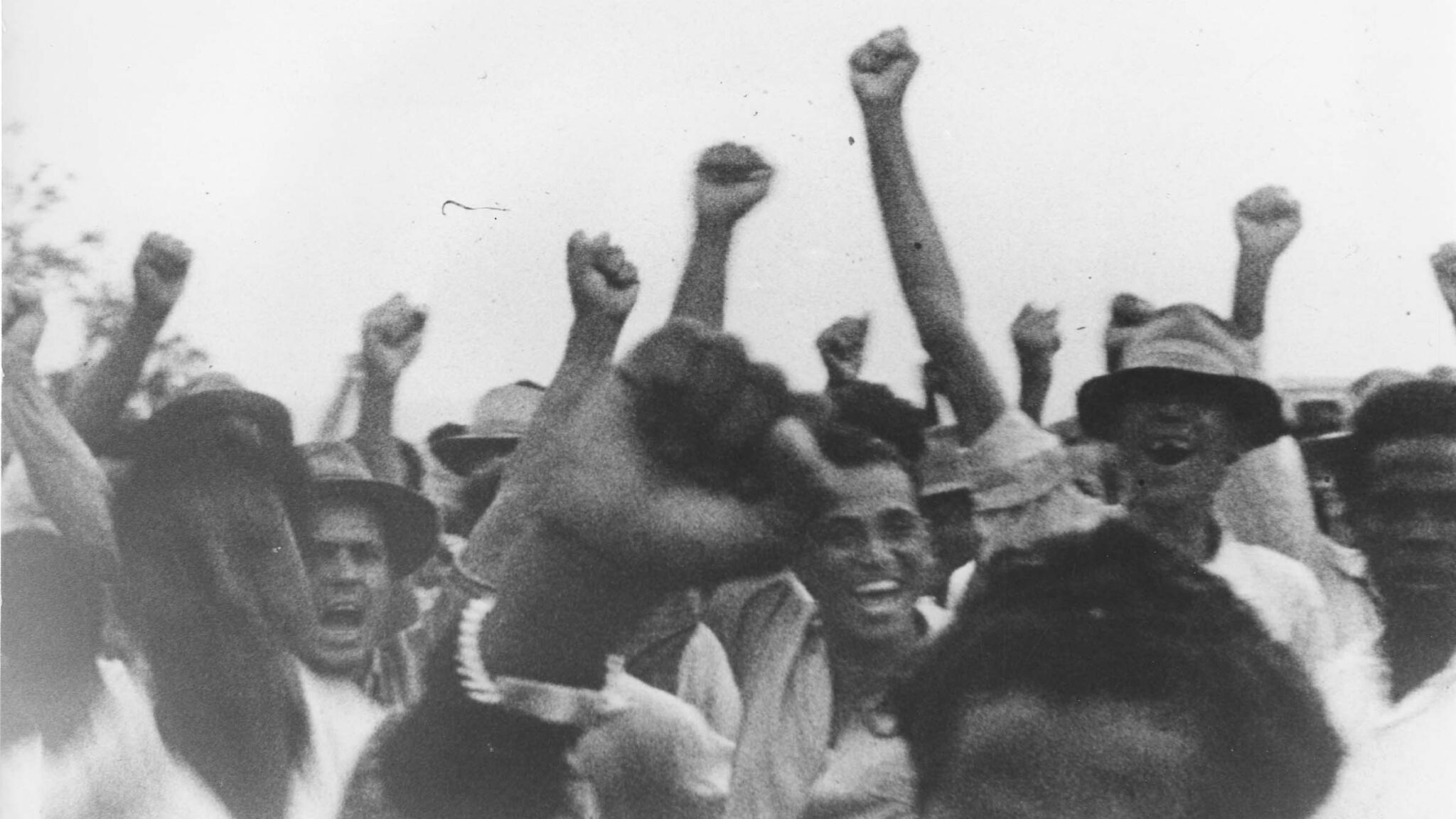
Beautifully shot, with incredible footage of rallies, underground meetings, workers committees, jubilant demonstrations, and colonial officials confronted with popular power. These films are vital documents of militant cinema: The movement by which anticolonial activists called upon filmmakers to come and film revolutionary struggles, often to regions where no film production existed locally, as acts of political solidarity.
Banned by the French state for decades, these films only circulated clandestinely. Recently restored, we have had them subtitled from French by Melissa Thackway and Creole by Françoise.. During this evening long programme Françoise will screen the 3 films and discuss—in conversation with Lara Sheehi—the relentless repression of the French state, its stubborn refusal of justice and freedom, and the dependency it imposed. But more importantly, she’ll speak of the undefeated dream of the Reunionese people for liberation, and what this means for anti-colonial struggles globally.
Context
The films touch on many themes and common anti-colonial approaches that run through the episode: re-membering, testimony and counter-narratives, documentary from below, the everyday as history, land struggles beyond the state, indigeneity, folk artforms, family and oral history.
Réunion 67, with Sucre amèr in 1963 and Maloya pour la liberté in 1979, constitute an exceptional triptych of films on the anti-colonial communist struggles in Réunion. Exceptional, because the history of the mass movement around the Reunion Communist Party has been erased from decolonial history. But also, very rare are the filmed images of this period: the local television channels and the press in the hands of those in power never gave a voice to the communist and trade union leaders. Vergès and his comrades were banned from the air until 1981. However, this party, under the name Communist, succeeded in mobilizing and organizing a large part of the Reunionese people, in a context of the Cold War that was violently anti-communist and violently against decolonization. [these films are] a valuable testimony to the effort that the French state has always made against any demand for sovereignty from the peoples it colonized, and from those it continues to maintain under its domination. [They are] also a precious testimony for the global history of decolonial struggles.
– Françoise Vergès, 2026.
Sucre amèr
Yann Le Masson, 1963, France, 23 minutes, French with English subtitles
Sucre amèr (Bitter Sugar) is the first European film to capture an election campaign as it unfolded. In 1963, Michel Debré—General de Gaulle’s Prime Minister—was elected as a deputy for Réunion with over 85% of the vote, defeating Paul Vergès, the representative of the Réunion Communist Party. Through speeches, demonstrations, and personal accounts, Yann Le Masson reveals the mechanics of the electoral fraud involved. The film was banned for ten years.
Collections La Cinémathèque de Toulouse
Réunion 67
Jean-Michel Humeau, 1967, 23 min, French with English subtitles
A film shot on Reunion Island in 1967 by Jean-Michel Humeau (cinematography) and Robert Destanque (editing)—under the pseudonyms Jo and Fredy Kant—during the 1967 legislative elections, intended to capture the political climate of the time and the rise of independence movements. The film documents the election campaign, marked by the clash between Paul Vergès and Michel Debré, as well as the social and economic tensions gripping the island in the 1960s—a period defined by stark inequalities and dependence on France. It highlights the persistence of power dynamics inherited from the colonial era, particularly evident in the structure of the sugar industry: Land concentration, the dominance of large sugarcane plantations, and the precarious living conditions of agricultural workers. In doing so, it reveals the limitations of the “departmentalization” policy and the contradictions inherent in the model of integration with France.
Maloya pour la liberté
Jacqueline Meppiel, 1979, 57’ (excerpts shown here, French with English subtitles
In 1963, Sucre amèr—a short film by Yann Le Masson shot during Michel Debré’s first election campaign—revealed a colonial-style situation on Reunion Island, an ‘Overseas Department.’ Sixteen years later, in April 1979, a visit to the island by Georges Marchais (General Secretary of the French Communist Party)—at the invitation of the Reunion Communist Party—served as the thread connecting a new approach to this land and its people. Five days of meetings with planters, construction and sugar mill workers, dockers, victims of repression, and residents of a shantytown confirmed the persistence and worsening of the colonial situation previously highlighted in Sucre amèr. At the same time, statements by religious and political figures, along with the enthusiasm and determination seen at three major mass rallies featuring Georges Marchais and Paul Vergès (General Secretary of the Reunion Communist Party), expressed an entire people’s profound desire for change.
Content Notes: Discussion and depictions of state violence.
ReadBios
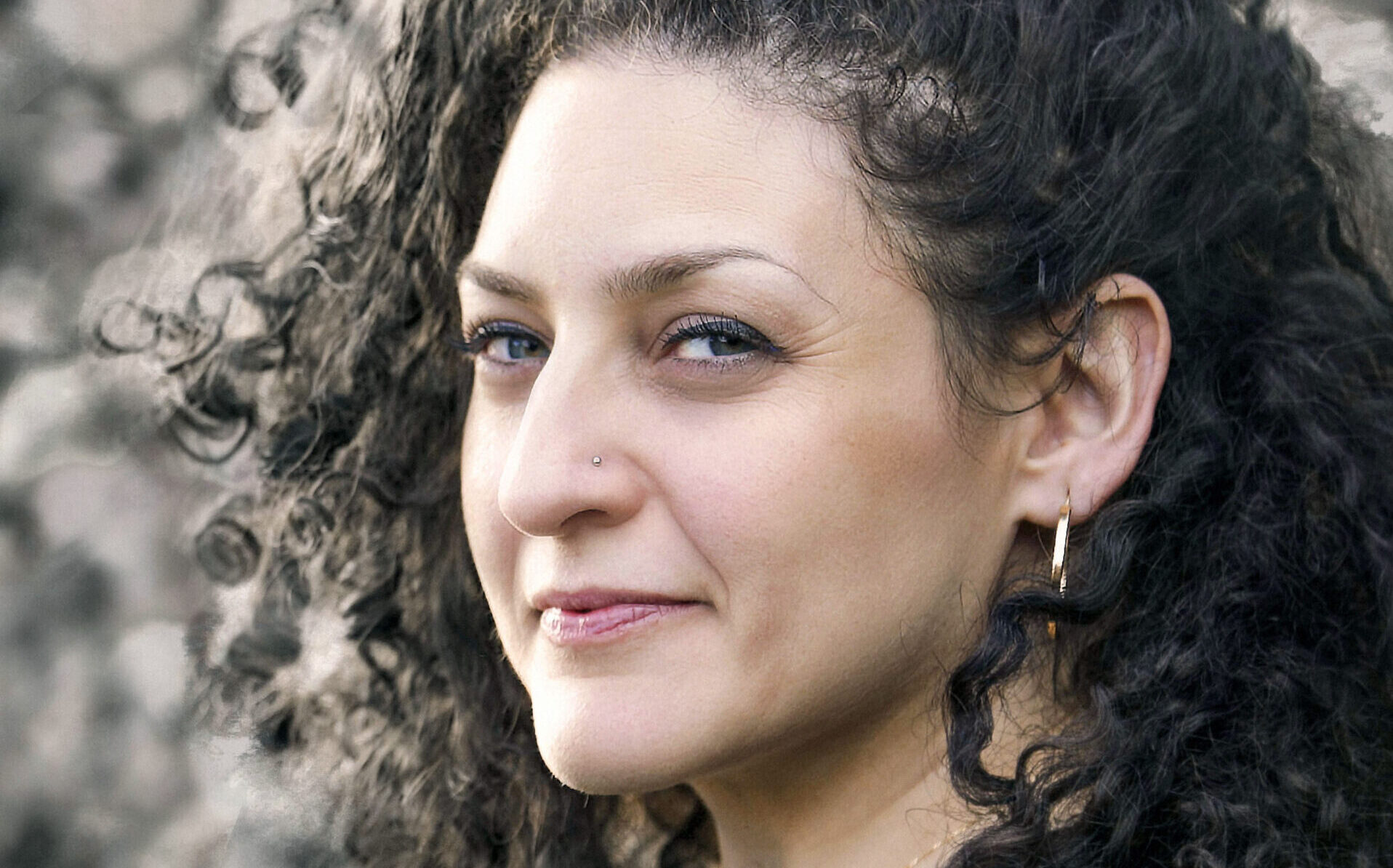
Lara Sheehi is a President’s Fellow at UC Davis, a licensed clinical psychologist, and the host of the Psychic Militancy podcast. Lara’s work focuses on psychoanalysis, the psychic refusals central to liberation struggles and life-making in the Global South, the psychic dimensions of resistance and revolution, and critical Zionism studies. She is the author of From the Clinic to the Streets: Psychoanalysis for Revolutionary Futures (Pluto, 2026) and co-author with Stephen Sheehi of Psychoanalysis Under Occupation: Practicing Resistance in Palestine (Routledge, 2022). Lara is a member of the founding collective for the Institute for the Critical Study of Zionism and is on the advisory board for Forensic Architecture.
Françoise Vergès (La Réunion/ France. Ph.D in Political Theory, University of Berkeley, 1995), writes on the racist fabrication of premature death, decolonial feminism, the impossible decolonization of the western museum, climate disaster and decolonial politics of vital needs. She has written films on Maryse Condé and Aimé Césaire, collaborates with artists, and, since 2015, curates L’Atelier which produces public performances with artists and activists. She is editorial advisor for choreographer Benjamin Millepied’s Paris Dance Project.
Françoise Vergès is currently working on a book and two films about communist anti-colonial struggles in Reunion Island through her parents’ personal archives and her own. Recent publications: Making the World Clean. Wasted Lives, Wasted Environment and Racial Capitalism (2024), Program of Absolute Disorder Decolonizing the Museum A Decolonial Feminism (2024), A Decolonial Feminism (2021).
Artists
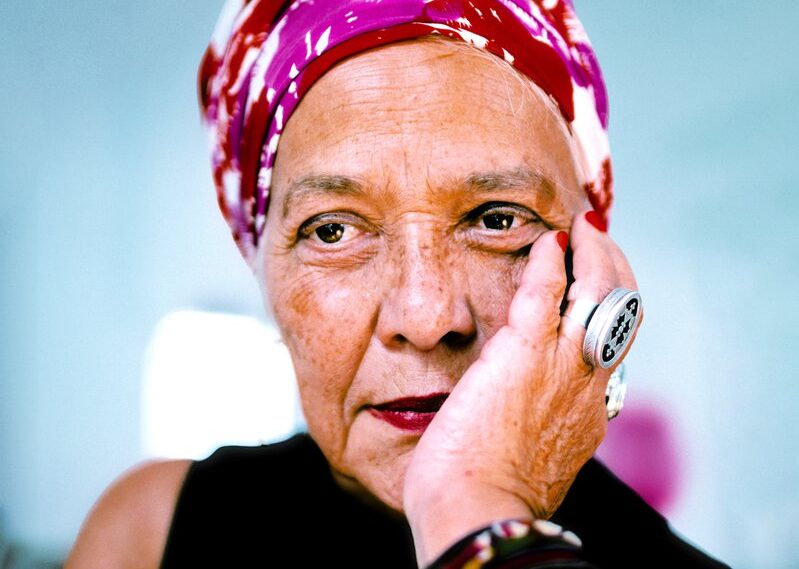
Françoise Vergès