Against Innocence
Against Innocence
How has the idea of innocence been weaponised to conceal the crimes of colonisation? Three leading anti-colonial thinkers will explore its history and examine how it continues to facilitate colonial systems today.
Overview
We asked Houria to organise this conversation. Here’s how she’s conceptualised it:
The concept of ‘white innocence’ must be understood as one of the dimensions of what I have termed ‘the white immune system’. It is an ideological construct underpinned by the material power of white supremacy (modern states dominated by the capitalist bourgeoisie, a globalised inter-state system, the racialisation of social relations, colonialism, imperialism and militarism) which advocates a monopoly on human ethics. On the one hand, it seeks to conceal the crimes resulting from capitalist predation, but also to ensure their continuation. Like any moral stance, it requires its negative counterpart, its evil double. This is why white innocence cannot be conceived without producing a negative otherness that will serve as its foil. Monsters must be invented to convince oneself of one’s innocence (terrorists, Islamists, Russians, the Irish…). This charade has worked for decades, and particularly since the end of the Second World War. We are now witnessing its end, particularly since 7 October. The masks have finally come off with Trump, who represents the dying phase of Western domination and who, because he is weakened, is causing the masks to fall.
Context
At the core of Houria’s beautiful, polemical, direct and tactical writing is the possibility of practicing revolutionary love between Arab, Jewish, working class, and anti-colonial communities.
Houria and her collaborators have had a direct impact on the political landscape, especially on the French Left, which has been encouraged or even forced to break with the racial state and adopt a more anti-colonial stance.
Building on Gramsci’s notion of ‘The Integral State’, Houria outlines the processes by which what she called ‘the racial integral state’ has been constructed post WWII, including how, by privileging white constituencies, unions and left parties laid the foundations for a racial contract that binds workers and the poor to the state, and against racialised communities.
Her writing suggests a direct confrontation with the islamophobic, anti-black and antisemitic ideologies that oppress us and that convince us to oppress, including: innocence as a vector for denialism, moral anti-racism, and ideas of ownership that extend all the way down to our bodies.
Houria and Françoise have collaborated for many years, shifting public discourse in France. One of their key contributions has been to highlight the complicities of what they term ‘civilisational feminism’–a white, carceral feminism that ignores the violence directed at racialised men or trans communities while taking at face value Western liberal powers’ claim to be intervening in other states on behalf of women and LGBTQ+ communities.
Ramon and Houria have also worked together for many years. They have both been central to multiple iterations of the Bandung of the North’ conferences, which continue in the spirit of Bandung 1955–the first intercontinental conference of non-white peoples in human history–but today builds from the position of global South communities now living in the North. They’ve also been central to the creation of the Decolonial International Network, which brings together decolonial movements globally.
Content Notes: Discussion of Islamophobia, Homophobia, Antisemitism, colonial violence and genocide.
ReadBios
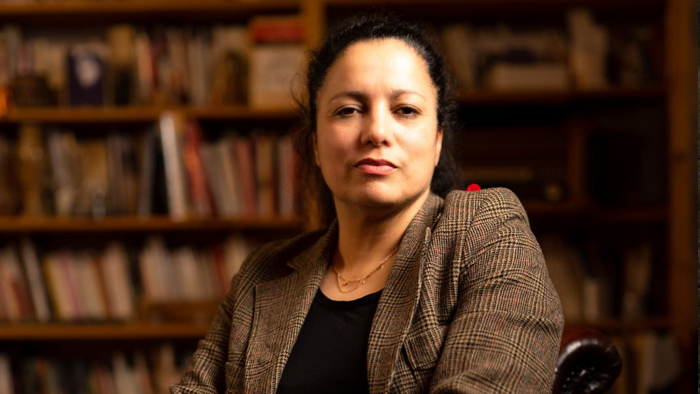
Houria Bouteldja, writer and activist of Algerian origin, was a founder and former member of the Parti des Indigènes de la République (PIR), a decolonial political party based in France, which fights against colonialist and neo-colonialist ideologies and practices, racism and Islamophobia. She has written numerous strategic theoretical articles on decolonial feminism, racism, autonomy and political alliances, as well as articles on Zionism and state philosemitism. She is the author with Sadri Khiari, of Nous sommes les indigènes de la République (Editions Amsterdam, 2012). Whites, Jews and Us, towards a politics of revolutionary love is her first book translated into Portuguese, English, Spanish, Italian, Greek and Dutch and so far the most recognized of her work, originally published in 2016 by La Fabrique, Les Blancs, les Juifs et nous: Vers une politique de l’amour révolutionnaire. Her most recent book Beaufs et Barbares: Le pari du nous (Éditions La Fabrique, 2023) was translated into Spanish by Patanes y bárbaros: la apuesta del nosotros (Akal, 2023) and more recently in English, Italian and German. In October 2024, she contributed to a collective book published by La Fabrique, ‘Combatting antisemitism and its exploitation’, alongside Judith Butler and Naomi Klein. Houria is currently a member of the “QG Decolonial”.
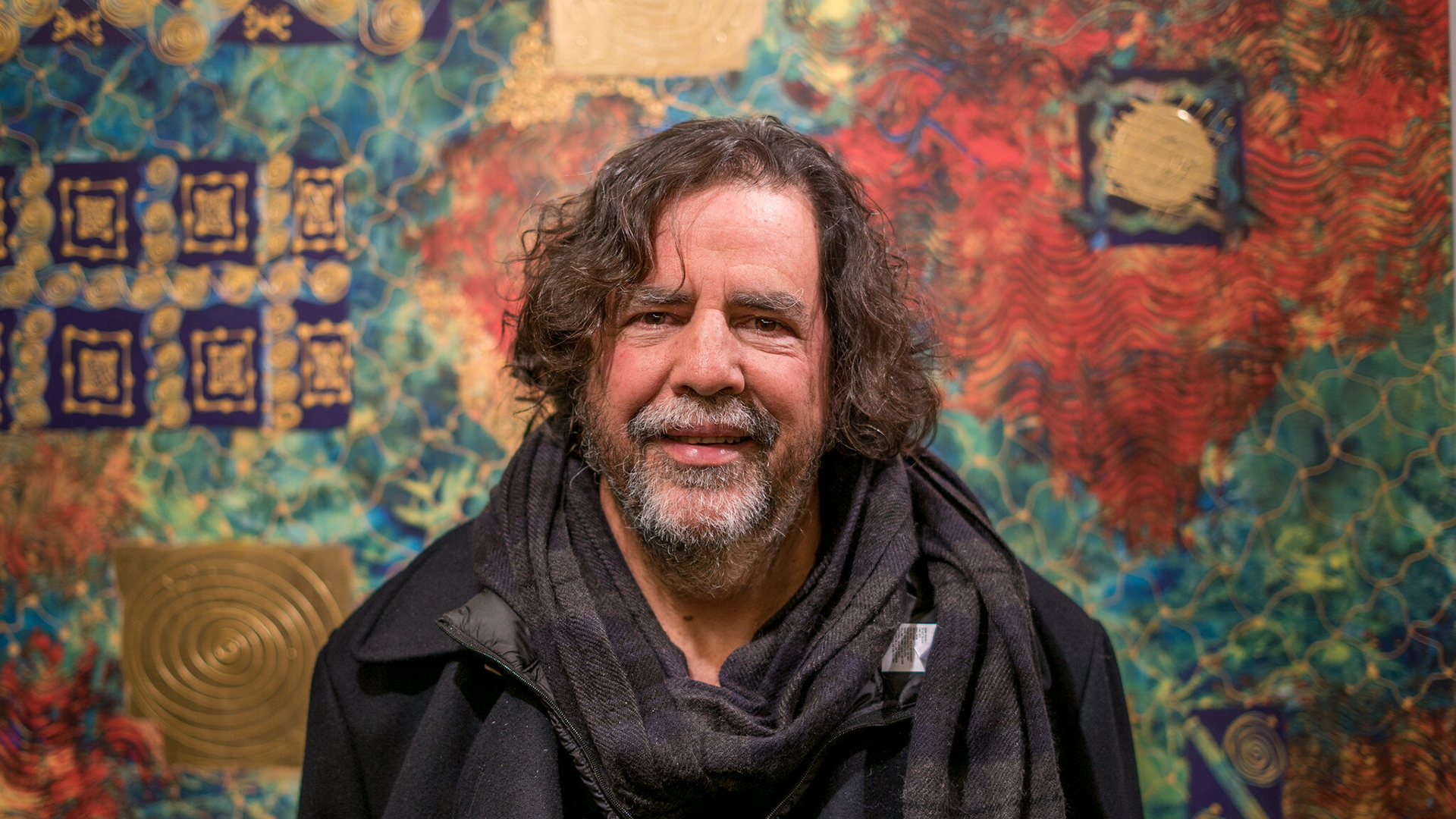
Ramon Grosfoguel is Emeritus Professor from the Department of Ethnic Studies at University of California-BERKELEY. He has published extensively on Decolonizing the Political-Economy of the World-System, Decolonization of Knowledge, Racism and International Migration. His most recent book is entitled De La Sociologia Descolonizadora al Nuevo Antiimperialismo Decolonial (Editorial AKAL, Spain).
Françoise Vergès (La Réunion/ France. Ph.D in Political Theory, University of Berkeley, 1995), writes on the racist fabrication of premature death, decolonial feminism, the impossible decolonization of the western museum, climate disaster and decolonial politics of vital needs. She has written films on Maryse Condé and Aimé Césaire, collaborates with artists, and, since 2015, curates L’Atelier which produces public performances with artists and activists. In 2025 (Bannister Fletcher Fellowship), she organized the workshop “Imagining the Post-Museum,” with the Whitechapel Gallery, Mosaic Room and the Sarah Parker Remond Center for the Study of Racism and Racialization (UCL, London), and Cité internationale des arts and ULIP in Paris. She is editorial consultant for choreographer Benjamin Millepied’s Paris Dance Project.
Françoise Vergès is currently working on a book and a film about communist anti-colonial struggles in Reunion Island through her parents’ personal archives and her own. Recent publications: Making the World Clean. Wasted Lives, Wasted Environment and Racial Capitalism (2024), Program of Absolute Disorder Decolonizing the Museum A Decolonial Feminism (2024), A Decolonial Feminism (2021).
Access
Live Captions
Live Stream
Content Notes
Discussion of Islamophobia, Homophobia, Antisemitism, colonial violence and genocide.
See general Access information for Episode 12: From the Rivers to the Seas event
Artists
Houria Bouteldja
Ramón Grosfoguel