What is the Sound of Freedom?
Ultra-red
For day five of Ultra-red’s project, the investigation will review the previous work undertaken together, and perhaps draw up a summary of reflections and pose some future questions.
Arika have been creating events since 2001. The Archive is space to share the documentation of our work, over 600 events from the past 20 years. Browse the archive by event, artists and collections, explore using theme pairs, or use the index for a comprehensive overview.
For day five of Ultra-red’s project, the investigation will review the previous work undertaken together, and perhaps draw up a summary of reflections and pose some future questions.
Take a break and/ or hang in an Open Meet Up in IRL and URL
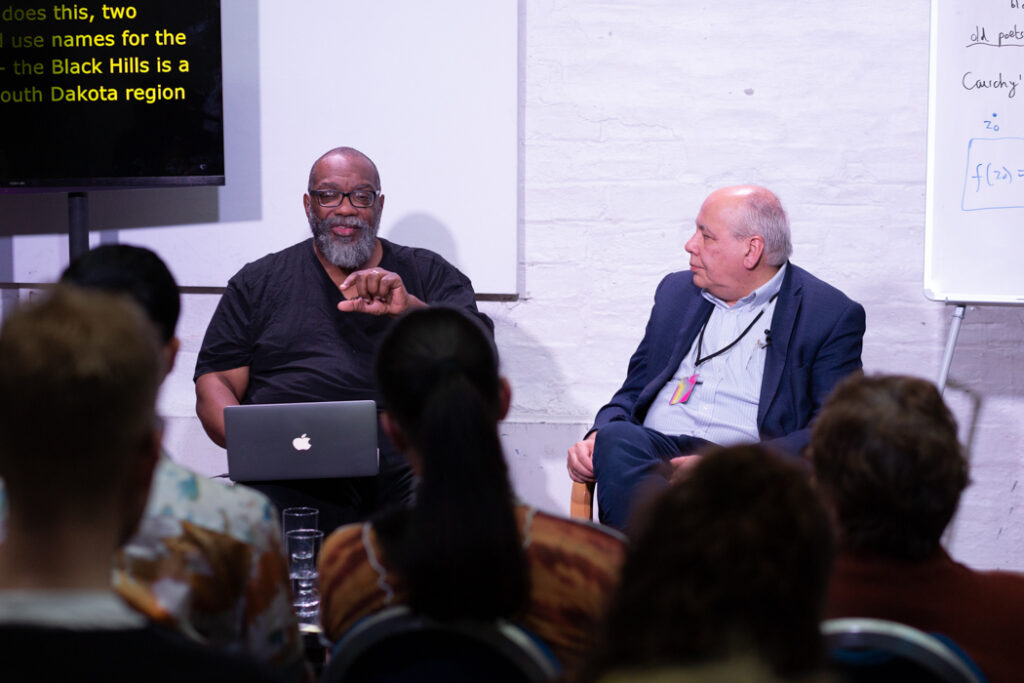
A back and forth between Fred and Fernando on the transits and obstructions between mathematics and poetics, and how both help us to think from the other side.
Dub is strange. A conversation with Edward George and Dhanveer Brar.
An improvised film about our worlds at the brink, on the edge, in front of a crisis. To stand on the side of life, by seeing the resistance to genocide in Palestine as a turning point to overcome.
In Our Hands is a nine week programme of workshops exploring radical approaches to health and collective care in the movement for liberation and social justice.
How can we imagine bodies not as an end in themselves, but as a medium through which we can become one another’s means?
One-shot sonic portraits of 4 houses, their inhabitants and their relationship to sound, from 2 of the most deep-thinking field-recording artists around.
Live ISDN drone performance resonating between Dundee and an empty Montreal Grain Silo.
Elizabeth’s writing pulls apart toxic settler colonialism and the worldview used to justify it; working towards an alternative distribution of powers, so that ways of being otherwise can endure.
Open-ended, paradoxical and performed investigations into: misunderstanding, language games, form saturated with sense, and consecutive matters…
Rather than asking the state for services, what kinds of change are made possible when we prioritise people supporting each other?