All the Colours of the Dark, Except Black
Evan Calder Williams
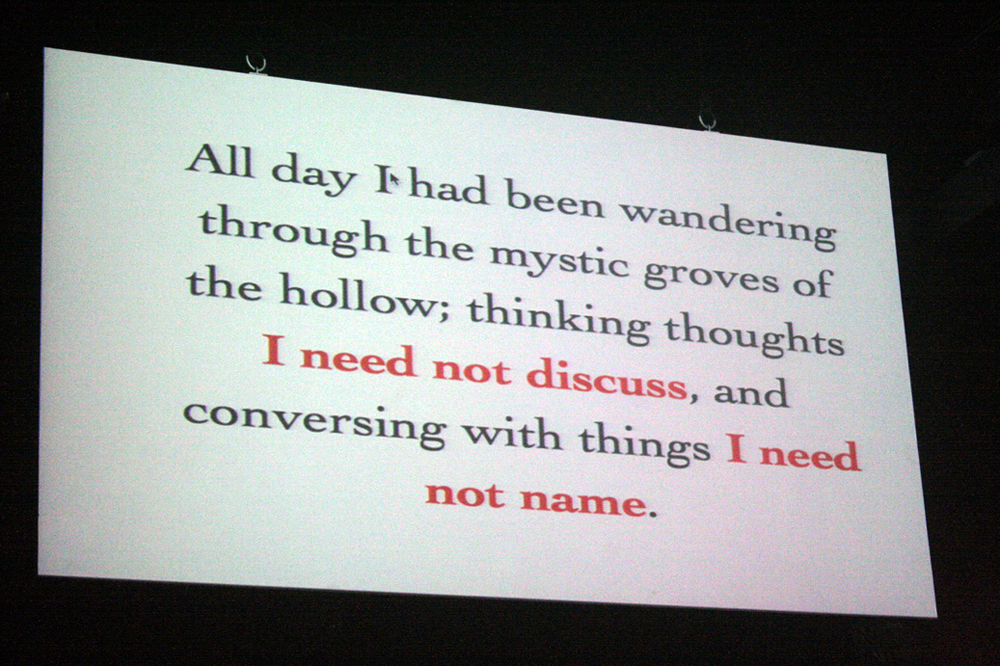
A chat, with examples (Zola, H. P. Lovecraft, Hammer Horror), about blackness and the sheer stupid thickness of what has no profundity whatsoever.
Arika have been creating events since 2001. The Archive is space to share the documentation of our work, over 600 events from the past 20 years. Browse the archive by event, artists and collections, explore using theme pairs, or use the index for a comprehensive overview.
A chat, with examples (Zola, H. P. Lovecraft, Hammer Horror), about blackness and the sheer stupid thickness of what has no profundity whatsoever.
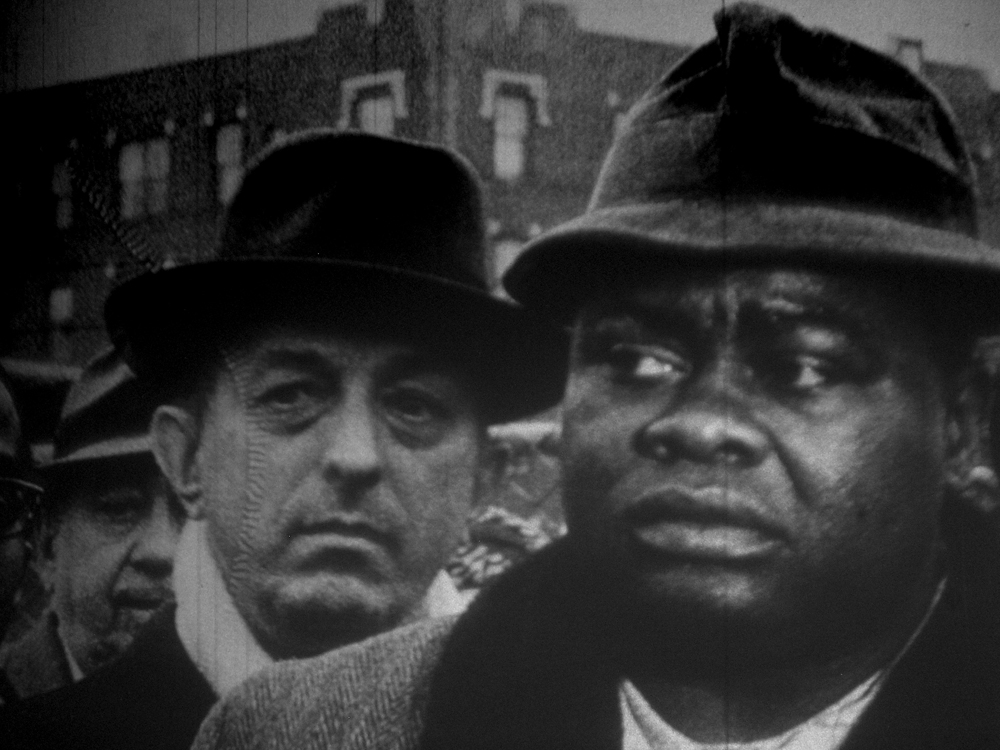
A double bill of A (imageless) film of nothing but a sound recording and its transcription and a found film of news interviews about Malcolm X’s assasination, where the filmmaker decided to add nothing to it, except our attention.
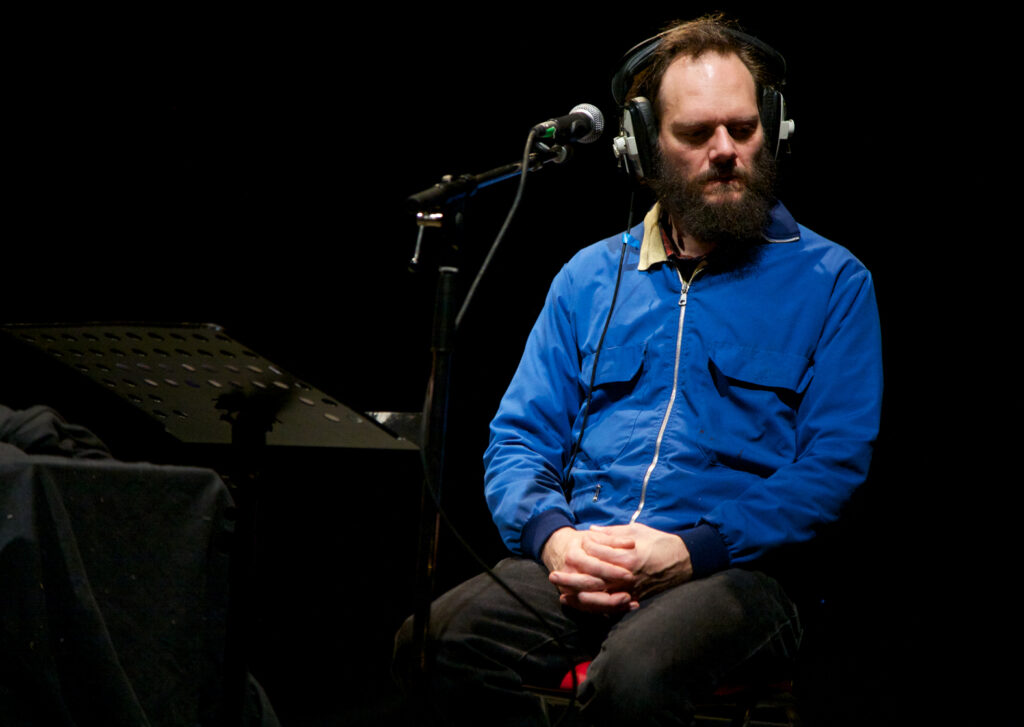
Listening to people listening to their own homes. Musicians and actors will listen back to recordings made in local peoples homes on headphones, and interpret/ translate what they are hearing.
Taking our festivals south of the border to The Sage Gateshead we set out to offer a few cardinal pointers in the vast array of experimental music practices.
The second in a series of workshops for workers and non-workers who care. What does the sharing of vulnerability entail? Can such a sharing inform progressive social relations?
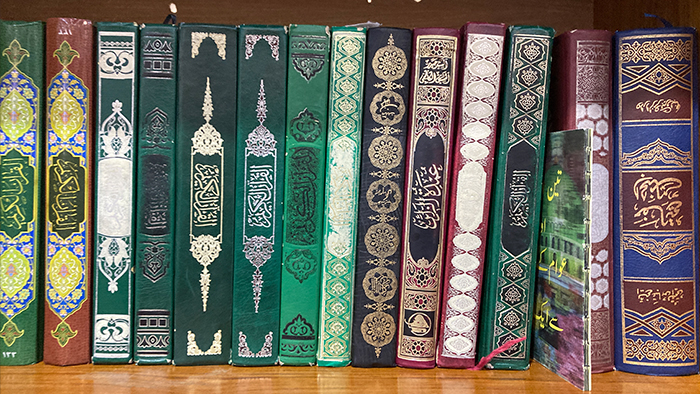
Sadia Shirazi & Mezna Qato will discuss a series of scores that explore the texture and landscape of exile, resistance, and Muslim sociality. These instructional scores trouble the idea that art and activism are untouched by faith and faith is untouched by art and activism.
Copying without Copying is 3 evenings of events that are about what happens when we speak, or when we hear someone speak on our behalf, when we share a collective moment of hearing and maybe understanding.
Taku’s actions strip back musical performance to one of its original proposals: what is an action and how does it create a situation for spending time together, for paying attention?
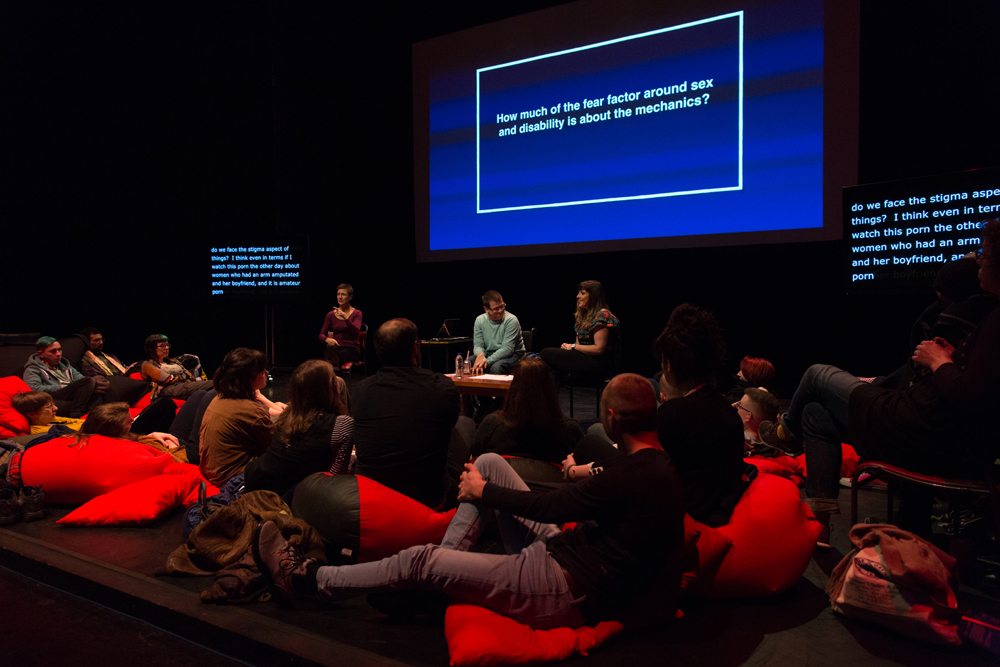
How do people living with disability see themselves in today’s sexualised culture? How do we imagine our crip sexual selves despite society wanting to reduce us to non-erotic bodies?
Can we use sound, repetition and difference to personally and collectively engage with space, time and labour?
What kind of listening and acknowledging do we offer each other? What is it to listen to an ‘elsewhere’, and do we ever do anything else when we listen to music?
Inspired by Delany’s Aye, and Gomorra. A spookily filmic world where asexual bodies live in the contradiction of their unarousable loneliness and desire for intimacy and contact.