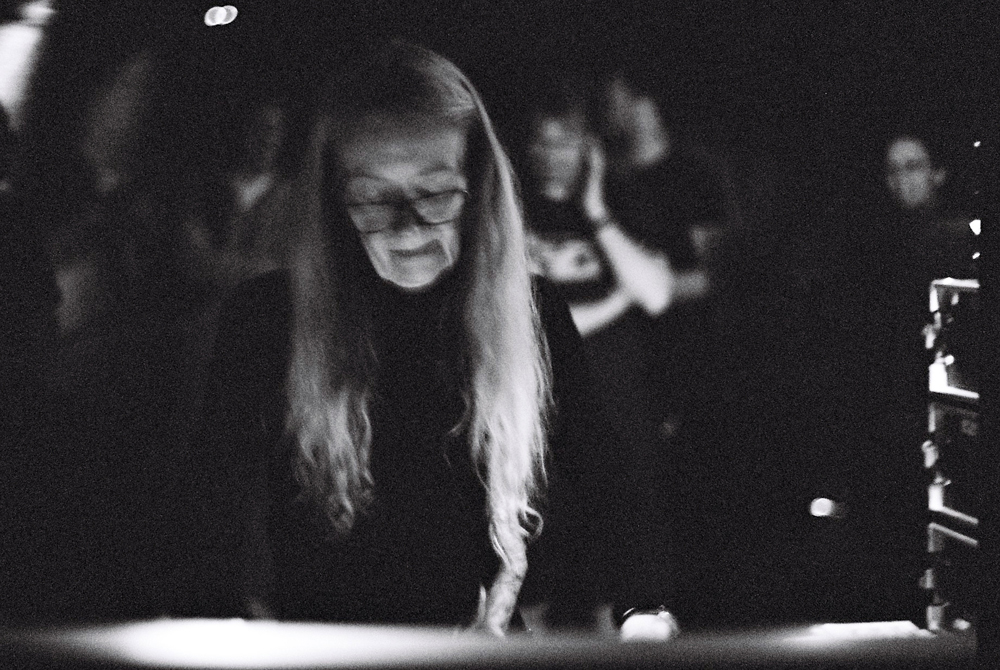
Ken Jacobs & Edwin Carels Talk
Edwin Carels Ken Jacobs
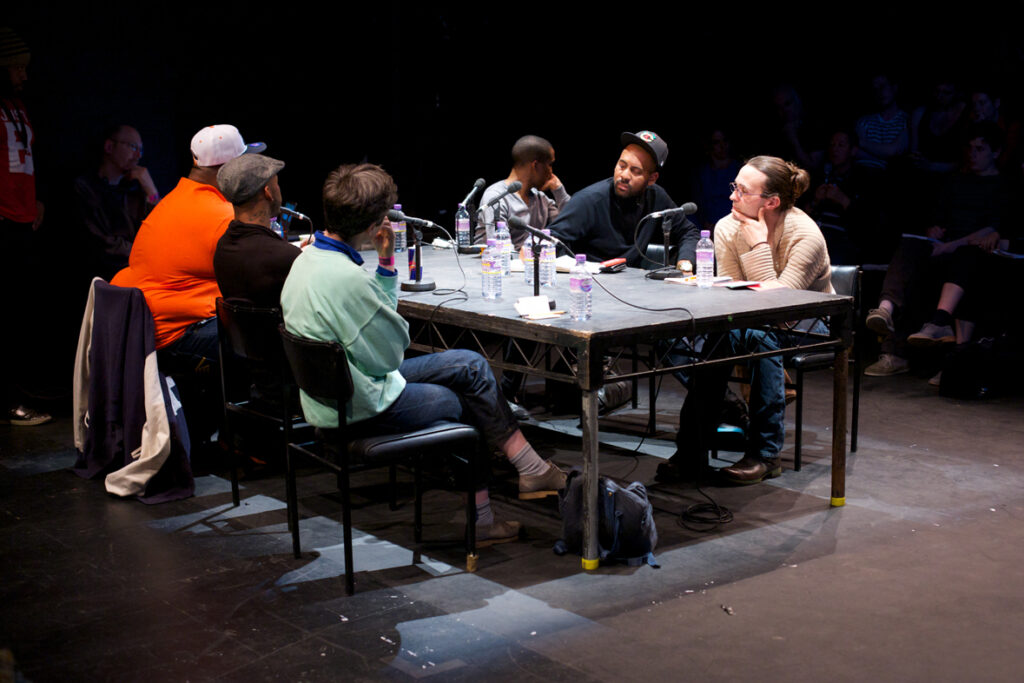
Ken Jacobs chats to Edwin Carels: Edwin is a curator based in Ghent, responsible for some fantastic programmes of experimental film and art at the Rotterdam Film festival (amongst others).
Arika have been creating events since 2001. The Archive is space to share the documentation of our work, over 600 events from the past 20 years. Browse the archive by event, artists and collections, explore using theme pairs, or use the index for a comprehensive overview.
Ken Jacobs chats to Edwin Carels: Edwin is a curator based in Ghent, responsible for some fantastic programmes of experimental film and art at the Rotterdam Film festival (amongst others).
Quintessentially British, The Bohman Brothers’ music is a home-made and DIY conflux of some of the most virulent strains of experimental music.
What is the radical concept at the core of ‘rhythm’, expanded from simply musical or mathematical notions to encompass personal, social, collective rhythms?
How do poetry and maths stitch together pictures of our fractured situation from its wreckage and relics, from the debris of hope and the well of residues that make us what we are?
A chat, with examples (Zola, H. P. Lovecraft, Hammer Horror), about blackness and the sheer stupid thickness of what has no profundity whatsoever.
Each organ is unique. The project is to find out what makes it unique.
Tormented and drawn-out high-pitched yelps and drones, all interleaved with periods of torpid silence.
A performance bearing witness to a struggle built upon patience and collective action from the great multi-instrumentalist and member of the AACM.
Could cruising and random public sex be the basis of an ethically organised society? A discussion with Jackie Wang, Samuel R. Delany and Huw Lemmey.
A guitar solo of frugal wringing, of notes in the dark, an attitude of making everything count.
During Episode 9 we made this clip with Storyboard P at Kinning Park Complex. Video by Ash Reid.
A panel exploring how to dismantle the master’s house — its material edifices and ideological architecture — and the construction of abolitionist futures in the present.