Icon’s Lunch
Various Artists
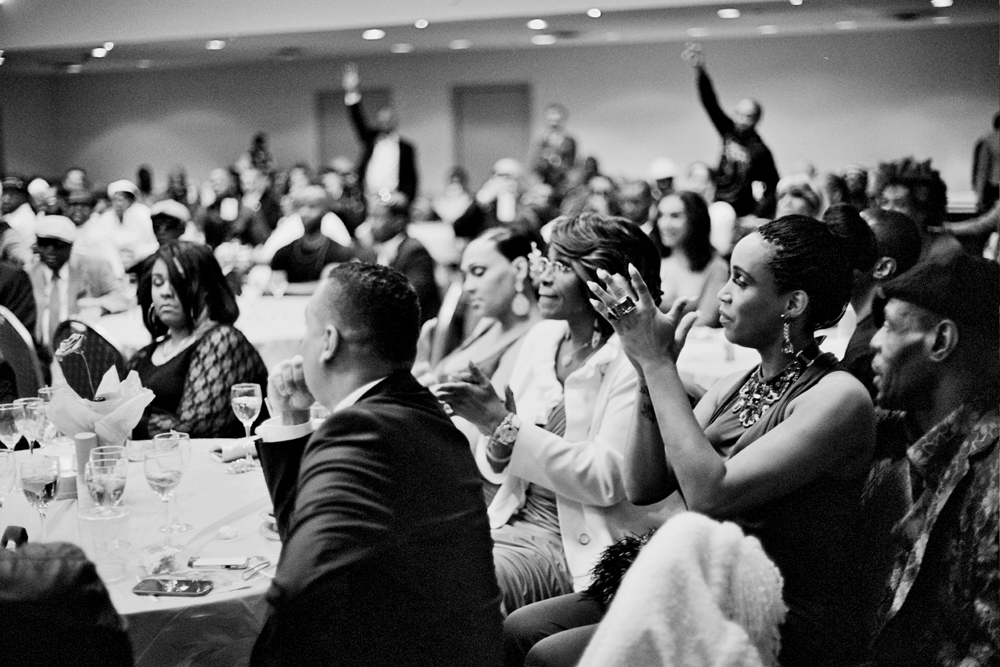
This event honoured those individuals who achieved the status of Icon during the period of 1986-1990.
Arika have been creating events since 2001. The Archive is space to share the documentation of our work, over 600 events from the past 20 years. Browse the archive by event, artists and collections, explore using theme pairs, or use the index for a comprehensive overview.
This event honoured those individuals who achieved the status of Icon during the period of 1986-1990.
A Festival supporting the struggle for Sex Workers’ Rights: share knowledge, discuss, dance and strategise!
Tiny fragments of sound recombined and woven into spare and precise, violent yet beautiful pieces
What would have happened in 1963 if someone from the voguing ball scene going on in Harlem had travelled downtown to perform alongside the early postmoderns at Judson Church?
A performance for dry ice and four specially constructed steel tables, each one heated by a single candle until searingly hot.
What is the radical concept at the core of ‘rhythm’, expanded from simply musical or mathematical notions to encompass personal, social, collective rhythms?
Christian Bök‘s work spans thrillingly conceptual poetry to body-shaking vocal performances.
What to do about a telethon other than fuck it up? Poet, tarotist, artist, and librarian Cyrée Jarelle Johnson returns to IWBWYE to read the 1980s and ’90s for what those decades were: practice for now.
What happens when you are engaged in a deep and extended artistic practice that intersects between literature and music, notation and improvisation, sight and sound?
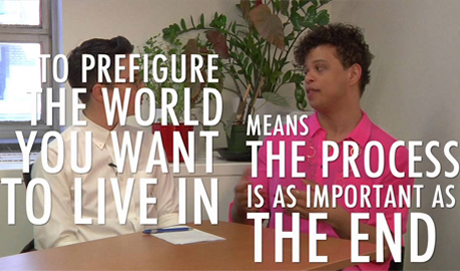
A crash-course in pre-figurative, radical, queer, anti-racist, anti-police, anti-prison, anti-deportation abolitionist politics and trans-resistance.
Imagery, drawn from what seems like hundreds of different films is overlaid and combined in a promissory rainbow of new meanings and impossible scenarios, with the unsettling feel of daylight shadows.
How do we sense entanglement? Can the knotting of ropes according to a poem’s rhythm make the social pulse of language matter?