Investigation – Christof Migone
Christof Migone
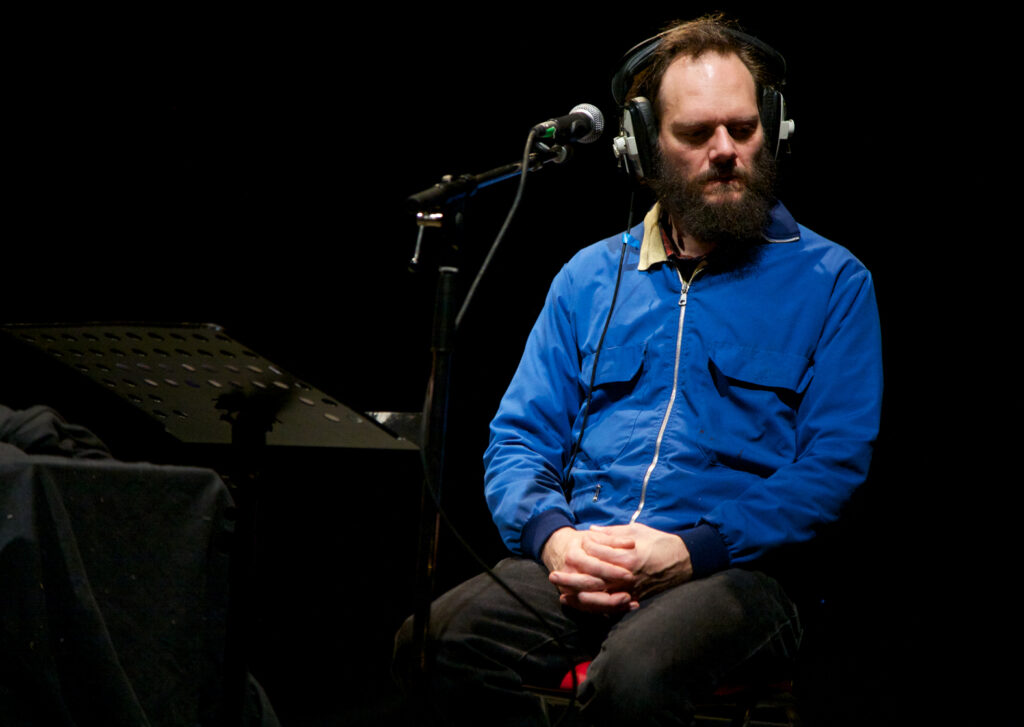
Can we use sound, repetition and difference to personally and collectively engage with space, time and labour?
Arika have been creating events since 2001. The Archive is space to share the documentation of our work, over 600 events from the past 20 years. Browse the archive by event, artists and collections, explore using theme pairs, or use the index for a comprehensive overview.
Can we use sound, repetition and difference to personally and collectively engage with space, time and labour?
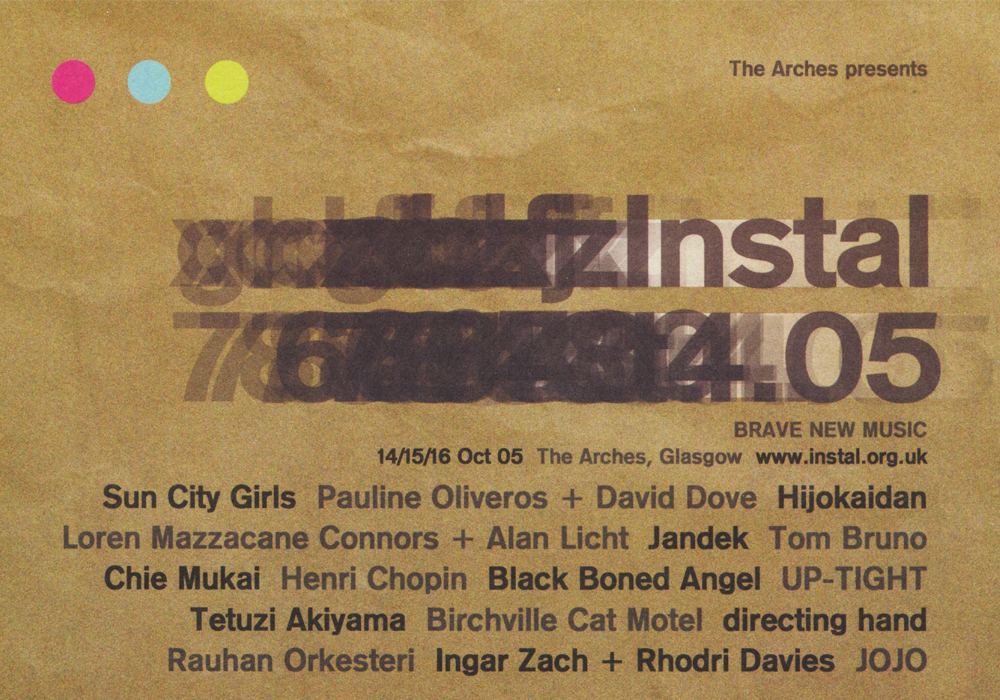
The 2006 INSTAL festival saw a broad selection of artists that included Blood Stereo and Ludo Mich, Ellen Fullman and Sean Meehan, Keiji Haino and Tony Conrad and a specially created performance by Maryanne Amacher.
Folk poet, actor and bon viveur Kan Mikami in duo with Jojo Hiroshige, a founding member of Japanese Noise band Hijokaidan.
Sound as it is endured by space and the body: 15 participants lie face down and pound the floor with a microphone one thousand times, each person choosing their own rhythm and intensity.
How do we sense entanglement? Can the knotting of ropes according to a poem’s rhythm make the social pulse of language matter?
Tiny fragments of sound recombined and woven into spare and precise, violent yet beautiful pieces
Three documentary films exploring diverse realities of sex workers around the world followed by a closing ceremony of the festival.
French improviser, composer, writer & musical thinker of dry humour and elegant clarity. Sly conjurer of music from the unconsidered processes of music making.
Torrential, wrenching wordless wails, guttural screams and roars, a Haino solo vocal performance.
The Songspiels take on a mode of musical theatre developed by playwright Bertolt Brecht and composer Kurt Weill in the early twentieth century, presenting political and social concerns through the accessible and (often funny) form of song.
Simon Morris is joined by Nick Thurston as they attempt to read aloud whilst peddling on exercise bikes.
How do you know what you want? Should freedom be doing what you ought, not doing what you want? How might a philosopher and artist turn this thinking into an enabling condition in the context of noise and improvisation?