Eli Clare
Eli Clare
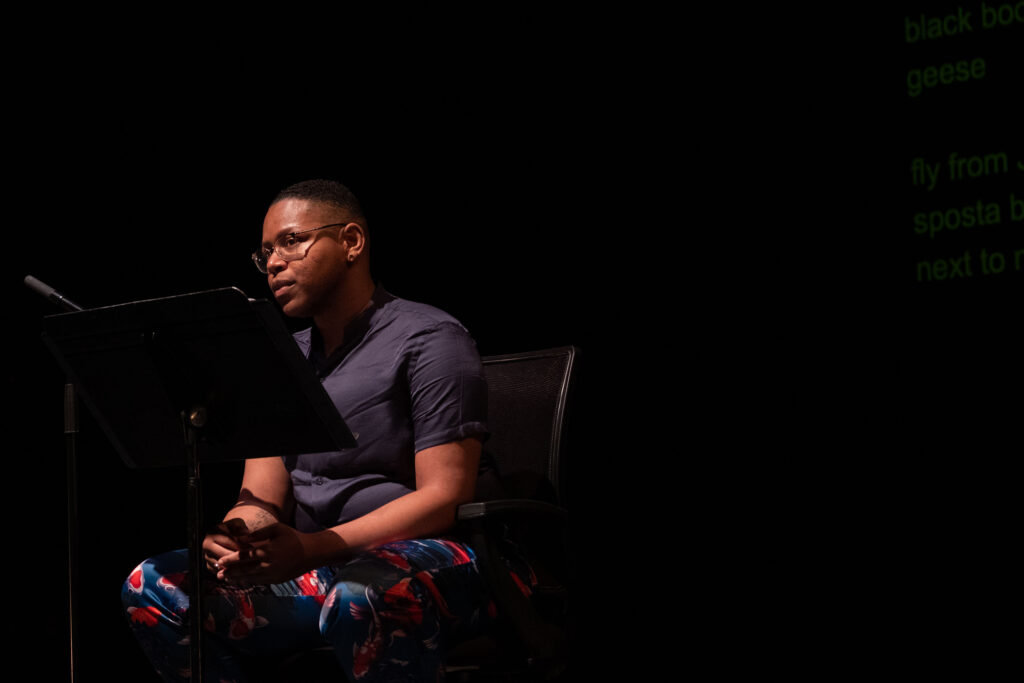
Poems are kisses, fists, and underground rivers. For all these reasons and many more, I am a poet.
Arika have been creating events since 2001. The Archive is space to share the documentation of our work, over 600 events from the past 20 years. Browse the archive by event, artists and collections, explore using theme pairs, or use the index for a comprehensive overview.
Poems are kisses, fists, and underground rivers. For all these reasons and many more, I am a poet.
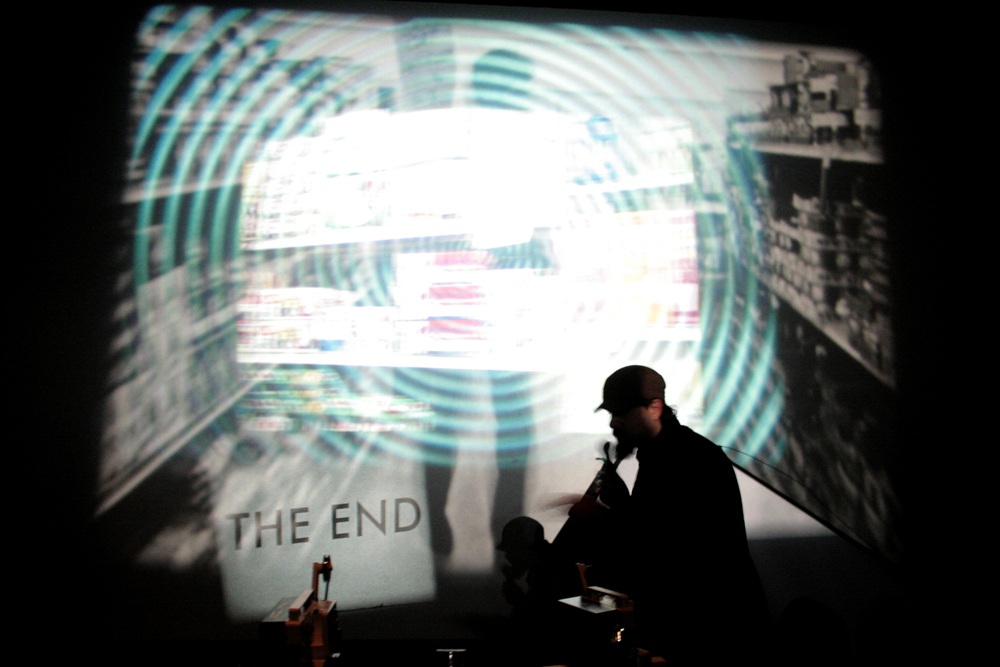
Nikos played every note that it’s possible to play on the cello, all played back as a one hour drone, while the cello was turned to powder and bottled.
Writing that shows us that, even in struggle, there is light to be let in.
In 2008 we toured our Kill Your Timid Notion festival of experimental sound and image to London, Bristol and Glasgow, bringing audiences a taste of the previous 5 festival editions.
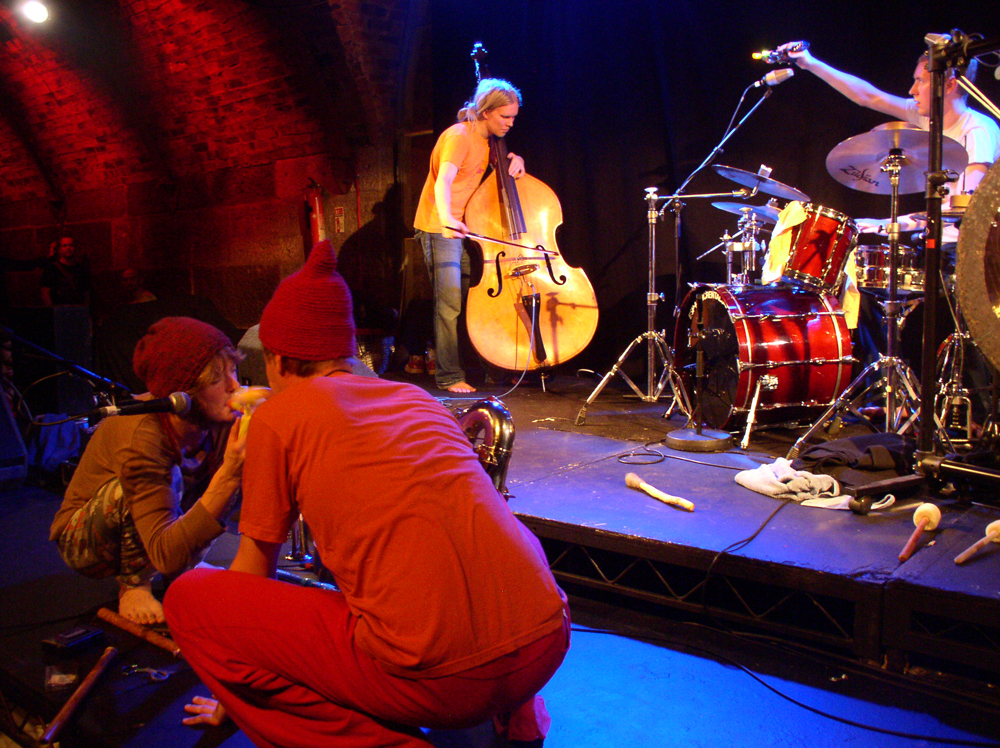
There exist places in our towns and cities that are created not by design, but by circumstance. Shadowed Spaces was a tour of overlooked, bypassed and unconsidered nooks and crannies with 3 musicians.
A programme looking at landscape, filmic or architectural spaces and at how the fixed stare of a camera frame only captures so much reality; here we focus on how filmmakers structure our relationship with that reality and at how they relate it to or interpret it through sound.
Includes: tamed TV snow, video feedback of racing particles, a remake of a polish photogram film destroyed in WWII, a visual and aural representation of Gestalt theory, hole-punched film and Guy Sherwin’s Cycles 3 double-projection.
A recreation of one of Gustav Metzger’s celebrated auto destructive performances.
Joe Colley specialises in hotwired sound constructions full of ominous electronic disturbances and caustic, noxious drones. For KYTN, Joe created a situation of controlled chaos with 50 light sensitive oscillators placed in a field of candles.
Guy Sherwin gives a kind of annotated, chat through his optical sound films
Christian Bök‘s work spans thrillingly conceptual poetry to body-shaking vocal performances.
How do you know what you want? Should freedom be doing what you ought, not doing what you want? How might a philosopher and artist turn this thinking into an enabling condition in the context of noise and improvisation?