Solo Performances
Leah Lakshmi Piepzna-Samarasinha
Come for the crip ingenuity; stay for the smooth feels of what it is to be each other’s everything.
Arika have been creating events since 2001. The Archive is space to share the documentation of our work, over 600 events from the past 20 years. Browse the archive by event, artists and collections, explore using theme pairs, or use the index for a comprehensive overview.
Come for the crip ingenuity; stay for the smooth feels of what it is to be each other’s everything.
A sort of prayer and conference, a sort of scream and dialogue – a monologue and declaration at the time, addressing how we can build complicity with one another.
A chat with Rashad about the communist, conceptual methodology that informs his ground-breaking synthetic music—a form of speculative sonic fiction writing to produce hyperreal non-representational auditive experiences.
Performing with hand built radio transmitters, which react to interference in the atmosphere and the electrical impedance of his hands, his radio art is a form of social practice; a statement in opposition to mass media.
Durational group-mind drone and clatter: bamboo, electronics, the contents of your local ironmongers bin. A 3-hour set from this legendary Japanese improvisation group.
A 2-day workshop to deconstruct our classed experiences and the ways in which we reproduce the same class system we fight against, in order to create a stronger, more egalitarian Scottish art sector.
Glasgow based artist Defaalt invites the audience to collaborate fully in his performance by means of a generative graphical interface.
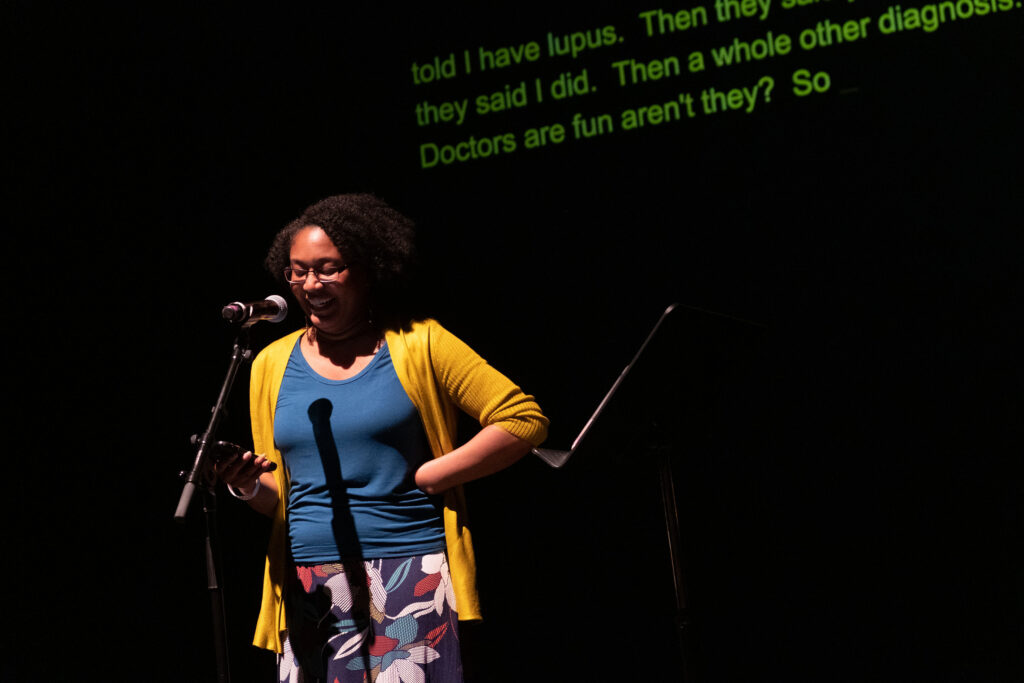
A fully transcribed, described, and open-captioned film screening that’s nothing short of their actual open heart.
A chat with Eugene Thacker. Can we rethink the world as unthinkable, and without us?
Jandek’s first ever live performance. Unannounced, the performance was a total surprise for everybody at the festival.
Fernando thinks that when maths is deep, it should be simple and able to be explained by hand gestures. By embodying ideas, we’re able to more clearly think about their cultural implications.
Each organ is unique. The project is to find out what makes it unique.