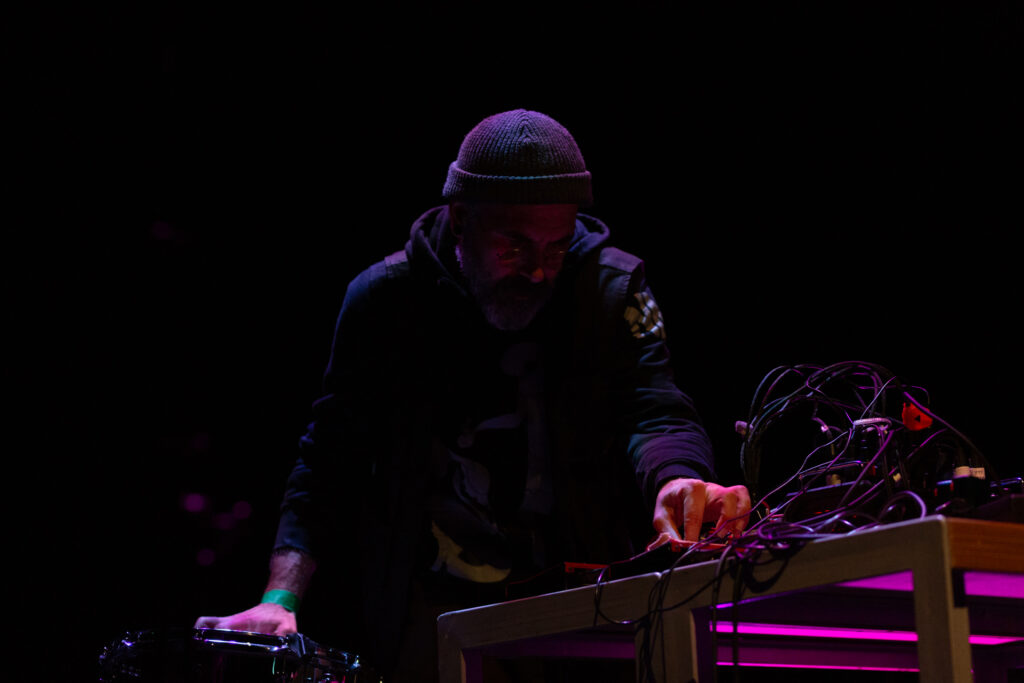
Based on a True Story – 1986
Rashad Becker
The most sophisticated synthetic music around: timbrally otherwise body music as sonified fictions and auditive sociograms.
Arika have been creating events since 2001. The Archive is space to share the documentation of our work, over 600 events from the past 20 years. Browse the archive by event, artists and collections, explore using theme pairs, or use the index for a comprehensive overview.
The most sophisticated synthetic music around: timbrally otherwise body music as sonified fictions and auditive sociograms.
TEST is a collective creative improvising quartet based out of the NYC Underground (figuratively and literally). Their street-hardened, spatial Jazz is riotous and intense: is also makes us think about collective organization, and different ideas of responsibility and liberty.
Profound mathematical ideas for romantics, to help us linger in the difference we share.
Dundee. Progressive rhythmical guitar squall vs. post-highland discorporate dusk-jockey.
Philip Jeck creates slowly evolving symphonies that are as much about the crackling hiss of old vinyl as the actual ‘musical’ material.
A kind of audience activating, structured film guessing game in the manipulation of time, sound and image. “At 11:15, weiners. At 21:05, pornography. At 23:30, a duet. Watch the Clock.”
A Festival supporting the struggle for Sex Workers’ Rights: share knowledge, discuss, dance and strategise!
What’s the relationship between the eternal hum of the oceanic beloved and the persistence of vorticity in fluid dynamics? And how does Alice Coltrane’s harp help us stay there?
A rare live performance which, although not a full installation, made use of the unique acoustic and spatial properties of the Arches to rattle the audience and help it locate its third ear.
Exploring the interplay between punk sinewave aggression, high-speed video sequences and stroboscopic lighting
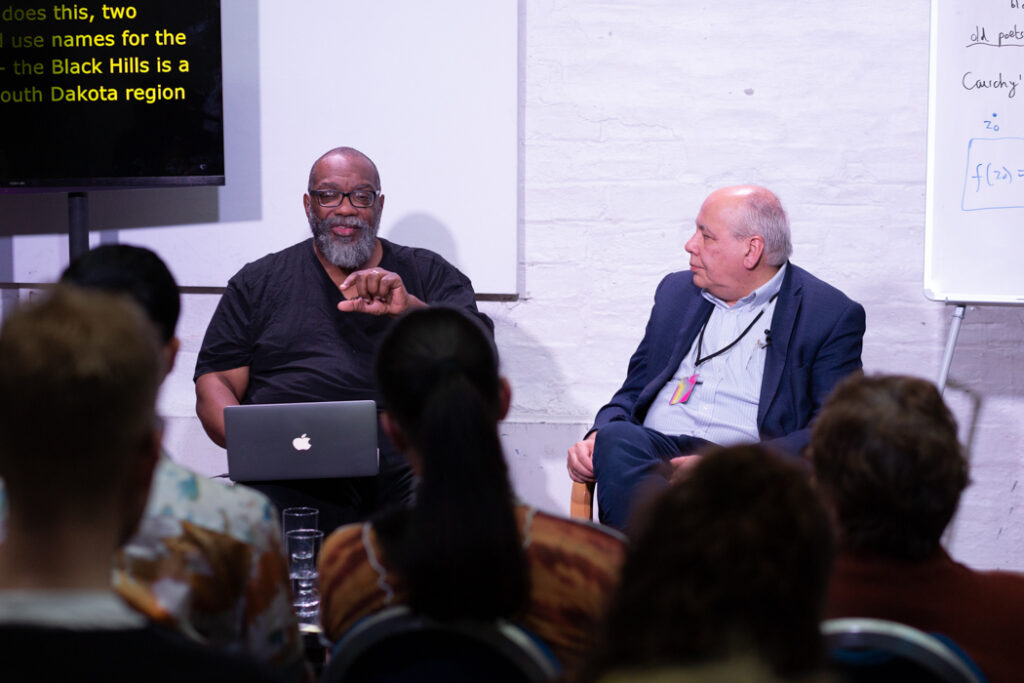
A back and forth between Fred and Fernando on the transits and obstructions between mathematics and poetics, and how both help us to think from the other side.
Relative patterns of occlusion and exposure occupy two screens. Each exposure fires a stroboscopic flash of colour: yellow for one screen; blue for the other, filling the centre of both screens with colour, haloed with after-images.