Open Stage/ Screen/ Mic
Our Zooms are unmuted, our mics are open, and our hearts and bodyminds are receptive. We give the floor online and in person to you…
Arika have been creating events since 2001. The Archive is space to share the documentation of our work, over 600 events from the past 20 years. Browse the archive by event, artists and collections, explore using theme pairs, or use the index for a comprehensive overview.
Our Zooms are unmuted, our mics are open, and our hearts and bodyminds are receptive. We give the floor online and in person to you…
Bruno’s liberated improvisational approach stretches beyond the lyrical, tough as nails rhythmic bursts and expressive, swinging attack of his drumming.
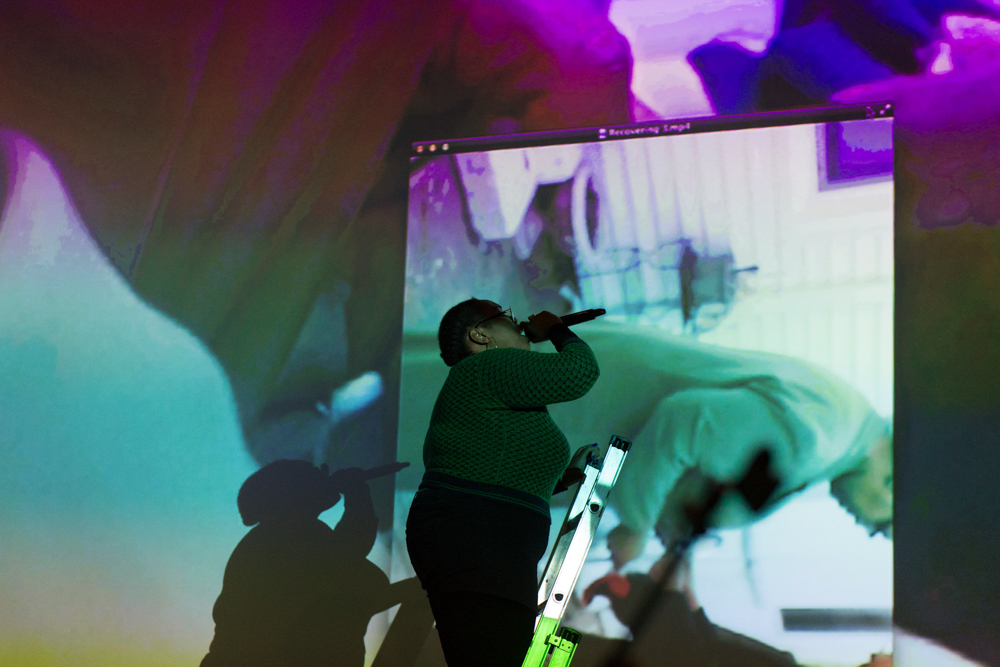
A queer black operatic requiem for piano and voice that asks us to stay in the hold of the slave ship, that tries to understand the connection from the slave ship to the prison.
A spectacular musical show which discusses the representation of a nation state, its characters and history. A learning play on myth construction and its reproduction.
Dundee. Progressive rhythmical guitar squall vs. post-highland discorporate dusk-jockey.
Can we use sound, repetition and difference to personally and collectively engage with space, time and labour?
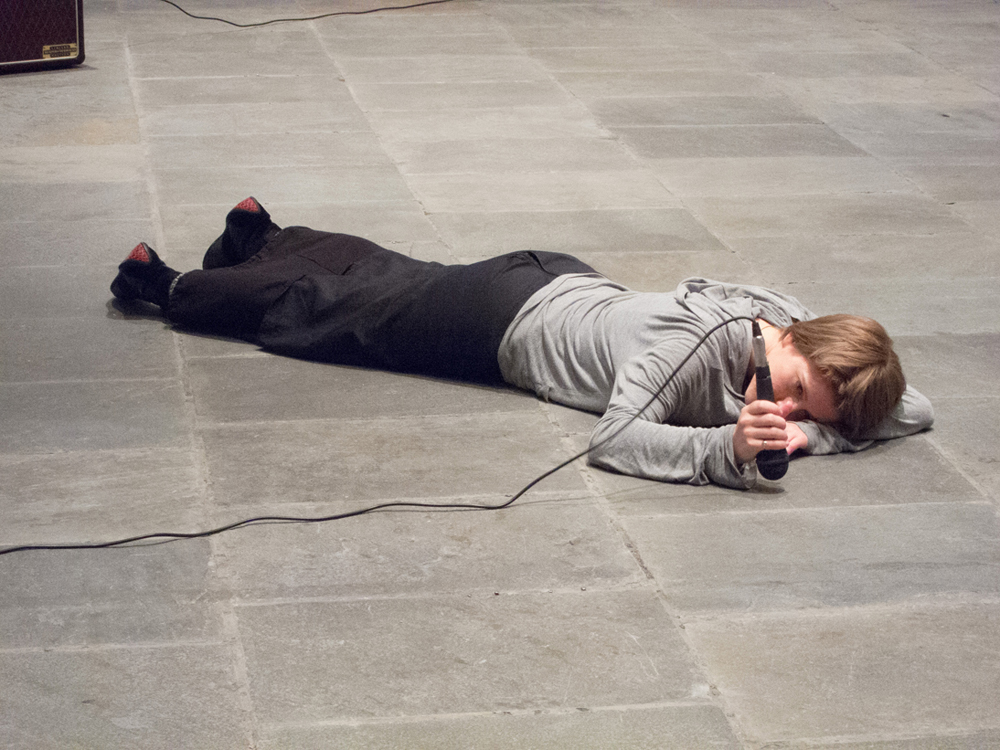
Sound as it is endured by space and the body: 15 participants lie face down and pound the floor with a microphone one thousand times, each person choosing their own rhythm and intensity.
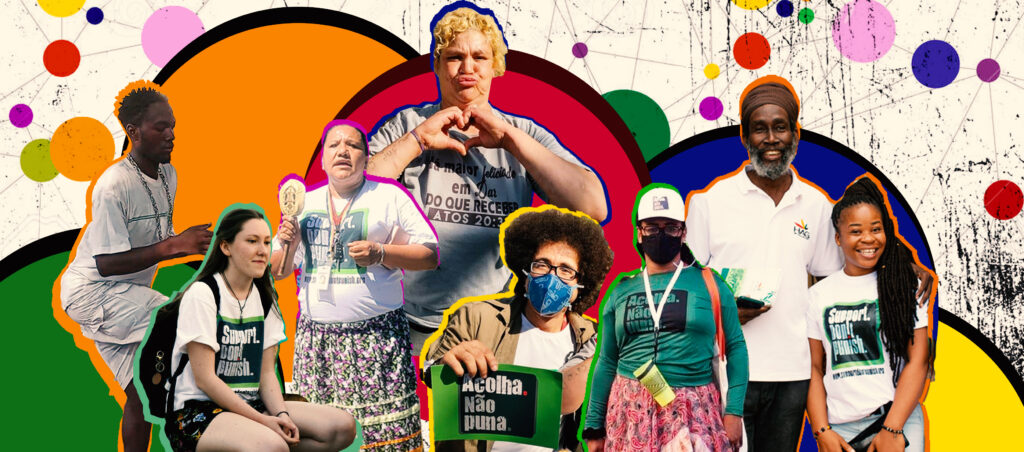
Rather than asking the state for services, what kinds of change are made possible when we prioritise people supporting each other?
A celebration of our overabundant social entanglement and complicity, that remind us of how we can see ourselves, stripped of powers’ attempts to grasp us.
A prison abolitionist punk video-poetry-music mash up about our fucked-up dystopian society, RoboCop, kids toys and criminality.
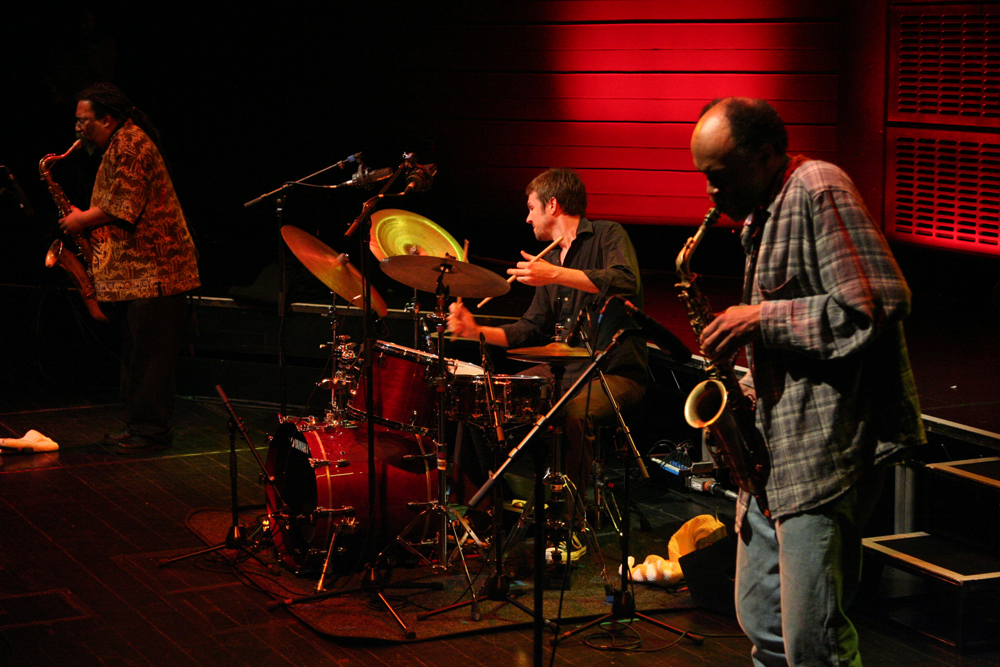
Daniel Carter & Sabir Mateen’s trio with percussionist Andrew Barker; incessantly driving forward through sweat-drenched bursts of pure ecstatic freedom.
If life is assaulted by power, where do we find spaces for living? A conversation with Peter Pál Pelbart.