It’s Sorta Like a Big Hug
Constantina Zavitsanos Park McArthur
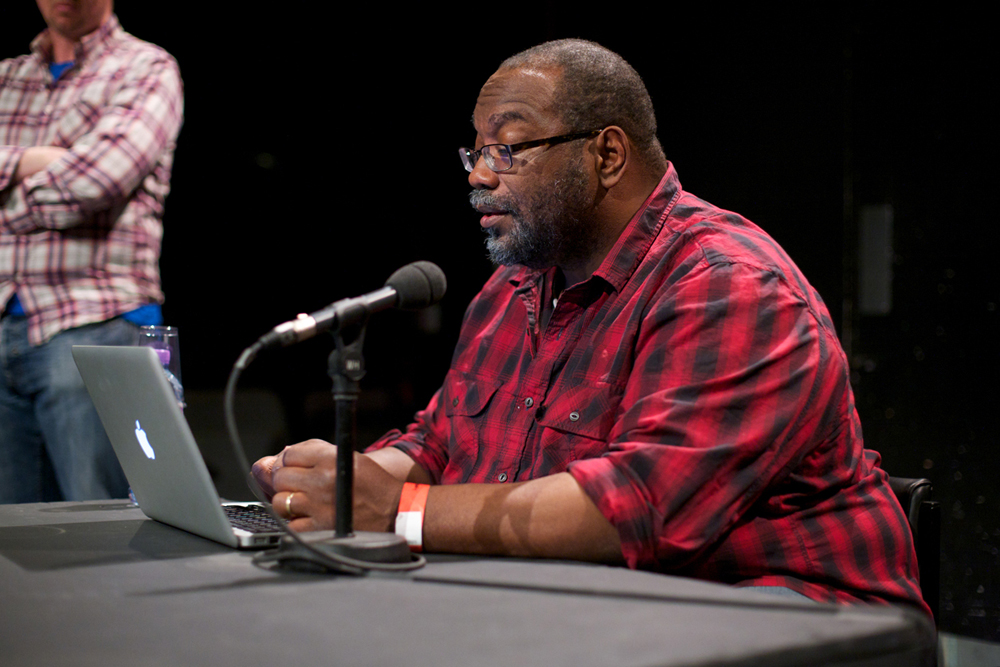
How can we imagine bodies not as an end in themselves, but as a medium through which we can become one another’s means?
Arika have been creating events since 2001. The Archive is space to share the documentation of our work, over 600 events from the past 20 years. Browse the archive by event, artists and collections, explore using theme pairs, or use the index for a comprehensive overview.
How can we imagine bodies not as an end in themselves, but as a medium through which we can become one another’s means?
In 2008 we toured our Kill Your Timid Notion festival of experimental sound and image to London, Bristol and Glasgow, bringing audiences a taste of the previous 5 festival editions.
Live in person at Performance Space New York and live-streamed everywhere! Watching Storyboard P dance feels like glimpsing into another world.
The mutability of the body and the mobility of identity: queered pop culture, drag, lip-sync and performance.
Open-ended, paradoxical and performed investigations into: misunderstanding, language games, form saturated with sense, and consecutive matters…
Ever wondered about the roadside festoons which are the innards of discarded cassette tapes? All will be revealed in this methodical and insightful documentary by UK luminary John Smith and sound artist cohort Graeme Miller.
Robin Hayward – exploring the micro-sounds of a tuba, filling slowly with sand.
The Experimental Improvisers Association of Japan, [EXIAS-J] are a loose collective of musicians and dilettantes who seem to represent an entire and self sufficient scene in one band.
What happens when you are engaged in a deep and extended artistic practice that intersects between literature and music, notation and improvisation, sight and sound?
In Our Hands is a nine week programme of workshops exploring radical approaches to health and collective care in the movement for liberation and social justice.
Umeda is a Japanese artist who is as fascinated in setting up interesting situations to observe, as he is in creating performances.
How do you know what you want? Should freedom be doing what you ought, not doing what you want? How might a philosopher and artist turn this thinking into an enabling condition in the context of noise and improvisation?