Workshop on Gestural Maths
Fernando Zalamea
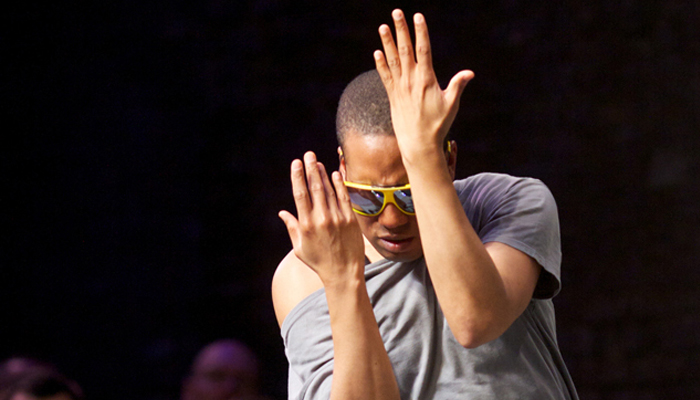
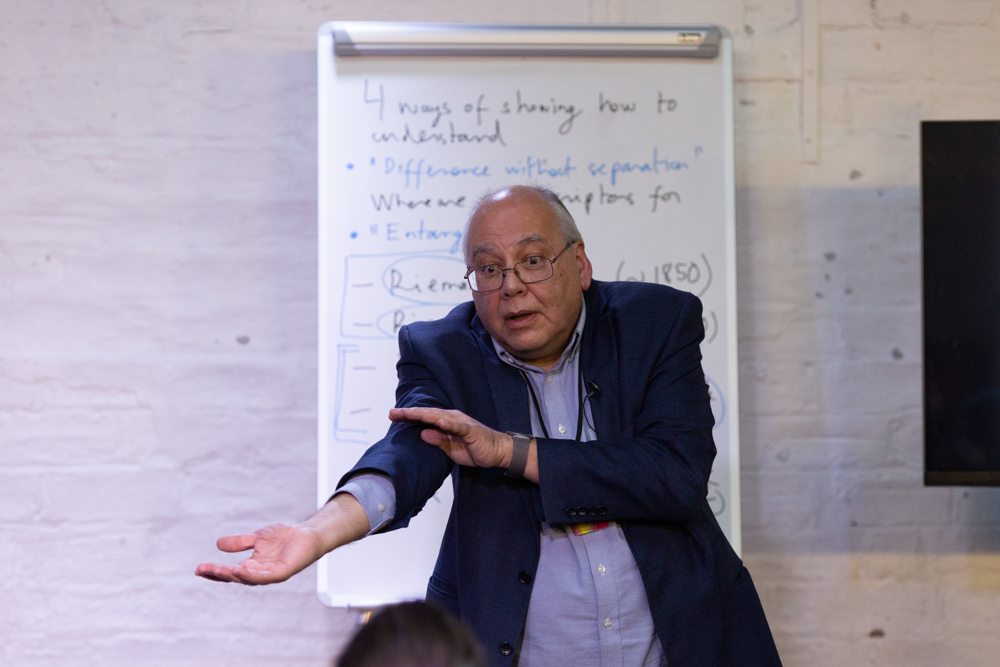
Fernando thinks that when maths is deep, it should be simple and able to be explained by hand gestures. By embodying ideas, we’re able to more clearly think about their cultural implications.
Arika have been creating events since 2001. The Archive is space to share the documentation of our work, over 600 events from the past 20 years. Browse the archive by event, artists and collections, explore using theme pairs, or use the index for a comprehensive overview.
Fernando thinks that when maths is deep, it should be simple and able to be explained by hand gestures. By embodying ideas, we’re able to more clearly think about their cultural implications.
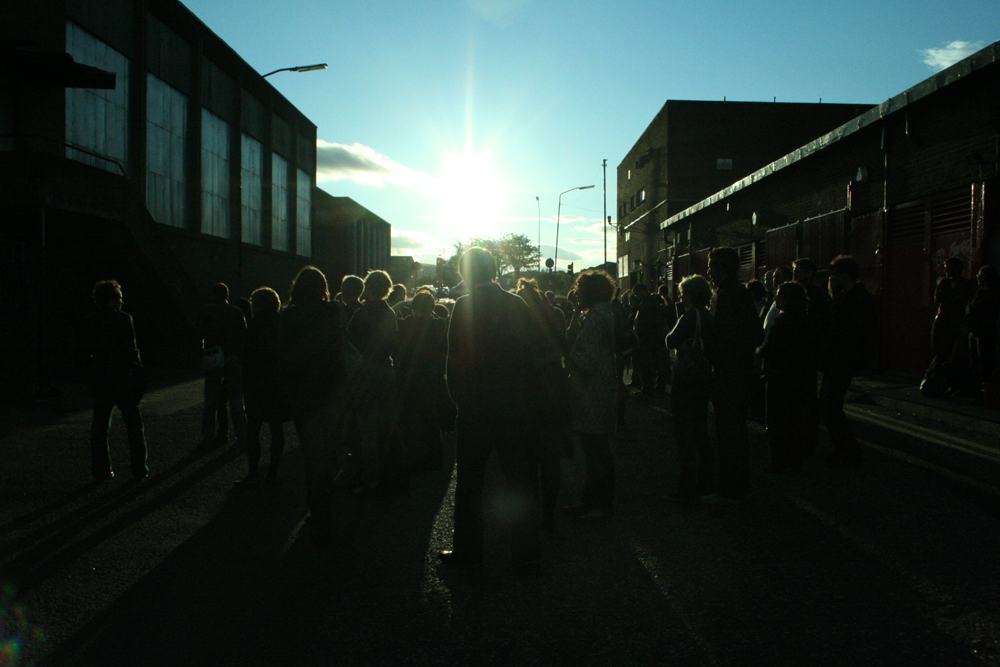
Location: Around and about the old public library in Easterhouse; disinvested in and left to rot by the council but which was shamelessly, hastily and superficially cleaned by them in expectation of our event.
A dense materialist experience at the limits of contemporary computer music, drawing on Korean Shamanism and Communism; striving to create a strange new vibration to the world that seems to contain the seed of everything.
Performances of compositions by Jean-Luc Guionnet and others, with Julia Letitia Scott, Iain Campbell F-W, Neil Davidson, Fritz Welch, Liene Rozite, Emilia Beatriz.
The films in the programme take the essential and fundamental building blocks of cinema (combining sound and image through time) screw about with them, interrogate them and cast them anew.
Instead of the one-way monologue of normal performance, what would be the result of an actual collective dialogue? Where would it go?
A meditation on how all of us perform — sometimes reinforcing, sometimes subverting — the shifting categories of gender, sexuality and race.
A multi-speaker, electronic, spacious and spatial performance from Florian Hecker.
What happens when you are engaged in a deep and extended artistic practice that intersects between literature and music, notation and improvisation, sight and sound?
An excavation of the 1805 Lock Hospital in Glasgow. Its official function was to support ‘unfortunate females with venereal disease’, but really what happened was that women and girls were marched in, experimented on, and often never released.
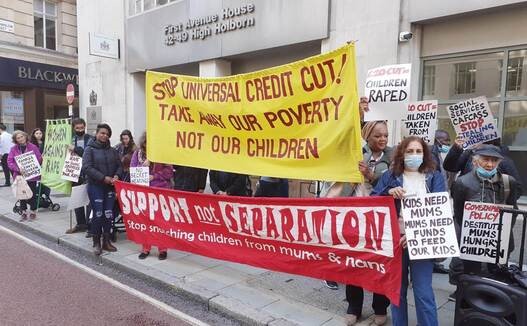
How do grassroots feminist organisations strategise relationships between mothers, parents, carers and their children based on respect and empowerment, in resistance to the practice of putting children in often the most uncaring of places – care.
How do poetry and maths stitch together pictures of our fractured situation from its wreckage and relics, from the debris of hope and the well of residues that make us what we are?