B-52
Hartmut Bitomsky
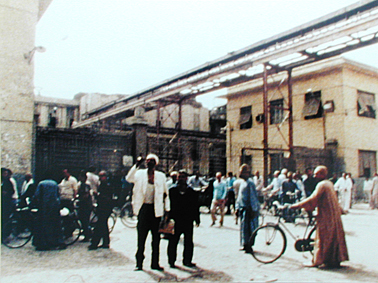
Hartmut is going to talk a little about his work at large and the politics of how his films are constructed. And we’ll screen one of his best films: B-52.
Arika have been creating events since 2001. The Archive is space to share the documentation of our work, over 600 events from the past 20 years. Browse the archive by event, artists and collections, explore using theme pairs, or use the index for a comprehensive overview.
Hartmut is going to talk a little about his work at large and the politics of how his films are constructed. And we’ll screen one of his best films: B-52.
Each organ is unique. The project is to find out what makes it unique.
Film and sound stripped of ‘content’ and experienced spatially, to be looked at not on the screen but in the space of the gallery
The first of two short film programmes featuring works that blur the boundaries between music and film from artists who cross and redefine those long held divisions. This programme focuses on the forebearers of filmic and musical innovation over the last 70 years.
A film performance about Guy then, and Guy now, as a metaphor for the passing of time, which of course all film is inherently about.
Location: between: the abandoned site of Parker House (ex-council office building) that became a student accommodation regeneration project, off the Dudhope roundabout; Bell Street Car Park entrance ramp and; the awkward (and otherwise used/ used otherwise) space left over between the back of Tesco’s and DW Sports on the Murraygate.
Percussion used to explore the social construction of space
Sound and image slipping out of synch and into discord, the programme includes (in London at least) a very special version of Hollis Frampton’s masterful (nostalgia) with a live narration by Michael Snow.
Setting up a minimal procedure to explore the interaction between a person and the (documentary) film/ video process. What initially seems simple ends up contrarily distanced and intimate, public and private.
UK conceptual/ drone/ noise artist, who is seriously posing what might seem to be unanswerable questions of music.
The Echo project is an installation as audio guide for a crowd. And at the same time it’s a private conversation: with you, as one of 20 people in a room, a sort of public intimacy.
Post consideration and post rationalisation… How do we think about experimental music and film after the performance?