Genocide’s Wake
Genocide’s Wake
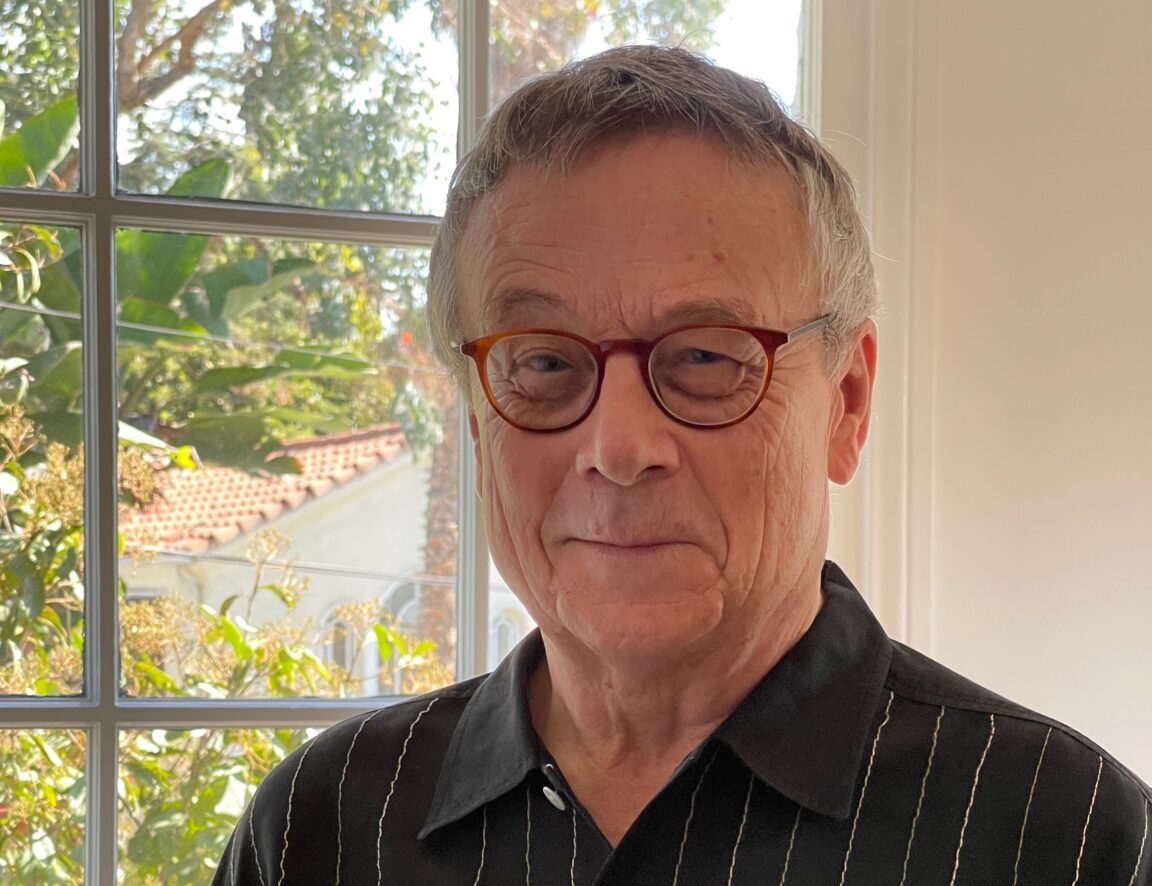
David is a poet, playwright, writer and a member of the Advisory Board of the US Campaign for the Academic and Cultural Boycott of Israel. Hanine is a leading Palestinian scholar, who writes about European antisemitism, settler colonialism and religion, including Christian Zionism. They’ll talk about the history of Zionism, Europe, states, individuation and solidarity.
The event will feature a short talk by David, followed by one from Hanine, and then a conversation together with members of the Beniba Centre and the Scottish Universities Jewish Staff Network.
Nick Mirzoeff was originally going to take part in this event, but is now unfortunately is unable to join us.
Overview
Genocide’s Wake – a conversation with David Lloyd
Presented with the Beniba Centre for Slavery Studies
“Genocide aims to abolish the life in common in which the atomized self-for-itself was unknown. What remains is the diminished fragment of shattered life, the wreckage cast up on the shore after the storm. Its loneliness is the longing for a collectivity that its very survival in the form of the individual forecloses. And beyond the terror of awaiting at every moment the sudden arrival of one’s own death is the abyss in which every person, every relation, every document or dwelling, every loved and shared place that might have borne witness to one’s existence and one’s passing will have been obliterated.”
This is a quote from Genocide’s Wake , one of a series of crucial articles David has written recently for Communis Press. For us, this quote stands in for so much of David’s thought, combining anti-colonial, anti-Zionist Palestinian solidarity—‘fragmented’ indexes his engagement with Nadera Shalhoub-Kervorkian and her writing—along with a critique of the regimes of the ‘atomised self’; the solitary confinement of individuation, the person, the proper and property, drawn from David’s entanglements with Black Studies thinkers and friends of Arika like Fred Moten, Hortense Spillers, Denise Ferreira da Silva.
David will speak about and share some of the thinking from these vital pieces during this talk.
The Thousand-Year Crusade for Palestine – conversation with Hanine Shehadeh
From crusading violence through the Protestant Reformation to French Republican nationalism, Hanine Shehadeh shows how Christian Europe built its idea of sovereignty, honour, and belonging by casting Jews and Arabs as its constitutive opposites—a redemptive formation that gradually racialized Western Christianity itself. Shehadeh argues that this Zionist Christian formation is the foundation of Western modernity.
It is from within this history of Zionist Christian formation, not against it, that Jewish Zionism emerges at the close of the nineteenth century. Reading the French Revolution alongside Napoleon’s campaign to conquer Palestine, Shehadeh argues that Jewish Zionism absorbed the colonial-racist terms of European modernity—accepting the diasporic Jew’s alleged degeneracy and proposing redemption through empire in Palestine. The State of Israel emerges, in this light, not as a refuge from European history but as its most durable export.
“Why has Palestine occupied such a powerful place in the Western imagination for centuries? In The Thousand-Year Crusade for Palestine, Shehadeh offers a brilliant and provocative historical reading of this question, tracing a thousand-year genealogy of Christian conquest, redemption, and civilizational identity. From the Crusades and the Reformation to Zionist Christianity and the modern settler state, Shehadeh reveals how Palestine became a stage on which Europe repeatedly imagined its righteousness—and how restoration of the Jew became part of that enduring Christian drama. With remarkable historical vision and conceptual ambition, Shehadeh brings into view connections that have too often remained fragmented, offering a striking new way of understanding Zionism within the longer history of Western modernity and its relationship to Palestine. Timely, original, and compelling, this is a book that demands attention.” Nadera Shalhoub-Kevorkian
ReadBIOS
David Lloyd is and Irish-born critic, poet and dramatist, and has worked on postcolonial and settler-colonial theory and cultural critique, race and aesthetics, and poetics. Recent critical books include Under Representation: The Racial Regime of Aesthetics (2019), Irish Culture and Colonial Modernity, 1800-2000 (2011), and Rage, Shame and Dread (Seagull Books, 2026). Poetry and drama collections include Arc & Sill: Poems 1979-2009 (2012); The Harm Fields (2022); The Bone Wine (2025); Archepelago (2026) and The Press, Shelter and The Pact: Three Plays (2025). He is a founding member of USACBI, and his articles on Palestine include “Settler Colonialism and the State of Exception: The Example of Israel/Palestine,” Settler Colonial Studies 2.1 (2012); “Redemptive Constellations: Irish-Palestinian Relays in Emily Jacir’s ‘Notes for a Cannon’”, Third Text (2020); “From the Critique of Violence to the Critique of Rights,” Critical Times, 3.1 (April 2020), and “Israel’s Cultural Bomb”, Social Text 43.2 (2025). He is Distinguished Professor of English Emeritus at the University of California, Riverside.
Hanine Shehadeh teaches and writes about modern Arab histories and intellectual history. She has a particular interest in theories of European antisemitism, Zionism, settler colonialism, and religion—including theories of nationalism, race, and militarism. She completed her PhD in Intellectual History at the Department of Middle Eastern, South Asian, and African Studies (MESAAS) at Columbia University.
The Scottish Universities Jewish Staff Network brings together Jewish staff and researchers in HEI across Scotland who share core commitments to justice and equality.
Seeks to nurture thoughtful approaches to addressing antisemitism and interconnected anti-racist struggles, while fostering intercommunal solidarity.
Recognizes that antisemitism needs to be addressed as a form of discrimination alongside other forms of discrimination including anti-Palestinian racism and Islamophobia, and tackled with socially and historically informed approaches.
Agrees with scholars, Rabbis, Holocaust survivors, leading universities, Jewish organisations, human rights and legal experts, the lead author of the “IHRA definition” himself, that the IHRA definition should not be adopted by institutions, is counter-productive, discriminates against many including Jews, and/or has led to a range of deeply concerning negative impacts.
Grieving with all those impacted by the genocide in Israel/Palestine, the JSN is alarmed by the conflation of Jews and Judaism with radical ultra-Zionism in order to justify extreme state violence, killing, dehumanisation and racism against Palestinians. It is also alarmed by the unprecedented repression against those who stand in solidarity with Palestinians. Challenging unfounded and politically weaponised allegations of antisemitism, and opposing any manifestation of actual antisemitism, the JSN seeks to encourage joint political reflection and action against any form of racism and related atrocities and crimes.
The Beniba Centre‘s mission is to support public events, academic research, and education initiatives which focus on the study and critical analysis of the history of slavery and its legacies in the modern world. Since inception, our focus has expanded to also include other areas of Black and Indigenous studies as well as for advocating for people in the Global Majority. We are a group of researchers and educators working on a range of different facets of the history of slavery, critical heritage and cultural studies, and the legacies of race and empire. Working across history, archaeology, literature, music, museums and material culture, we are dedicated to adopting an interdisciplinary approach to slavery studies.
Access
Not Step Free
There is not step free access into the lecture theatre located in room 108. Further information about venue access is available here
See general Access information for Episode 12: From the Rivers to the Seas event
Artists