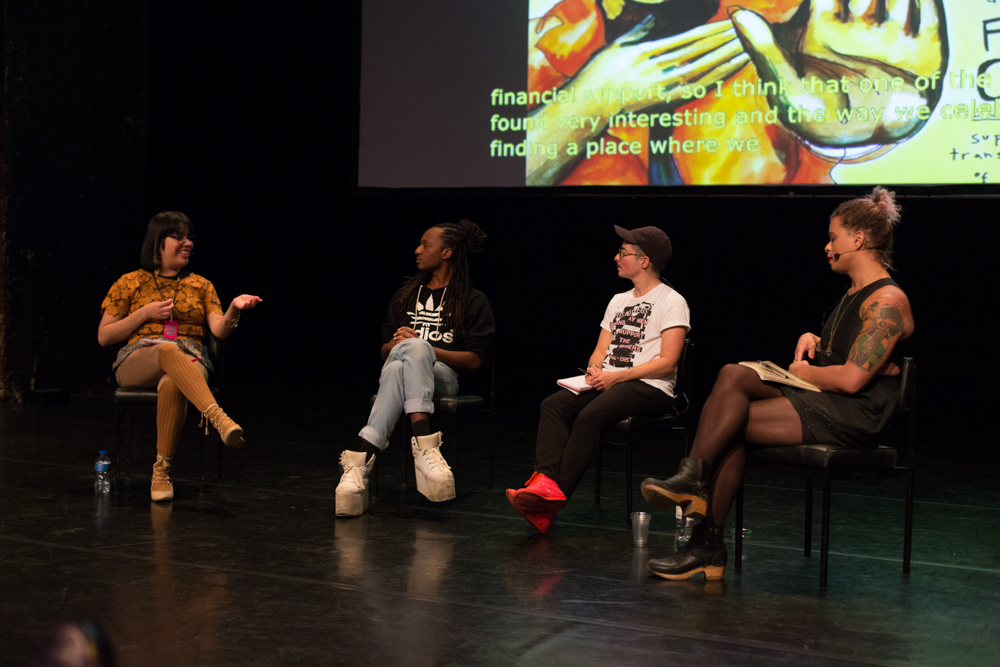
Miss Major in conversation with Eric A Stanley
Eric A Stanley Miss Major
A conversation of intergenerational trans-resistance and anti-racist fierceness between two of the most inspiring public speakers we know.
Arika have been creating events since 2001. The Archive is space to share the documentation of our work, over 600 events from the past 20 years. Browse the archive by event, artists and collections, explore using theme pairs, or use the index for a comprehensive overview.
A conversation of intergenerational trans-resistance and anti-racist fierceness between two of the most inspiring public speakers we know.
Emotional fantasies, towers of cakes, identity troubles, collapsed distance and time and Samuel R. Delany’s rarely seen 1971 film The Orchid.
The final iteration of Arika’s INSTAL festivals, the 2010 edition was an experimental festival of experimental music – 3 days of events at the Tramway that explored un-average ideas about sound and music.
A solo improvisation using just the situation of the concert: a space, a PA, Mattin’s own thoughts, you, the audience.
The first performative part in a game of chance and endurance as actor Tam Dean Burn constantly broadcasts for 24hrs.
Sound and image slipping out of synch and into discord, the programme includes (in London at least) a very special version of Hollis Frampton’s masterful (nostalgia) with a live narration by Michael Snow.
A collaborative performance where sound and image are created, performed and mediated by light, water and glass.
A concrete walkway ending in mid air, a ridiculously tight squeeze between three office buildings and various other sites of Labour politician and council leader T. Dan Smith’s modernist regeneration projects and ‘slum clearances’ of the 1950’s and 60’s.
A 101 panel on sex work in Scotland, hosted by National Ugly Mugs, Sex Workers Union, Scotland for Decrim (Decrim Now) host
A recorded a conversation that grounds the Episode, exploring Ailton Krenak’s thinking and distinct poetics of life; as it work against capitalism and fascism, as a denunciation of political alliances, and maybe even of ‘politics’.
Taking a scalpel to the relationship between performer and audience: cutting something out to see what’s left, a drastic subtraction and shift of emphasis.
When one calls a strike, who hears the call, who attunes and listens to it? How to listen to the call of a strike? What prevents one from hearing this call or stops one from listening to it?