Evil Nigger
Julius Eastman
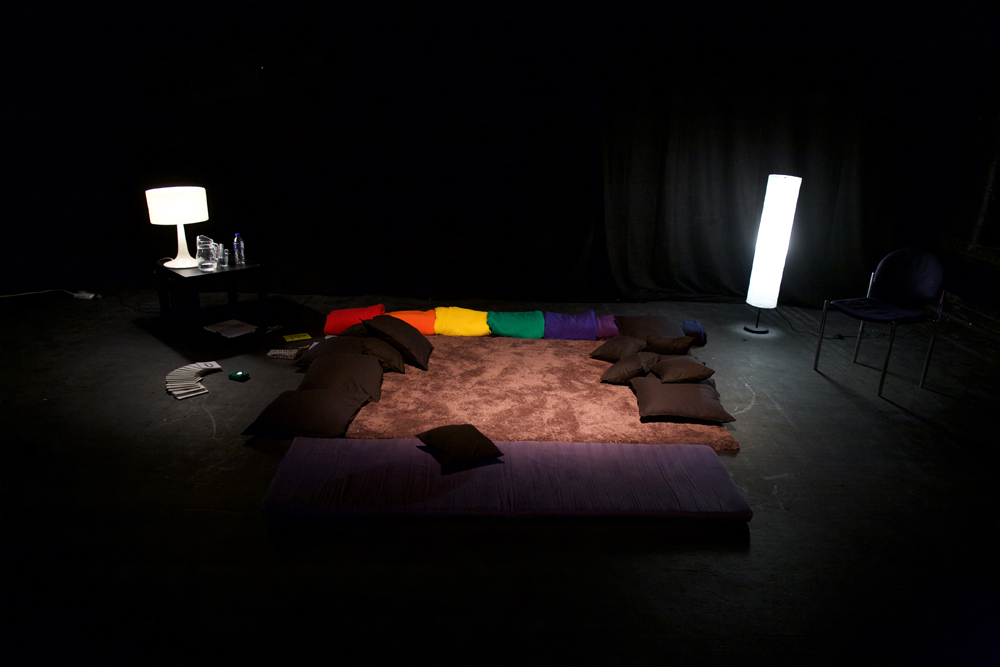
Julius Eastman’s Evil Nigger for 4 pianos performed by Joe Kubera, Kate Thompson, David Murray, Alan Fearon and Simon Passmore.
Arika have been creating events since 2001. The Archive is space to share the documentation of our work, over 600 events from the past 20 years. Browse the archive by event, artists and collections, explore using theme pairs, or use the index for a comprehensive overview.
Julius Eastman’s Evil Nigger for 4 pianos performed by Joe Kubera, Kate Thompson, David Murray, Alan Fearon and Simon Passmore.
A 100 strong Feral Choir of people who’ve never improvised with their voices before, conducted by composer Phil Minton.
Post consideration and post rationalisation… How do we think about experimental music and film after the performance?
Beyond time, colorlines, ability, and sexuality, a movement exploration into what it means to see and be seen, how hearing contrast with what is actually being heard.
Can a collective performance of NourbeSe’s poem of black life as it exceeds containment enact alternative forms of selfhood that emerge in and out of African diasporic experience?
The club as a community and a site for performed politics: deep/ queer house, vogue femme, lipsync and ballroom.
A sort of prayer and conference, a sort of scream and dialogue – a monologue and declaration at the time, addressing how we can build complicity with one another.
Jarrod Fowler and Christof Migone kick things off with performances involving edible plants, a saw, dandruff, and Christof responding to the prompt: “as far as you can for as long as you can.”
Daniel Carter & Sabir Mateen’s trio with percussionist Andrew Barker; incessantly driving forward through sweat-drenched bursts of pure ecstatic freedom.
A cast of pioneering and provocative spirits who exist outside the mainstream, between borders and definitions; a series of events that each explore different aspects of music that doesn’t quite fit any given category. INSTAL 08 included the Self-Cancellation project.
African American history, avant-garde jazz riffs and activism intertwine in experimental verse of extraordinary and affecting beauty that has to be heard.
Includes: street portraits of kids in 1930’s Dakota, a mysterious foggy pilgrimage, a swarm of time-lapsed consumers, a stereoscopic analysis of mill life, up close and personal in a Lighting Bolt mosh pit.