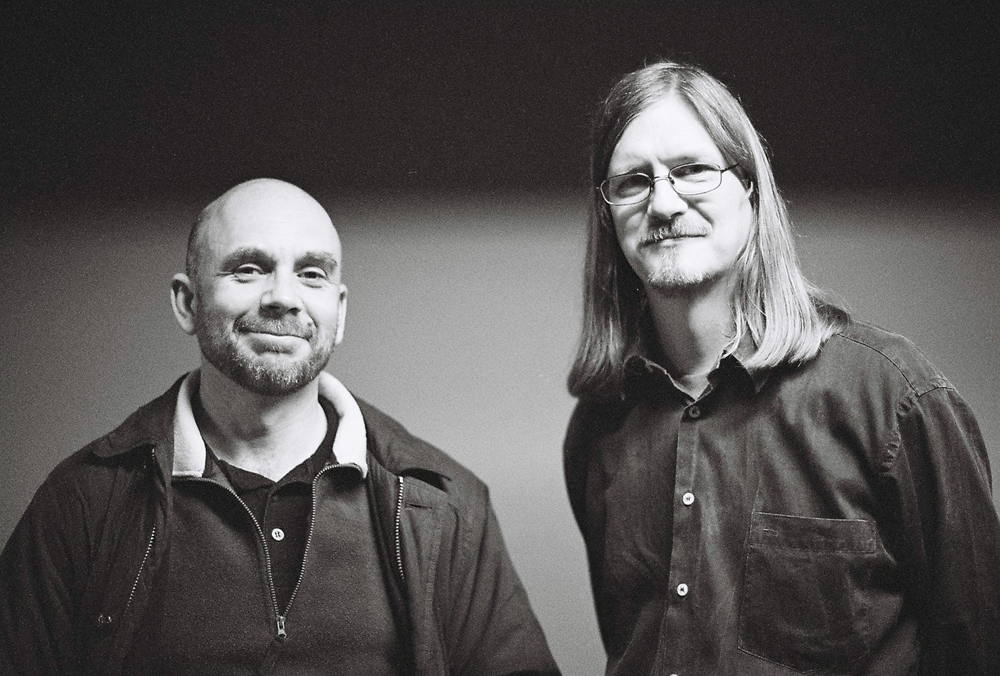
Klaus Filip & Radu Malfatti
Klaus Filip Radu Malfatti
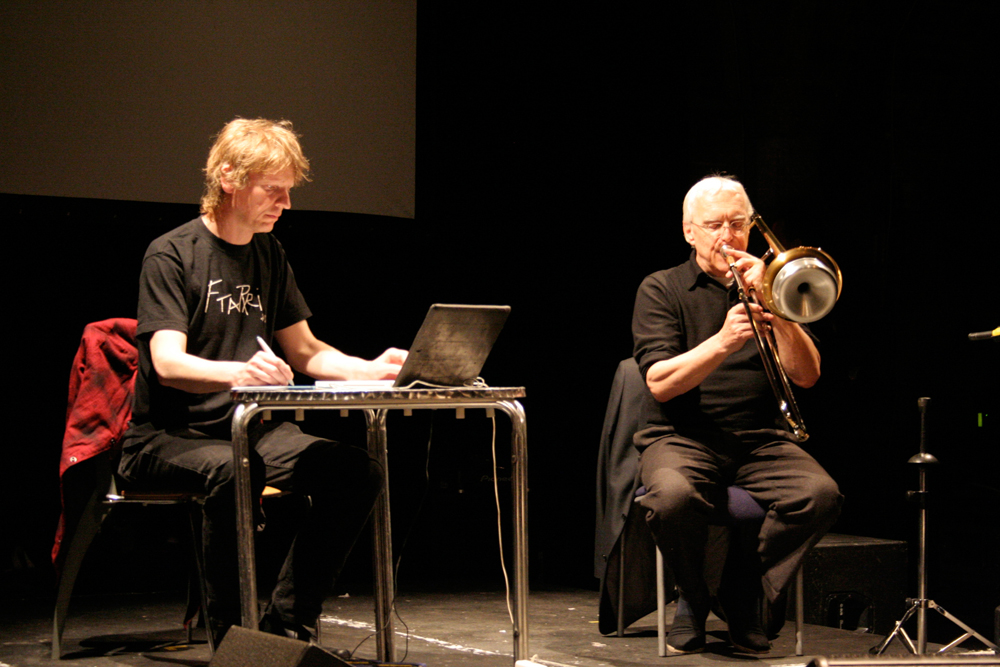
Radu plays a trombone, Klaus creates pure sine waves: they sound on their own, or sometimes together and often with considerable space and silence.
Arika have been creating events since 2001. The Archive is space to share the documentation of our work, over 600 events from the past 20 years. Browse the archive by event, artists and collections, explore using theme pairs, or use the index for a comprehensive overview.
Radu plays a trombone, Klaus creates pure sine waves: they sound on their own, or sometimes together and often with considerable space and silence.
Now a two day festival, INSTAL 04 was borne of a desire to open eyes, challenge audiences and expand musical horizons. This was also the year in which a certain representative from Corwood Industries made his first ever live appearance.
Repetitive, mesmerizing rhythmic workouts, to pieces of stark and rigorous introspection, where notes picked and slid in isolation, scatter like mercury around the listener.
Transfeminist, communist, revolutionary poetry that refuses to flinch. Nat Raha presents new work in the nine.
A public gathering that brings together local artists, musicians, activists, and community organisers.
A performed lecture concerned with Renaissance occult (musical) thinkers of the cosmic who put forward the notion of the “disharmony of the world”
A recently reanimated Ascension, with mighty Leeds drum hero Paul Hession bringing a dense polyrhythmic torrent into play with Jaworzyn’s reinvigorated piercing guitar.
Glasgow. Free-playing quartet of bass/ cello/ voice from The Glasgow Improvisors Orchestra and Age Of Wire & String.
Includes: street portraits of kids in 1930’s Dakota, a mysterious foggy pilgrimage, a swarm of time-lapsed consumers, a stereoscopic analysis of mill life, up close and personal in a Lighting Bolt mosh pit.
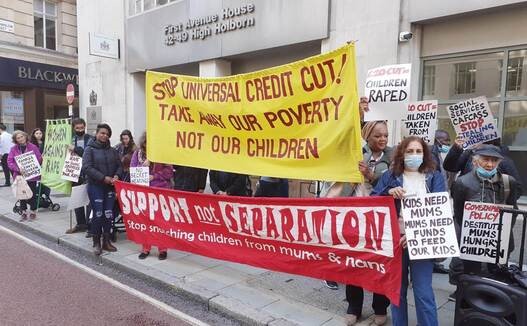
How do grassroots feminist organisations strategise relationships between mothers, parents, carers and their children based on respect and empowerment, in resistance to the practice of putting children in often the most uncaring of places – care.
How does this practice, that simultaneously resists and honours the distinctions between these genres, materials and senses, determine the inhabitation of another: a convergence of aesthetic and social experimentation?
How can we imagine bodies not as an end in themselves, but as a medium through which we can become one another’s means?