Michiyo Yagi
Michiyo Yagi
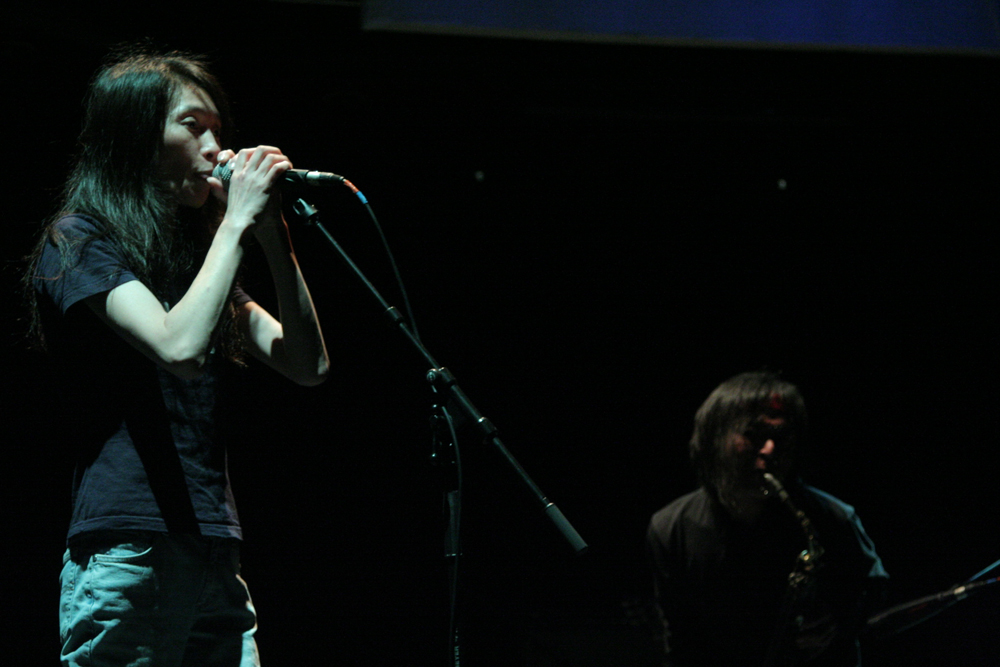
Sometimes delicate, sometimes harsh and jarring, Yagi’s koto solos are as much inspired by Nancarrow or Cage as they are traditional.
Arika have been creating events since 2001. The Archive is space to share the documentation of our work, over 600 events from the past 20 years. Browse the archive by event, artists and collections, explore using theme pairs, or use the index for a comprehensive overview.
Sometimes delicate, sometimes harsh and jarring, Yagi’s koto solos are as much inspired by Nancarrow or Cage as they are traditional.
This programme takes human subjects as the focus for sound and image construction. And it includes a couple of masterpieces of experimental film: Paul Sharits’ deeply empathetic interpretation of epilepsy and Peter Kubelka’s Webern inspired abstract portrait of Arnulf Rainer.
Solo performance on bass clarinet, jaw harp & voice by Arrington De Dionyso.
In rethinking the body, the law, the state, gender, race, violence, care and empathy, how we might give humanness a different future?
A freestyle performed conversation for bodies and voices – with the Queen of Krump, the master of Vogue Femme Dramatics and the rising star of Vogue Women’s Performance.
Four perspectives from people involved in different anti-capitalist and anti-racist struggles, considering how ideas of ‘ending’ have shaped their political thinking and praxis.
Bringing together artists working with music, sound, film and the moving image, KYTN 2008 saw performances, improvisations, screenings and installations over three days at DCA.
An immersive environment where sound is looped through oscillators, radio, guitar pick-ups and video amps to create dense strobing images and colours
Using violin and cello the duo map out a twilight sonic world that seems to tread the faultlines between improvisation and composition.
A chat with Eugene Thacker. Can we rethink the world as unthinkable, and without us?
Akio Suzuki and John Butcher performing by the Stones of Stenness, instead of the Ring of Brodgar, because of bad weather.
Can a collective performance of NourbeSe’s poem of black life as it exceeds containment enact alternative forms of selfhood that emerge in and out of African diasporic experience?