Wadada Leo Smith & John Tilbury
John Tilbury Wadada Leo Smith
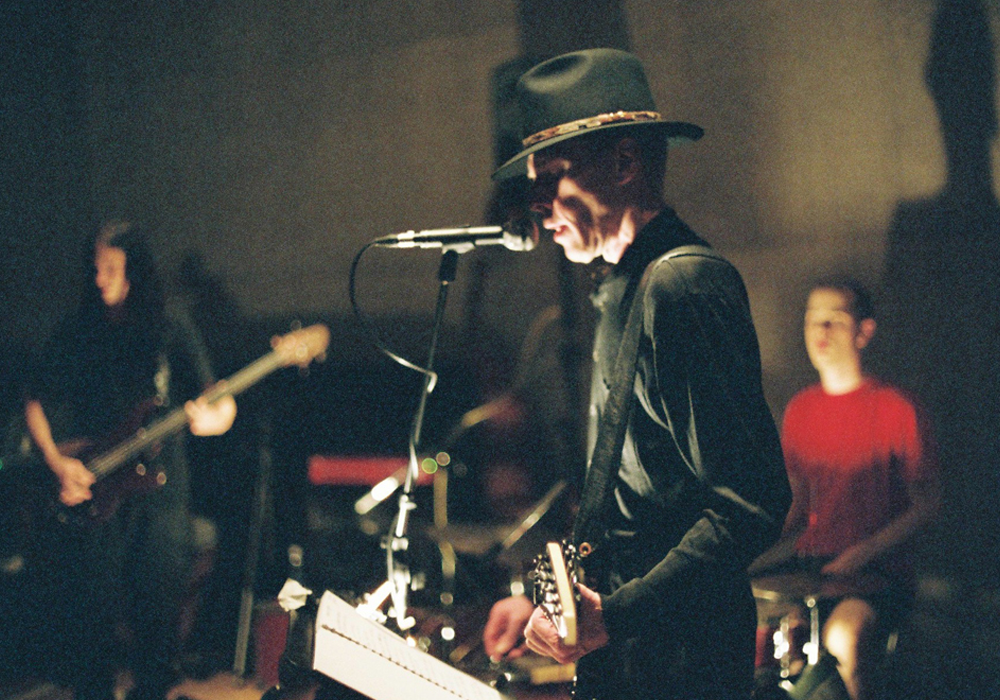
How might two of the great musicians working within contrasting traditions of freedom collaborate? What might this produce: musically, socially, allegorically?
Arika have been creating events since 2001. The Archive is space to share the documentation of our work, over 600 events from the past 20 years. Browse the archive by event, artists and collections, explore using theme pairs, or use the index for a comprehensive overview.
How might two of the great musicians working within contrasting traditions of freedom collaborate? What might this produce: musically, socially, allegorically?
A fulcrum to the Japanese noise scene, JOJO Hiroshige has been responsible for much of the explosion of free music coming from Japan in the last 30 years.
Work that focuses in on the static hiss and background noise of recording and pushes it to the fore.
In Ramayya’s visionary poetry, the body assumes as many forms as love produces states: attraction and repulsion, excitement and exhaustion, selfishness and the dissolution of self.
Harrowing but musical confrontations with the very real, physical and aural trauma of a woman screaming.
Audio signals pass through light bulbs, causing the filaments of the bulbs to sing and crackle in a chorus of electronic static.
A meditation on how all of us perform — sometimes reinforcing, sometimes subverting — the shifting categories of gender, sexuality and race.
Edinburgh. Cask-strength electrohypnol and shroom damaged folk croonings by Lapsed Electronics empire builder.
A trance inducing, flickering investigation of structural and minimalist droning from one of the key thinkers in sound and image over the last 50 years
Inspired by the supernatural horror of H. P. Lovecraft, black metal and a sense of worry as to what constitutes an object, or a world.
Lo-fidelity sheets of parinirvanic mangled tone get driven into oblivion by two longstanding gurus of the Northern England primitivist noise.
When we look, how do we objectify the body; how can we reflect on our (self) image as a construction?