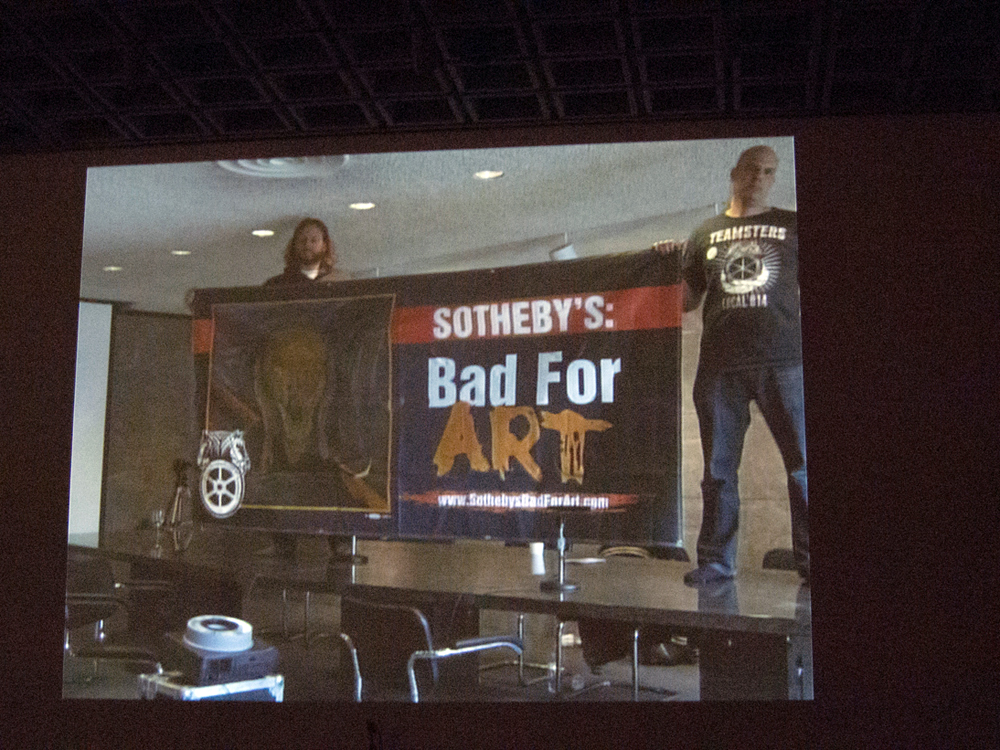
The Indivisible or Inadmissable Committee
When one calls a strike, who hears the call, who attunes and listens to it? How to listen to the call of a strike? What prevents one from hearing this call or stops one from listening to it?
Arika have been creating events since 2001. The Archive is space to share the documentation of our work, over 600 events from the past 20 years. Browse the archive by event, artists and collections, explore using theme pairs, or use the index for a comprehensive overview.
When one calls a strike, who hears the call, who attunes and listens to it? How to listen to the call of a strike? What prevents one from hearing this call or stops one from listening to it?
A tour with John Butcher and Akio Suzuki that set out to allow the audience to experience (and to listen to) the enviroment around them in different way.
(Cyber)feminist, non-essentialist transgender and queer daily radio shows using the formula of morning radio as an arch way of thinking about the scripted behaviour and controlled empathy of systematic care.
Inspired by the supernatural horror of H. P. Lovecraft, black metal and a sense of worry as to what constitutes an object, or a world.
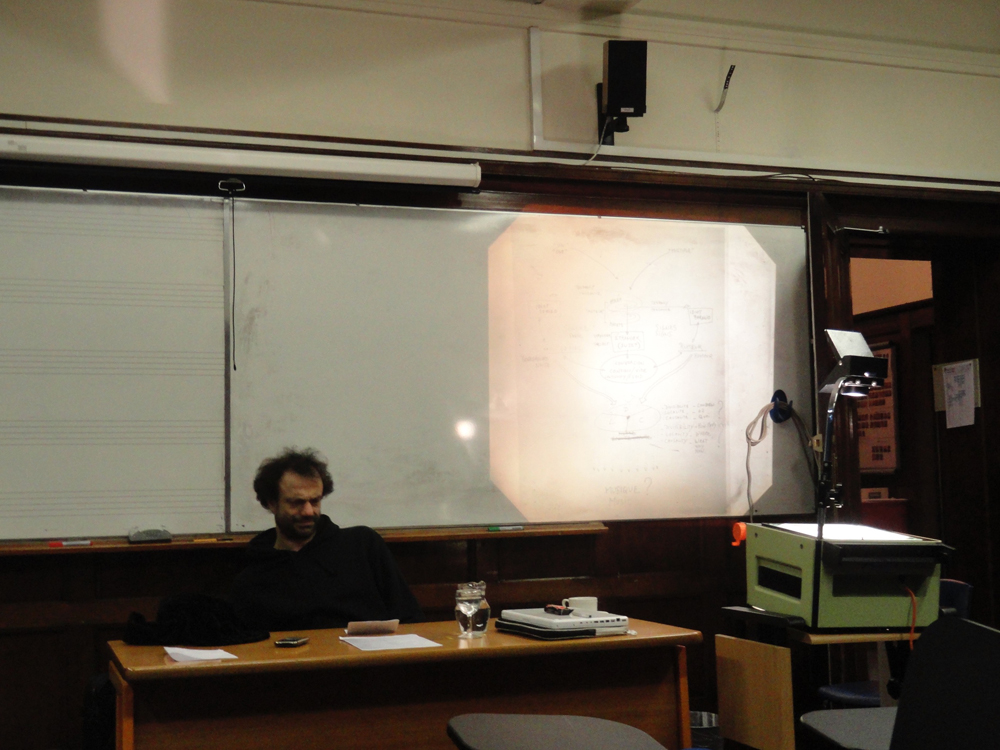
Jean-Luc Guionnet will be giving a talk as part of the music department’s ongoing series of colloquia.
Power-electronic klutz behaviour indecipherable blasphemies, cuts, bruises and broken microphones by Kovorox Sound head-honcho Lea Cummings.
A silent collage of found film footage partially layered with computer graphics to provide a framework in which live music can develop.
An evening of live performances, readings & saucy rococo cakes celebrating the launch of Truth and Lies – An Anthology of Writing and Art by Sex Workers.
The most sophisticated synthetic music around: timbrally otherwise body music as sonified fictions and auditive sociograms.
Four perspectives from people involved in different anti-capitalist and anti-racist struggles, considering how ideas of ‘ending’ have shaped their political thinking and praxis.
Solo organ performance by German composer Eva-Maria Houben, which focuses on ‘nearly nothing’ to expand the way we listen.
Rather than asking the state for services, what kinds of change are made possible when we prioritise people supporting each other?