Shutter Interface
Paul Sharits
Shutter Interface is an expanded cinema piece: a series of machinegun bursts of chromatic relationships and visual harmonics in an overwhelming montage
Arika have been creating events since 2001. The Archive is space to share the documentation of our work, over 600 events from the past 20 years. Browse the archive by event, artists and collections, explore using theme pairs, or use the index for a comprehensive overview.
Shutter Interface is an expanded cinema piece: a series of machinegun bursts of chromatic relationships and visual harmonics in an overwhelming montage
Akio Suzuki and John Butcher performing in an abandoned oil tanker on Hoy.
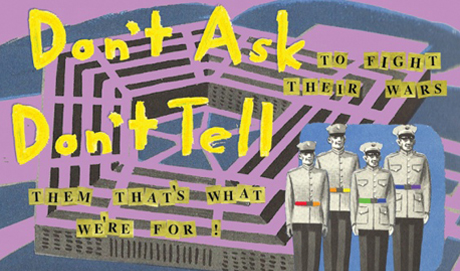
An audio report for the NATOarts board of directors that seeks to promote global security and stability through the exhibition of works of conceptual art.
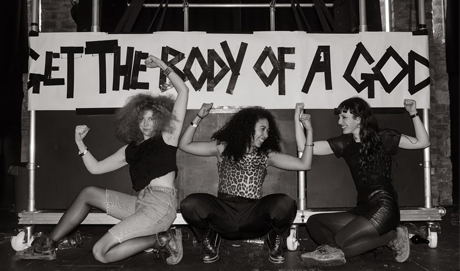
A movement-based workshop on Krump and the politics of how we teach, learn and listen with our bodies. Move with us!
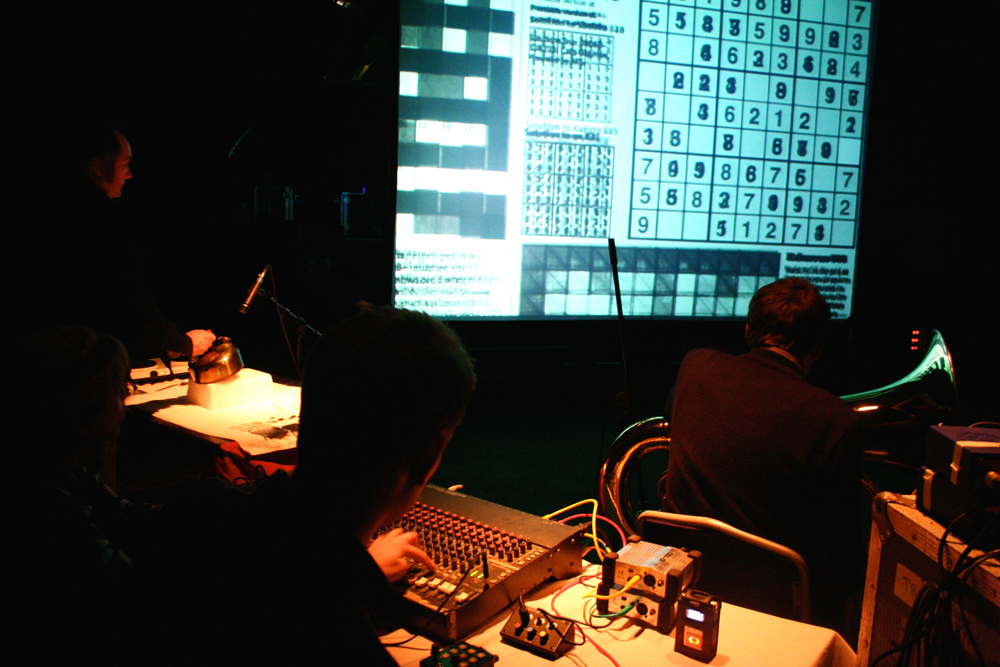
Performance of a Sudoko based graphic score giving rise to a process of self cancellation.
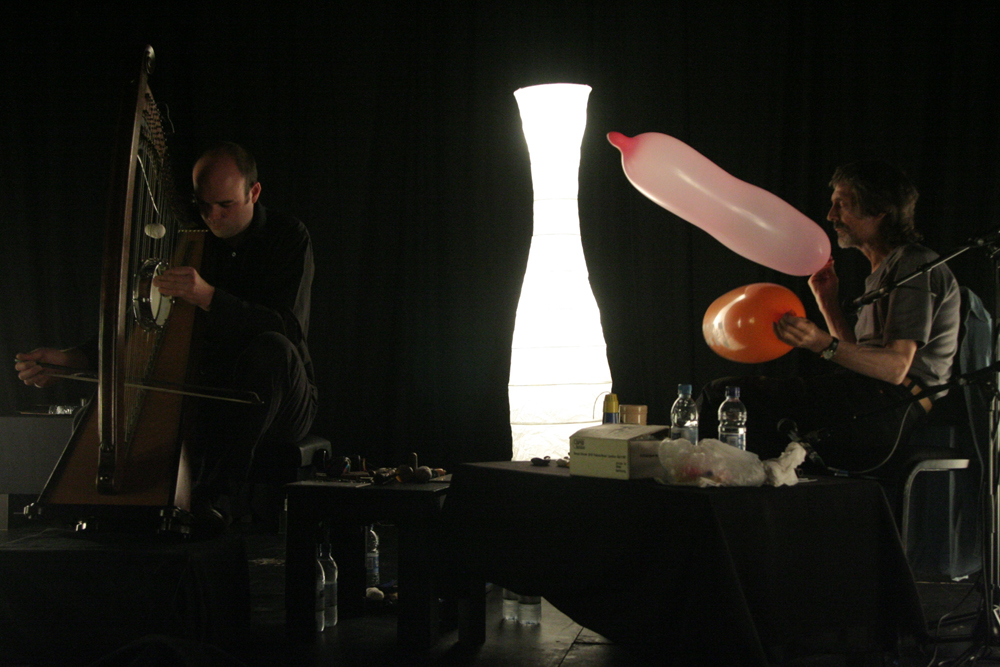
Terry is one of the most entertaining and unpredictable musicians in the London free improvising music scene. Rhodri Davies extends his instrument under a battery of techniques creating sound colours and textures quite alien to the harp.
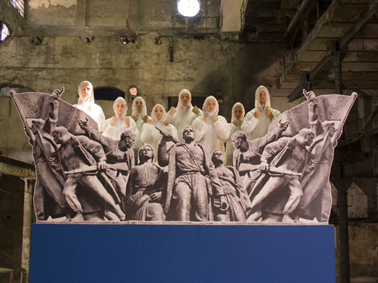
Seven women recite monologues composed from texts from the vibrant years of the Weimar Republic. A kind of cultural echo: an experience of histories brought to the present.
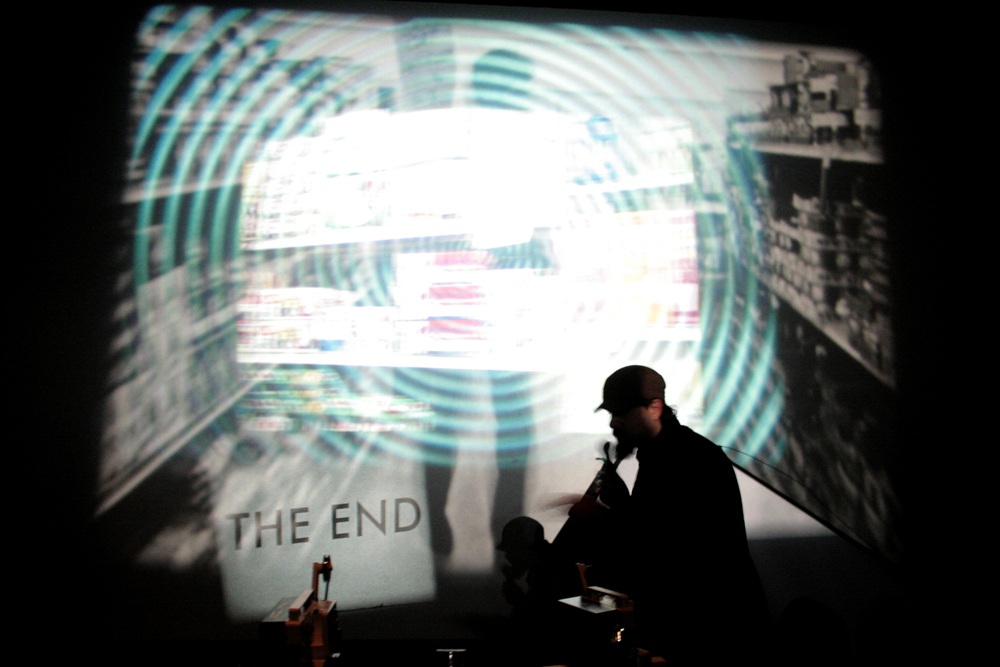
Quasi-theatrical multiple-projector pieces play with the relationship between performers, art and audiences.
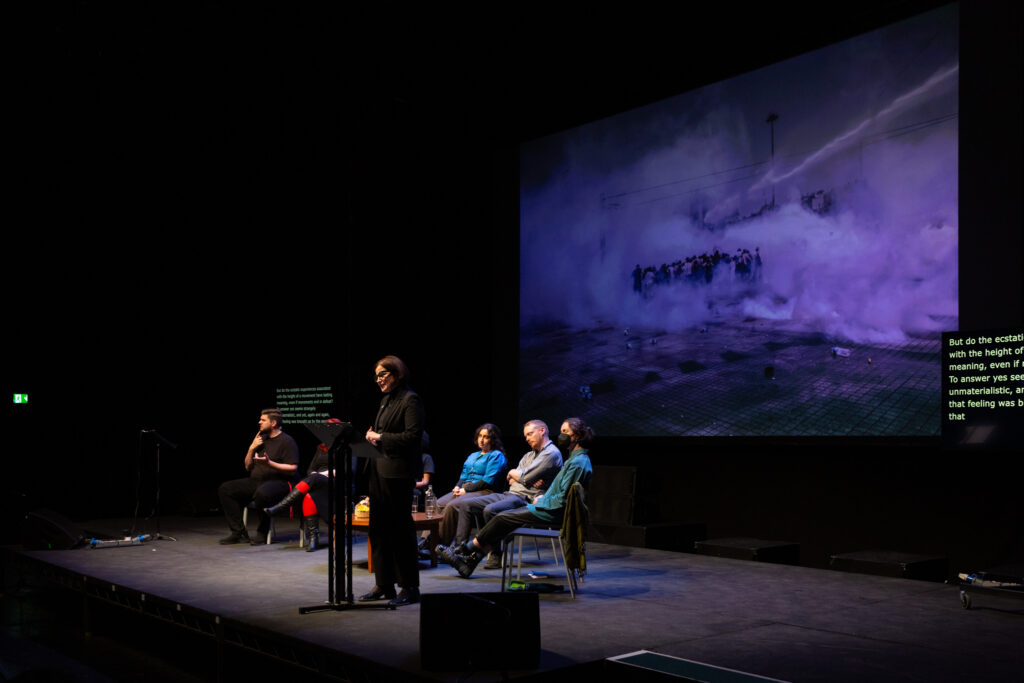
What does it mean to resist seeking assimilation or inclusion within, or let our demands be co-opted by the very systems we seek to dismantle?
A talk entitled ‘The Conquest of the Universe’: which delves into the connections between the underground filmmakers and musicians in New York in the early 1960s
The Songspiels take on a mode of musical theatre developed by playwright Bertolt Brecht and composer Kurt Weill in the early twentieth century, presenting political and social concerns through the accessible and (often funny) form of song.
Four perspectives from people involved in different anti-capitalist and anti-racist struggles, considering how ideas of ‘ending’ have shaped their political thinking and praxis.