Self Cancellation – Sand
Robin Hayward
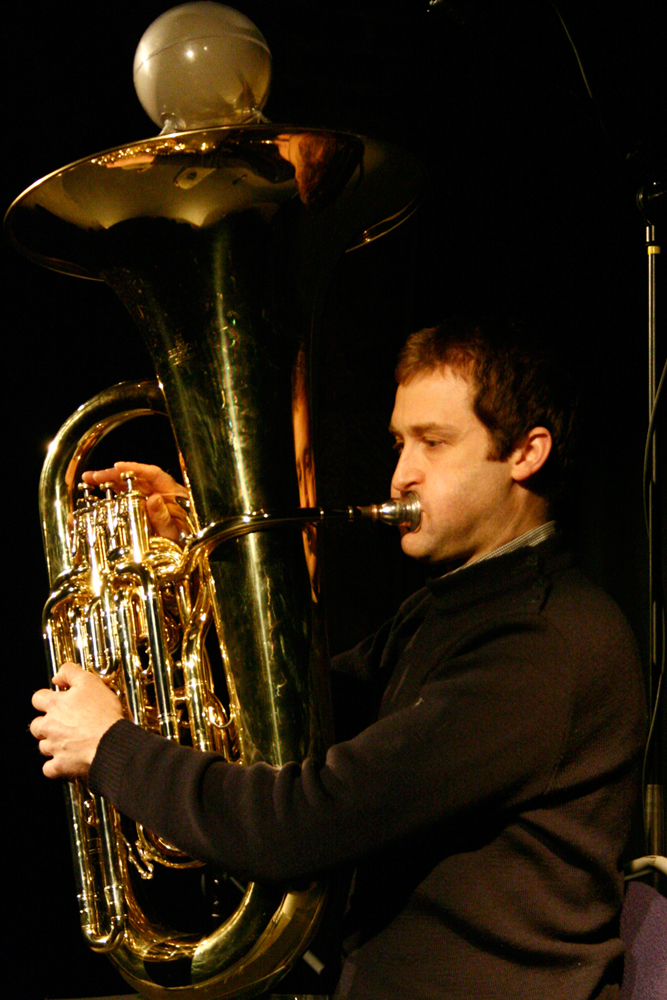
Robin Hayward – exploring the micro-sounds of a tuba, filling slowly with sand.
Arika have been creating events since 2001. The Archive is space to share the documentation of our work, over 600 events from the past 20 years. Browse the archive by event, artists and collections, explore using theme pairs, or use the index for a comprehensive overview.
Robin Hayward – exploring the micro-sounds of a tuba, filling slowly with sand.
Low-end drone guitarage army since 1997: nobody has done more on this occasion by a gaggle of sludge-lovers from the Scottish underground.
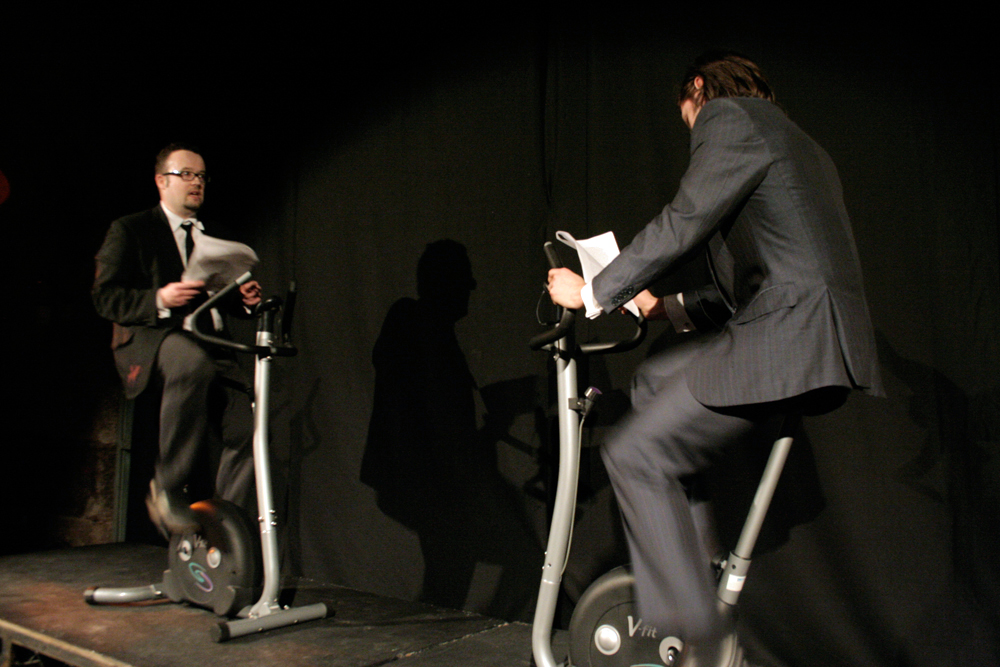
Simon Morris is joined by Nick Thurston as they attempt to read aloud whilst peddling on exercise bikes.
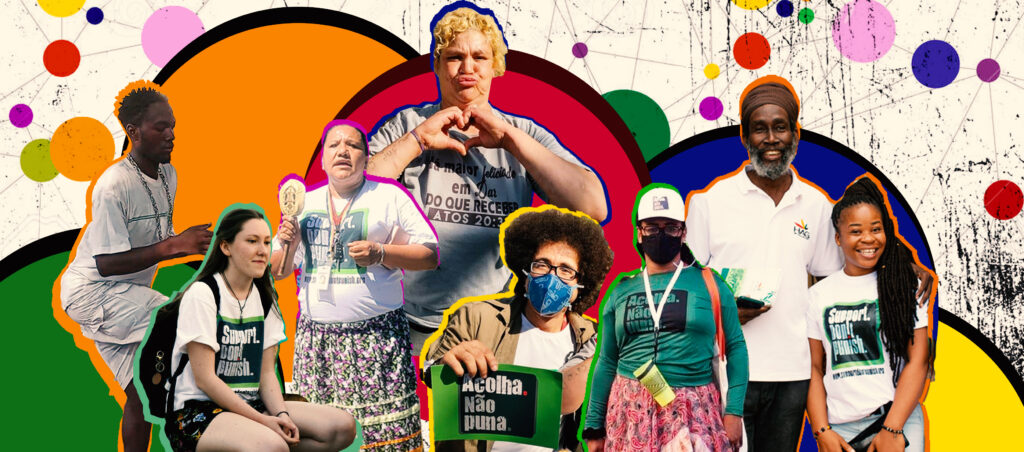
4 days of workshops, discussions and artists presentations exploring the radical act of caring for each other while working to change the world.
Rather than asking the state for services, what kinds of change are made possible when we prioritise people supporting each other?
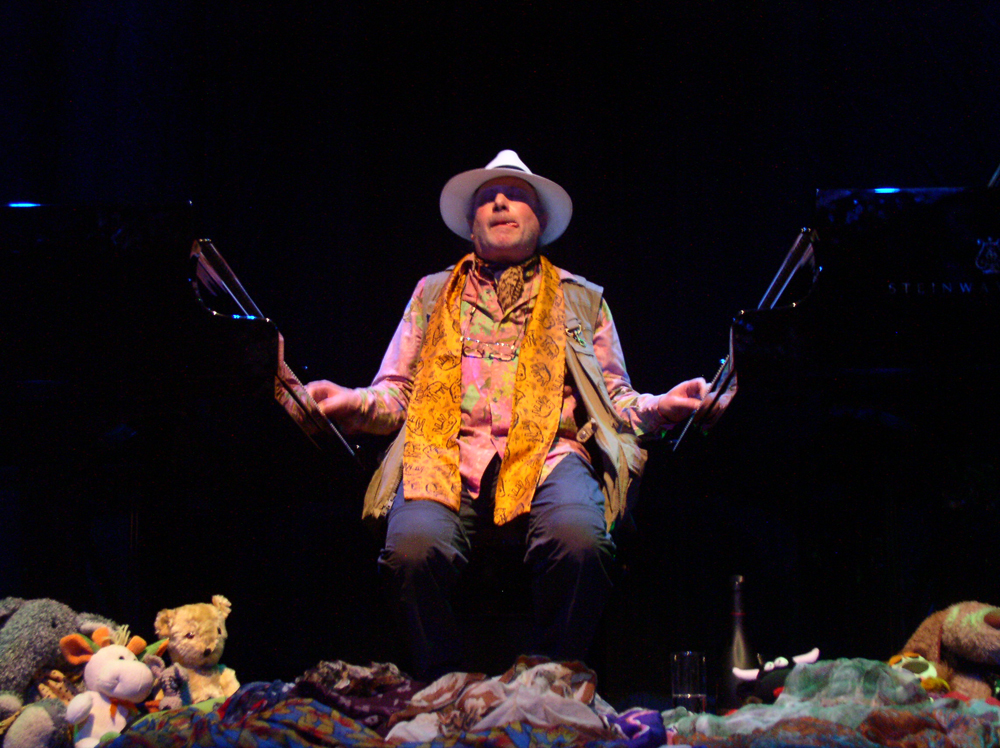
An extravagant debauch of huge pianos, plush toys, cognac and ritual.
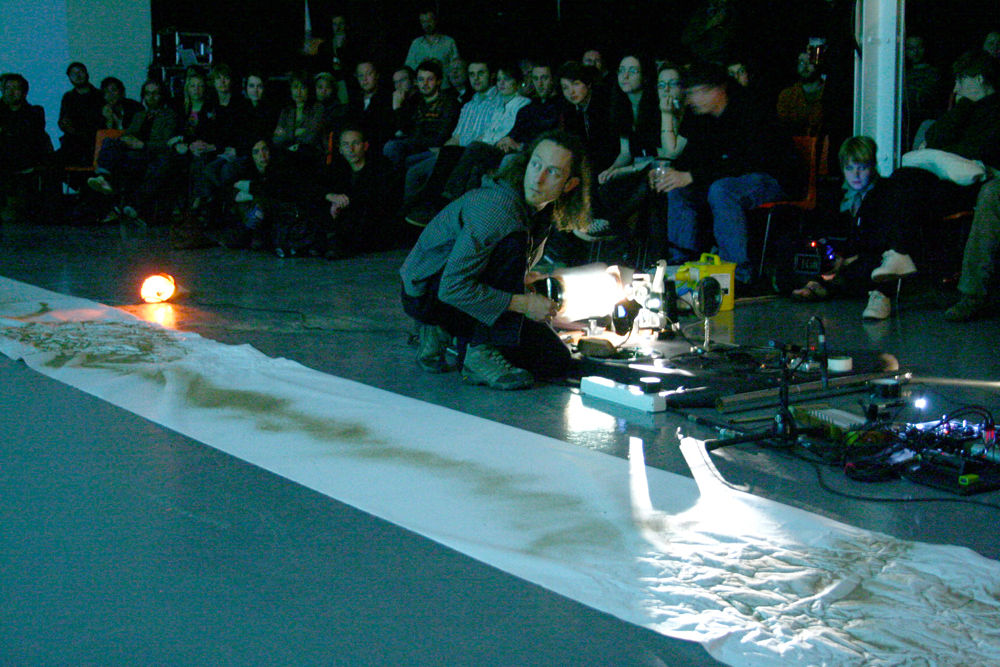
A system in which film is projected onto copper strips, captured again and then re-projected as video, somehow transforming the original imagery into molasses-slow, molten and incredibly tactile flickers of colour and light.
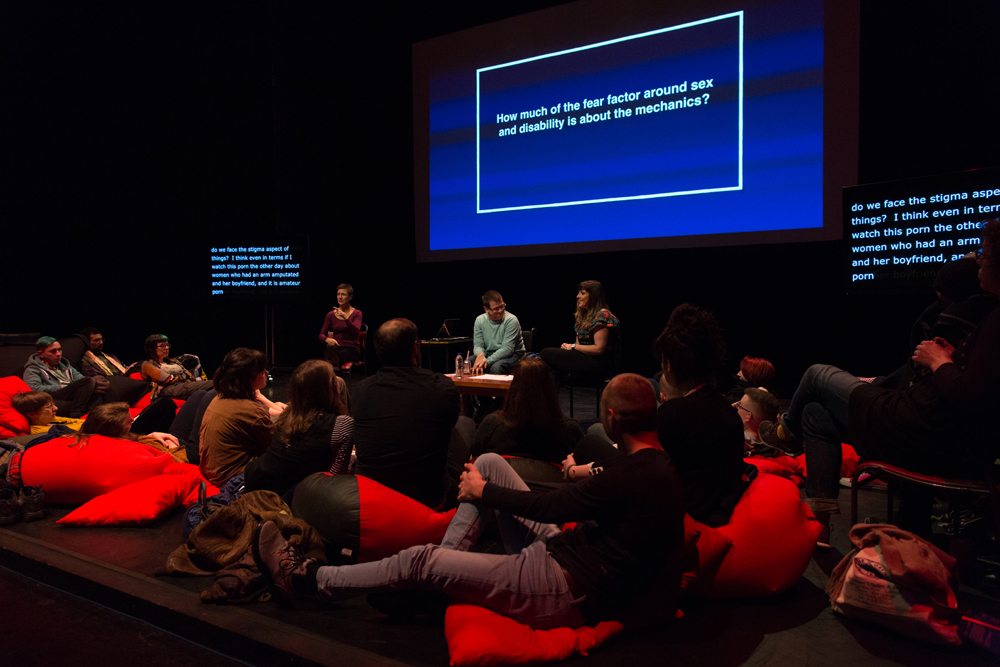
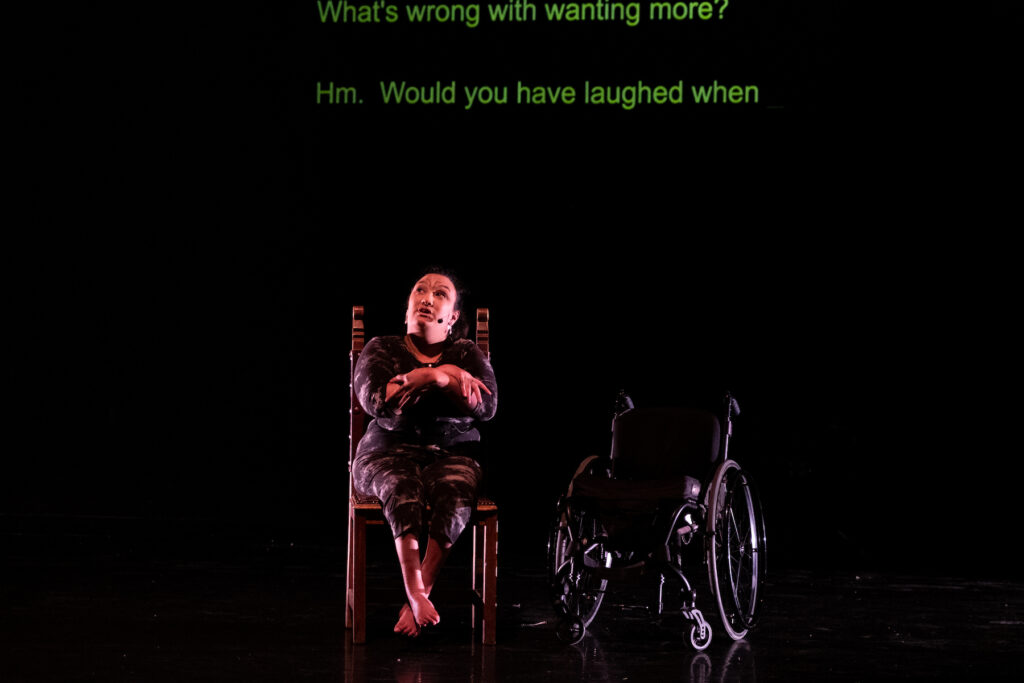
How do people living with disability see themselves in today’s sexualised culture? How do we imagine our crip sexual selves despite society wanting to reduce us to non-erotic bodies?
Dr Gabrielle Hodge shares words on Touching the Future, a Protactile project with John Lee Clark, Soline Vennetier, Issy McGrath, Lisa van der Mark, Kyle Bettley and Jordan Goldman, supported by Arika, kickstarting radical DeafBlind Protactile world-building in Glasgow.
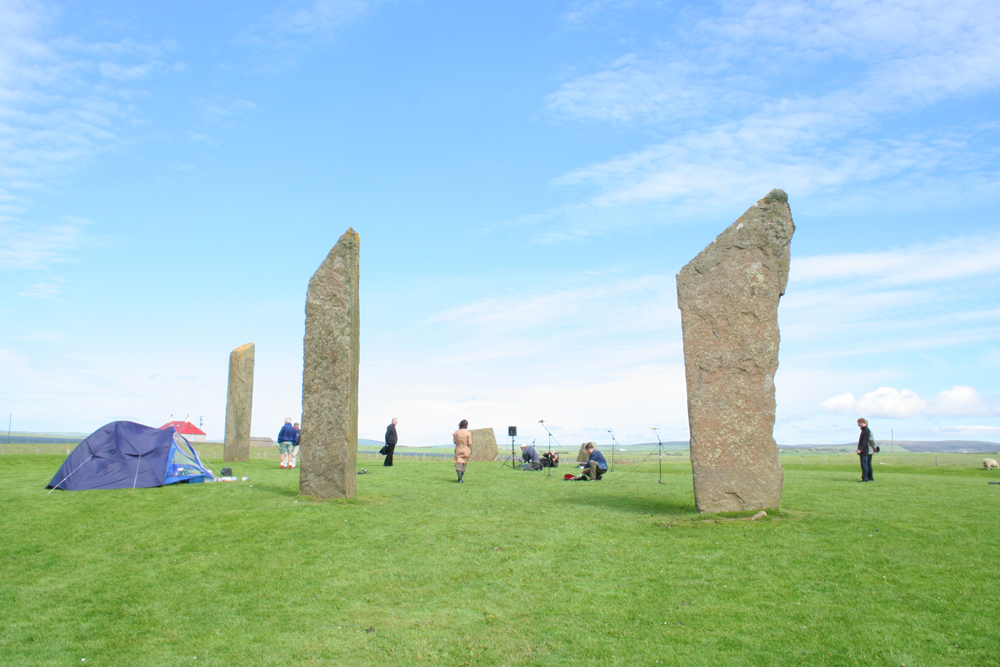
Akio Suzuki and John Butcher performing by the Stones of Stenness, instead of the Ring of Brodgar, because of bad weather.
A sung-through Nubian musical ballet. A darkly humorous take on sexual trauma and what magical and ancestral tools might heal it.
There are core ways in which our listening to the radio differs from other kinds of listening. What happens when we pay attention to how we pay attention?