The Invasion of Thunderbolt Pagoda
Acid Mothers Temple
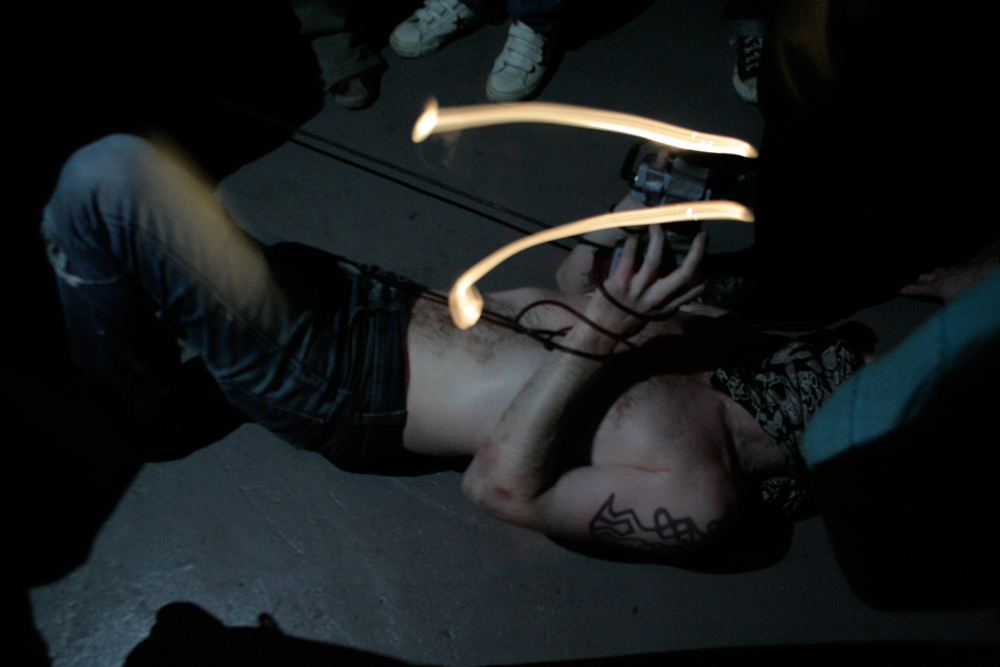
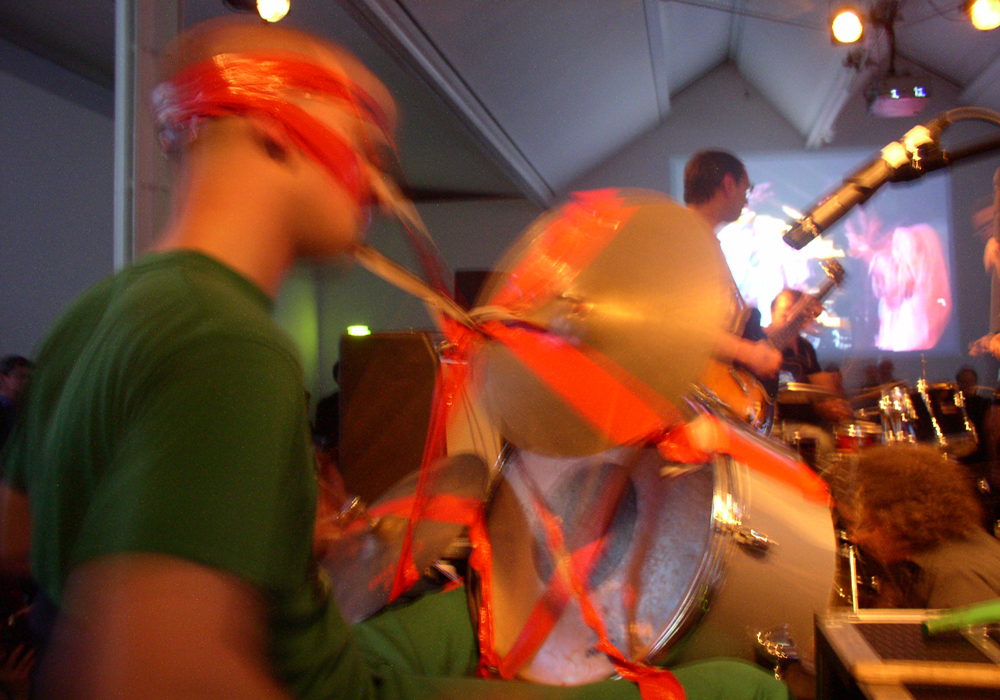
Freak-out group for the 21st century perform a live soundtrack to Ira Cohen’s infamous psychedelic masterpiece ‘The Invasion of Thunderbolt Pagoda’
Arika have been creating events since 2001. The Archive is space to share the documentation of our work, over 600 events from the past 20 years. Browse the archive by event, artists and collections, explore using theme pairs, or use the index for a comprehensive overview.
Freak-out group for the 21st century perform a live soundtrack to Ira Cohen’s infamous psychedelic masterpiece ‘The Invasion of Thunderbolt Pagoda’
Slapstick comedy, monologue, and a kind of live sculpture transformed through video, props, musical instruments and make-up.
A poetic multi-screen performance about “the inadequacy of the arbitrary passing moment and the impossibility of permanence”. About time and change.
Chip will read some of his great literary pornography, which pushes sexuality to the point of extremity and exhaustion.
Free jazz pianist John Blum with an everywhere-at-once presence in duo with Jackson Krall, incendiary free jazz drummer and sound sculptor
Intriguing, underground, Berlin based musicians interested in the borders between music and theatre, language, the visual arts, politics.
Finnish duo Grönlund Nisunen are known for their extraordinary work fusing incredible sounds with stunning objects in large scale sculptural installations.
In Ramayya’s visionary poetry, the body assumes as many forms as love produces states: attraction and repulsion, excitement and exhaustion, selfishness and the dissolution of self.
Akio Suzuki and John Butcher performing in a large multi chambered industrial ice house.
An original and beautifully simple performed installation forging a direct link between sound and image.
Whether drawing their own fractured, abstract narrative, or re-contextualising, chewing up and spitting out someone else’s, each of the films here take a dramatic arc as their starting point and throw it to the wind.
Rather than asking the state for services, what kinds of change are made possible when we prioritise people supporting each other?