Shutter Interface
Paul Sharits
Paul Sharits’ Shutter Interface is a multi screen installation born of an intent to reveal the material substance of cinema in its purest form: spatially.
Arika have been creating events since 2001. The Archive is space to share the documentation of our work, over 600 events from the past 20 years. Browse the archive by event, artists and collections, explore using theme pairs, or use the index for a comprehensive overview.
Paul Sharits’ Shutter Interface is a multi screen installation born of an intent to reveal the material substance of cinema in its purest form: spatially.
Hartmut is going to talk a little about his work at large and the politics of how his films are constructed. And we’ll screen one of his best films: B-52.
Julius Eastman’s Evil Nigger for 4 pianos performed by Joe Kubera, Kate Thompson, David Murray, Alan Fearon and Simon Passmore.
Arika is working in partnership with Decriminalised Futures on a multi year collaboration featuring multiple creative projects exploring sex worker lives, experiences and movement struggles.
A chat with Eugene Thacker. Can we rethink the world as unthinkable, and without us?
The first INSTAL festival (programmed by Barry Esson of Arika and Tiernan Kelly) featured a line-up including Robert Lippock, Philip Jeck, Fennesz, Paragon Ensemble, Icebreaker International, Defaalt and Rhomboi.
What is the radical concept at the core of ‘rhythm’, expanded from simply musical or mathematical notions to encompass personal, social, collective rhythms?
For this day-long festival, sex workers and their allies from New York, the tri-state area, and Europe will gather at MoMA PS1 to debate, perform, dance, strategize & share knowledge.
Performance of a Sudoko based graphic score giving rise to a process of self cancellation.
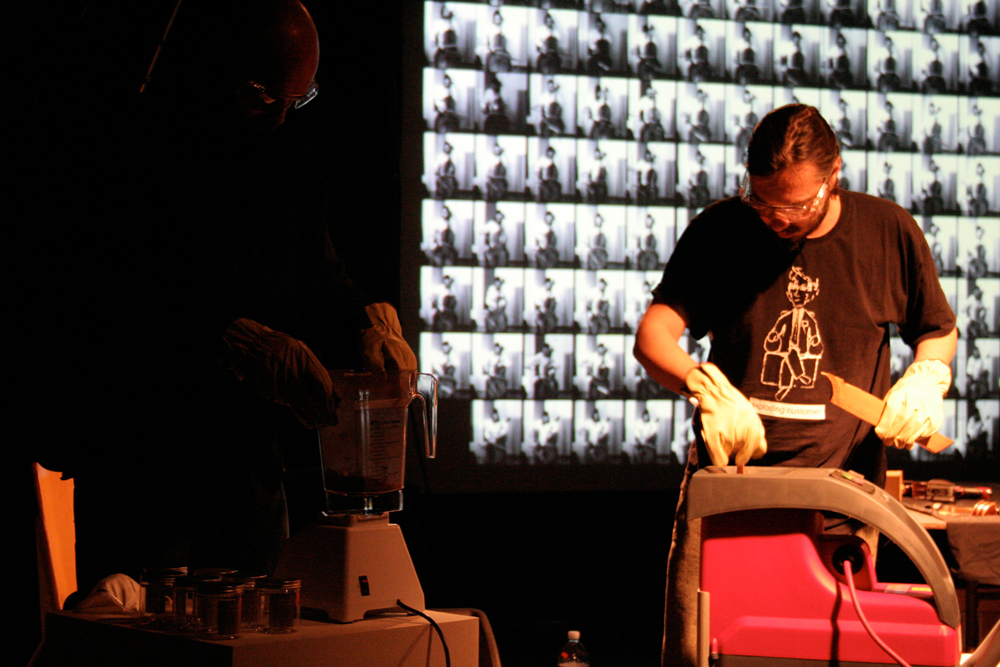
Nikos played every note that it’s possible to play on the cello, all played back as a one hour drone, while the cello was turned to powder and bottled.
A solo improvisation using just the situation of the concert: a space, a PA, Mattin’s own thoughts, you, the audience.
When we look, how do we objectify the body; how can we reflect on our (self) image as a construction?