Brian Dillon Talk
Brian Dillon
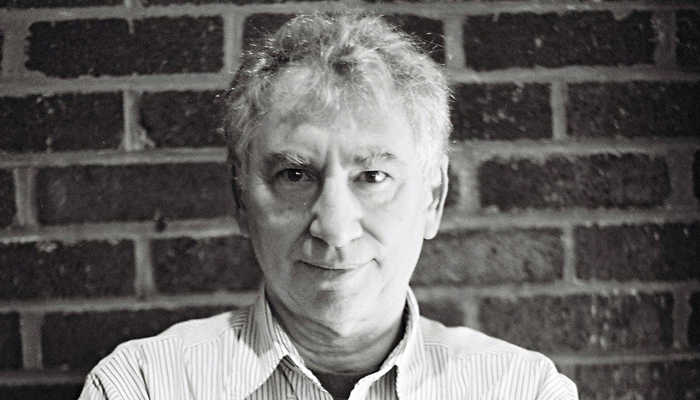
Join Brian as he ruminates on the history of how experimental filmmakers and sound artists have drifted into and taken over galleries in order to show their work.
Arika have been creating events since 2001. The Archive is space to share the documentation of our work, over 600 events from the past 20 years. Browse the archive by event, artists and collections, explore using theme pairs, or use the index for a comprehensive overview.
Join Brian as he ruminates on the history of how experimental filmmakers and sound artists have drifted into and taken over galleries in order to show their work.
By focusing on the things that most people don’t notice or pass by uncaring – Steve Roden crafts gentle, sparse and metaphorically loaded compositions.
A programme of discontinuity between narration, text and image. Including Manual Saiz’s employment of John Malkovich’s Spanish dubbing double and Peter Rose’s absurdly hilarious concrete poetry subtitling chaos.
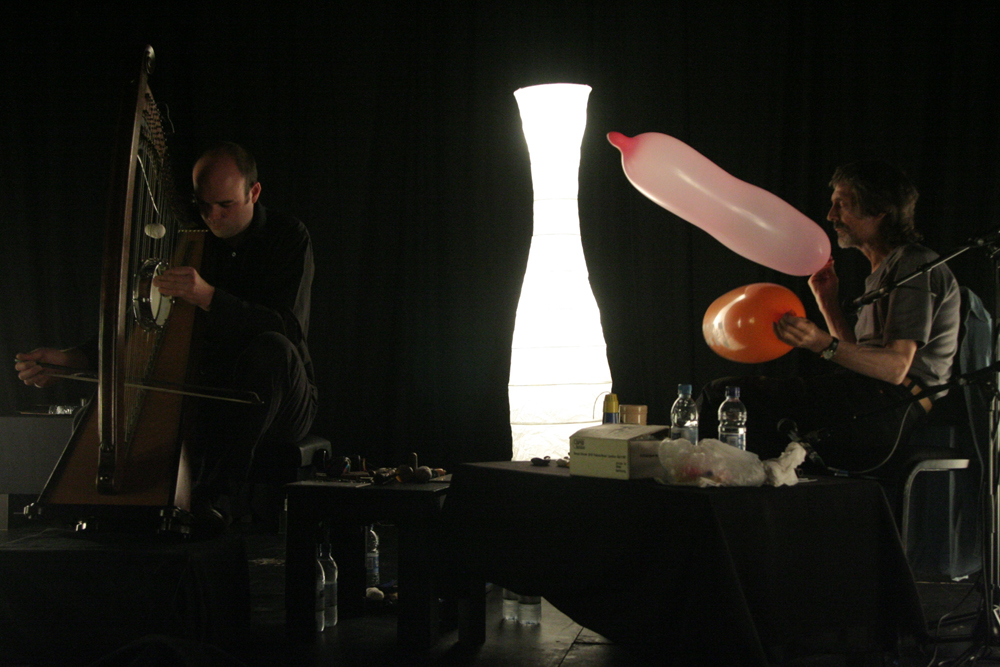
Quartet improvisation by Klaus Filip – laptop, Radu Malfatti – trombone, Sean Meehan – snare & cymbals, Taku Unami – rice and dish.
Sax/Drums duo of raucous, pealing noise, and cries of beguiling lyricism, whispered sax phrases float in a timbral cloud of bowed metal and rumbling toms.
A series of reality dramas happening over the course of the weekend.
A full-blooded, emotional attempt to reinvigorate improvisation from a musically inclined philosopher and two philosophically inclined improvisers.
The second of two short film programmes featuring works that blur the boundaries between music and film from artists who cross and redefine those long held divisions. This programme highlights contemporary works.
Jumping off from Sun Ra’s thoughts on evil, and the Alien films, this performance will explore how the sociality Sondra wants to visualise and participate in has no interest in respectability.
During Episode 9 we made this clip with Storyboard P at Kinning Park Complex. Video by Ash Reid.
A silent performance of (musical) reverberation.
Dworkin asks: What would a non-expressive poetry look like? A poetry of intellect rather than emotion?