Investigation: Jean-Luc Guionnet
What’s the best way to spend time with a musician when they visit a city to perform? And when the musician in question has a great deal to say, what sort of concert do you organise to do justice to that?
Arika have been creating events since 2001. The Archive is space to share the documentation of our work, over 600 events from the past 20 years. Browse the archive by event, artists and collections, explore using theme pairs, or use the index for a comprehensive overview.
What’s the best way to spend time with a musician when they visit a city to perform? And when the musician in question has a great deal to say, what sort of concert do you organise to do justice to that?
A mixture of investigation groups, live performances, screenings and installations at DCA; the festival looked to strip back music, sound, film and moving image to their core ideas and explore them with artists and audiences.
There are core ways in which our listening to the radio differs from other kinds of listening. What happens when we pay attention to how we pay attention?
A public gathering that brings together local artists, musicians, activists, and community organisers.
The mutability of the body and the mobility of identity: queered pop culture, drag, lip-sync and performance.
One-shot sonic portraits of 4 houses, their inhabitants and their relationship to sound, from 2 of the most deep-thinking field-recording artists around.
The Cube is a 6 hour performed installation in which sound and image are treated as independent but equal, where musicians and filmmakers sit alongside each other, improvise to and feed off both projected image and amplified and acoustic sound.
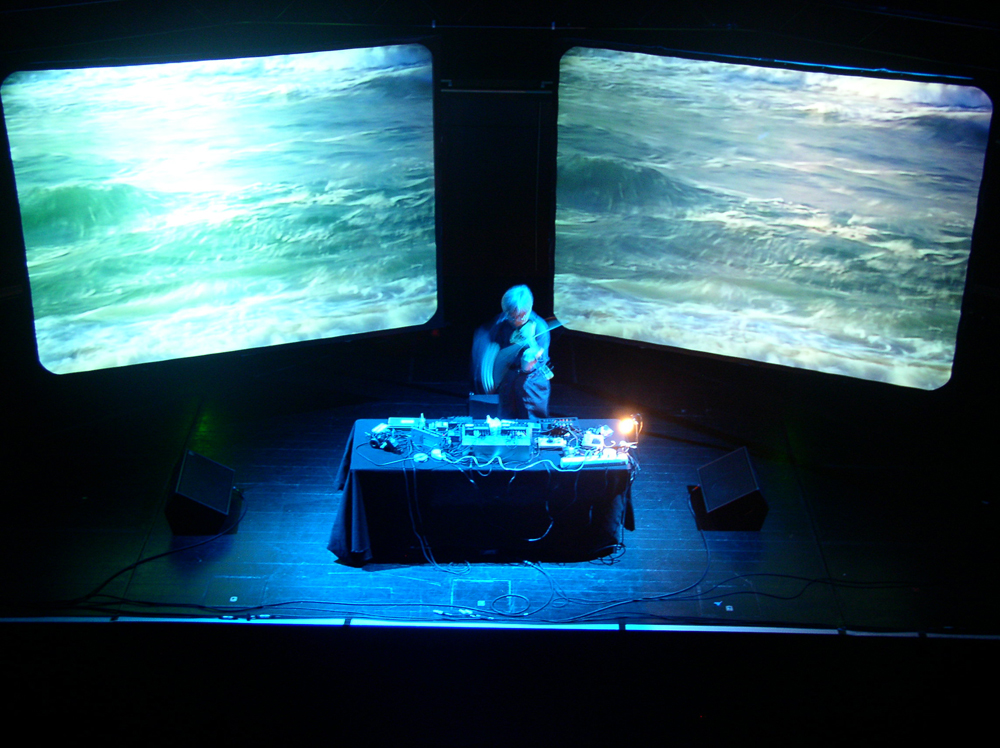
A new interpretation of Kosugi’s Catch-Wave, producing a cloud of fluctuating, hypnotic drones, in front of a backdrop of projected waves.
For this day-long festival, sex workers and their allies from New York, the tri-state area, and Europe will gather at MoMA PS1 to debate, perform, dance, strategize & share knowledge.
Discussion: If we approach “care as an event” rather than as a “contract of exchange” then what becomes possible in how we know, care for, and appreciate each other?
Beatriz will explore her thinking, on film as translation, plural subjectivity or land-based militancy. Discussion will centre around her work Oriana and its companion piece Oenanthe, which will be screened in full.
How can we imagine bodies not as an end in themselves, but as a medium through which we can become one another’s means?