Trans Breakfast at the End of the World
Mijke van der Drift Nat Raha
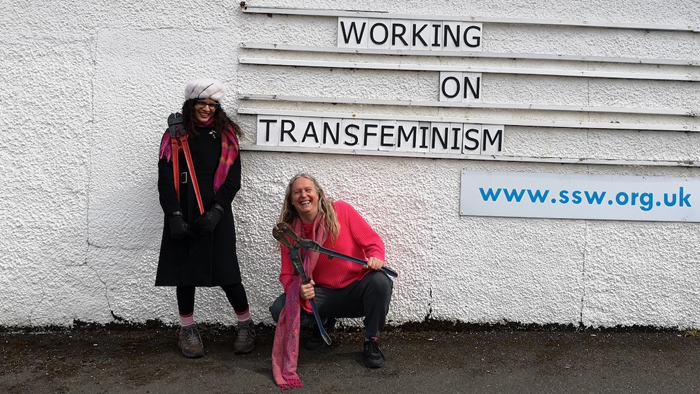
An informal conversation, over breakfast, about how abolition and movement work structures Mijke and Nat’s approach to transfeminism, ahead of their new book Trans Femme Futures.
Arika have been creating events since 2001. The Archive is space to share the documentation of our work, over 600 events from the past 20 years. Browse the archive by event, artists and collections, explore using theme pairs, or use the index for a comprehensive overview.
An informal conversation, over breakfast, about how abolition and movement work structures Mijke and Nat’s approach to transfeminism, ahead of their new book Trans Femme Futures.
Includes: a polish counting lesson, around NYC with D A Pennebaker, a portrait of a tower block, a man with a spade, at home with KYTN regular Guy Sherwin, a cinematic Blair Witchish cut-up and a song for some swings.
The Cube is a 6 hour performed installation in which sound and image are treated as independent but equal, where musicians and filmmakers sit alongside each other, improvise to and feed off both projected image and amplified and acoustic sound.
Jarrod Fowler creates a social space where layered one-to-one live encounters with the audience become sonic material.
Discussion: If we approach “care as an event” rather than as a “contract of exchange” then what becomes possible in how we know, care for, and appreciate each other?
Thinking against the monoculturalism of Western thought—of faith, affection, sexuality and gender—which completely lacks any utility to, or descriptive value of Indigenous worldviews.
Craig will give a guided reading of his handbook of exemplary instances of literary listening and will be joined by one of the selected authors, Vanessa Place.
Paul Sharits is one of our all time heroes, and one of the great artist filmmakers of the 20th Century.
Arika is working in partnership with Decriminalised Futures on a multi year collaboration featuring multiple creative projects exploring sex worker lives, experiences and movement struggles.
How do communities formed under the duress of violent othering and the joy of solidarity – such as ballroom culture, Black diasporas, Zapatistas – reform bonds of kinship?
How do you know what you want? Should freedom be doing what you ought, not doing what you want? How might a philosopher and artist turn this thinking into an enabling condition in the context of noise and improvisation?
A welcoming intermission between events, open to the public.