Entangling history, phenomenology, metaphysics, culture, and mathematics: the model RTSK
Fernando Zalamea
Profound mathematical ideas for romantics, to help us linger in the difference we share.
Arika have been creating events since 2001. The Archive is space to share the documentation of our work, over 600 events from the past 20 years. Browse the archive by event, artists and collections, explore using theme pairs, or use the index for a comprehensive overview.
Profound mathematical ideas for romantics, to help us linger in the difference we share.
Freeform Super 8mm documentation of Saturday at Instal 06 by filmmaker Matt Hulse.
For day three of Ultra-red’s project, the investigation will take up protocols for listening to the sound of freedom composed and facilitated by Nancy Nevárez.
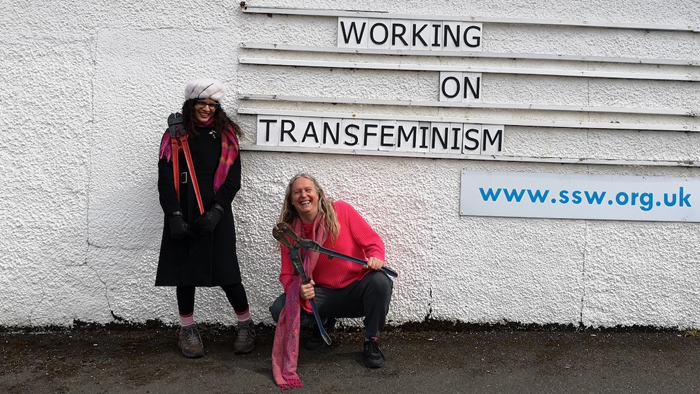
An informal conversation, over breakfast, about how abolition and movement work structures Mijke and Nat’s approach to transfeminism, ahead of their new book Trans Femme Futures.
Philip Jeck creates slowly evolving symphonies that are as much about the crackling hiss of old vinyl as the actual ‘musical’ material.
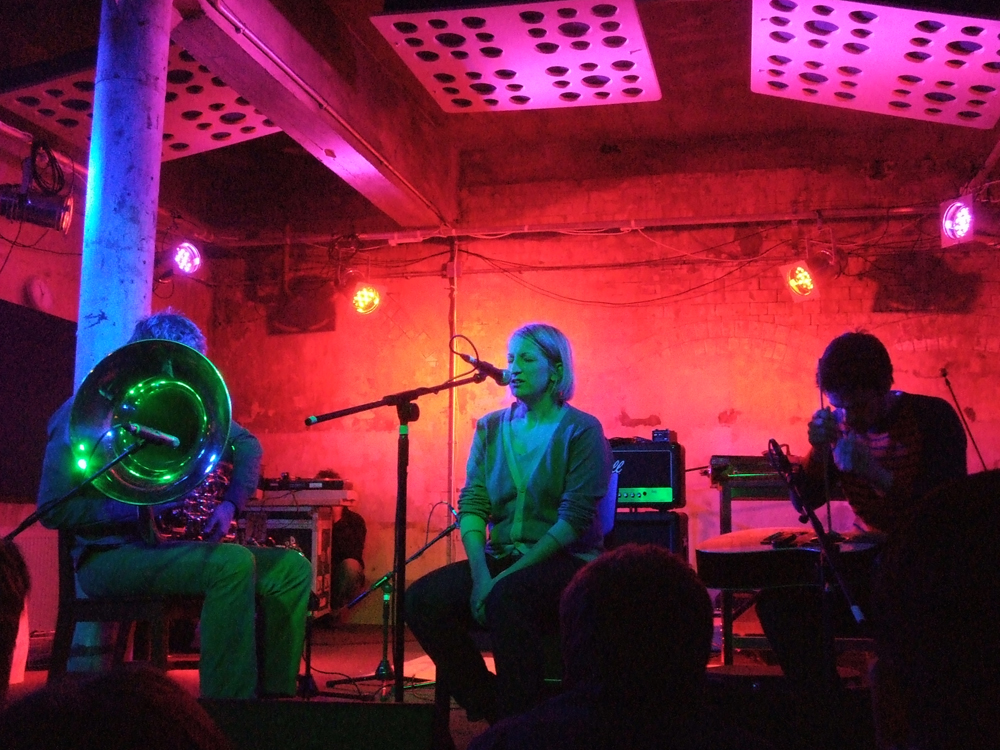
Sparse and miniature free thought workouts involving guitar, vocals and tuba.
Intriguing, underground, Berlin based musicians interested in the borders between music and theatre, language, the visual arts, politics.
Strickland Distribution and Ultra-red give a practical sound workshop bringing together walk participants to discuss the issues raised during the walk
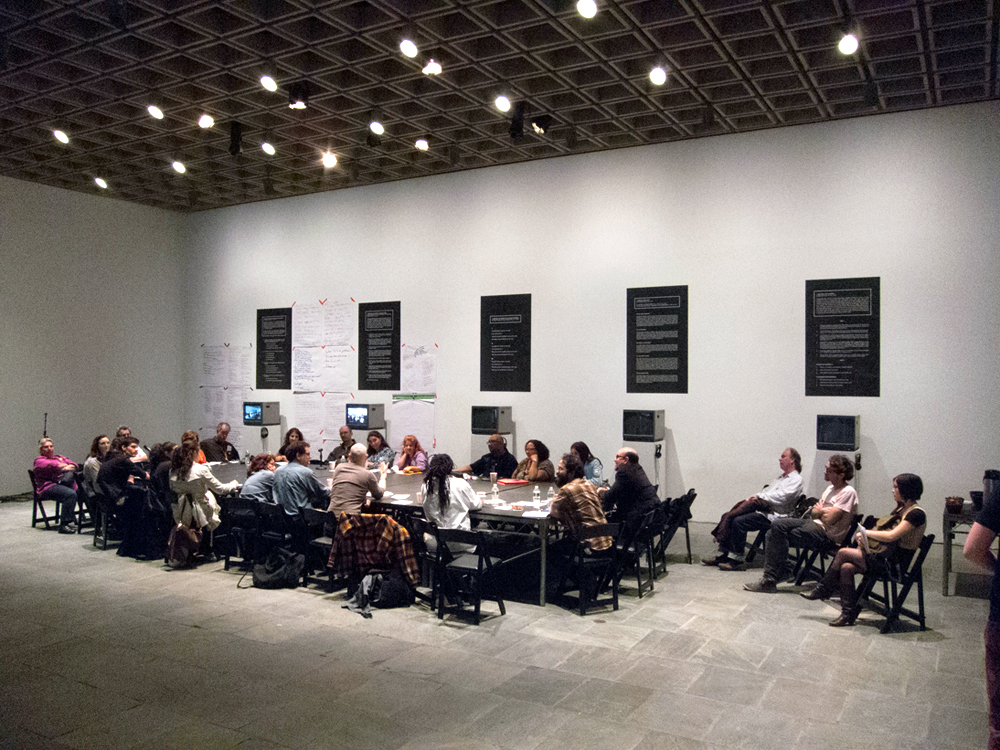
Discussion: If we approach “care as an event” rather than as a “contract of exchange” then what becomes possible in how we know, care for, and appreciate each other?
Ken presents his Nervous Magic Lantern, wherein film itself is forsaken for an investigation of hypnotic and trancelike crystaline forms. Eric La Casa works with recordings of everyday occurrences: the background hum of place.
A performance for projectionist, musicians and audience, which plays with references to Oscar Levant and Gershwin: apparently a series of small doses of chaos.
Relative patterns of occlusion and exposure occupy two screens. Each exposure fires a stroboscopic flash of colour: yellow for one screen; blue for the other, filling the centre of both screens with colour, haloed with after-images.