INSTAL 10
The final iteration of Arika’s INSTAL festivals, the 2010 edition was an experimental festival of experimental music – 3 days of events at the Tramway that explored un-average ideas about sound and music.
Arika have been creating events since 2001. The Archive is space to share the documentation of our work, over 600 events from the past 20 years. Browse the archive by event, artists and collections, explore using theme pairs, or use the index for a comprehensive overview.
The final iteration of Arika’s INSTAL festivals, the 2010 edition was an experimental festival of experimental music – 3 days of events at the Tramway that explored un-average ideas about sound and music.

Intriguing, underground, Berlin based musicians interested in the borders between music and theatre, language, the visual arts, politics.
Thinking against the monoculturalism of Western thought—of faith, affection, sexuality and gender—which completely lacks any utility to, or descriptive value of Indigenous worldviews.
No Wave, damaged garage jams and crazed instant vocal shrieks.
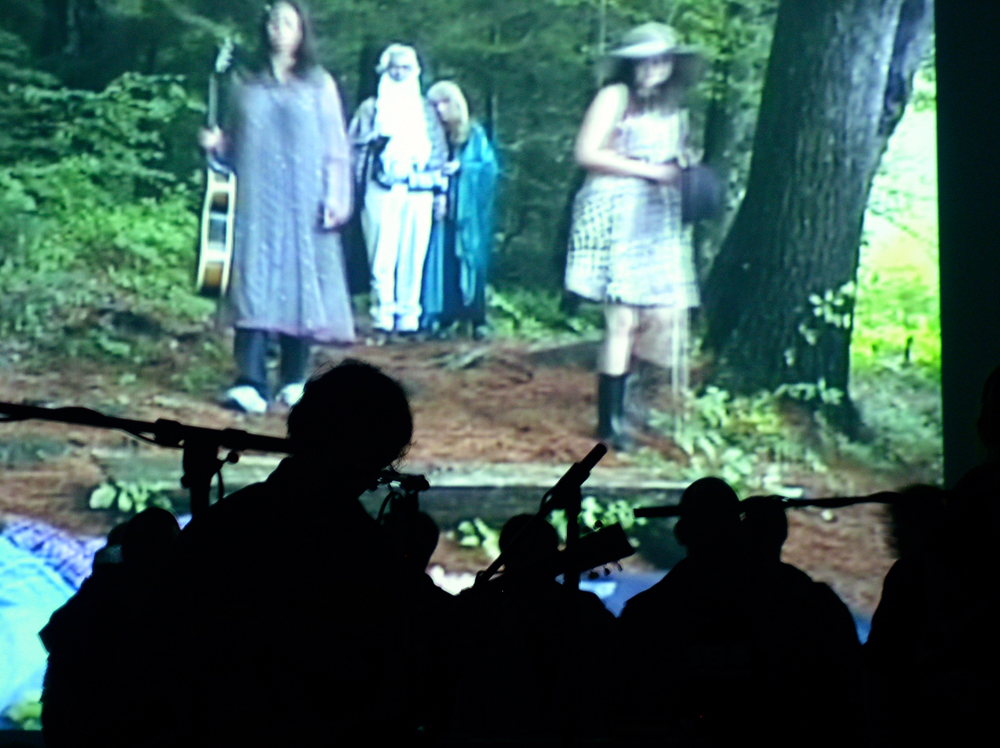
Do almost nothing: re-present (unaltered and arranged by chance) silent family home movies handed down to Flo, (Ken’s wife) and follow them with a “teach yourself Yiddish” cassette tape.
The Tower performance at KYTN throws into that mix the 70’s fluxus light shows and films of Jeff Perkins and other filmic interventions tuned to their unique frequency.
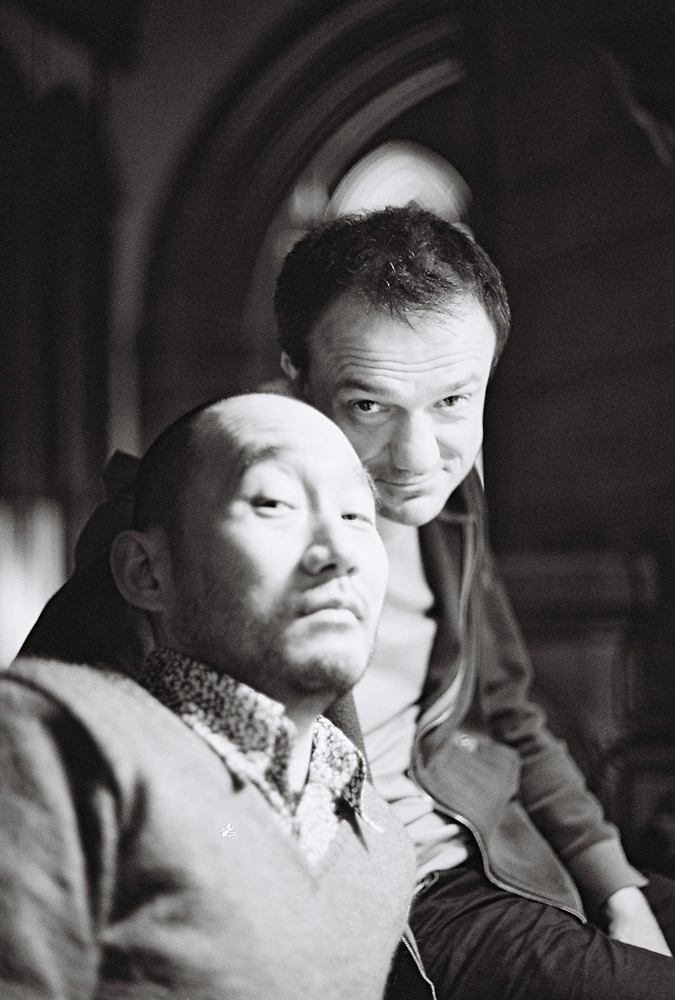
Brain boiling duo improvisation by great Japanese no input mixing desk pioneer Toshi Nakamura and french organ philosopher Jean-Luc Guionnet.
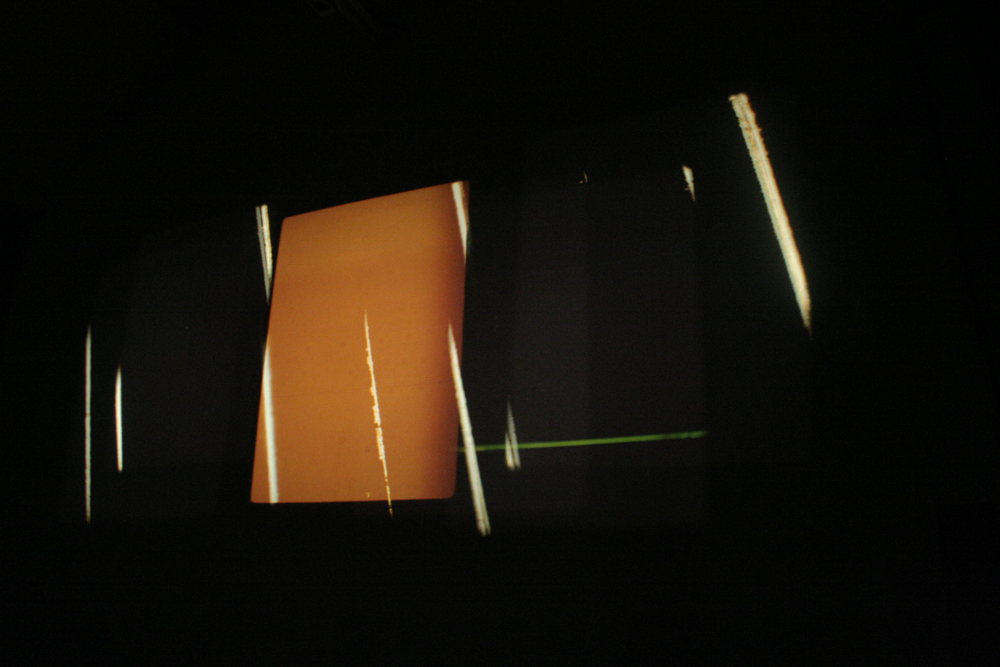
Noise music for the eyes. A 6 screen 16mm projection performance of intense audio and visual stimulus.
Post consideration and post rationalisation… How do we think about experimental music and film after the performance?
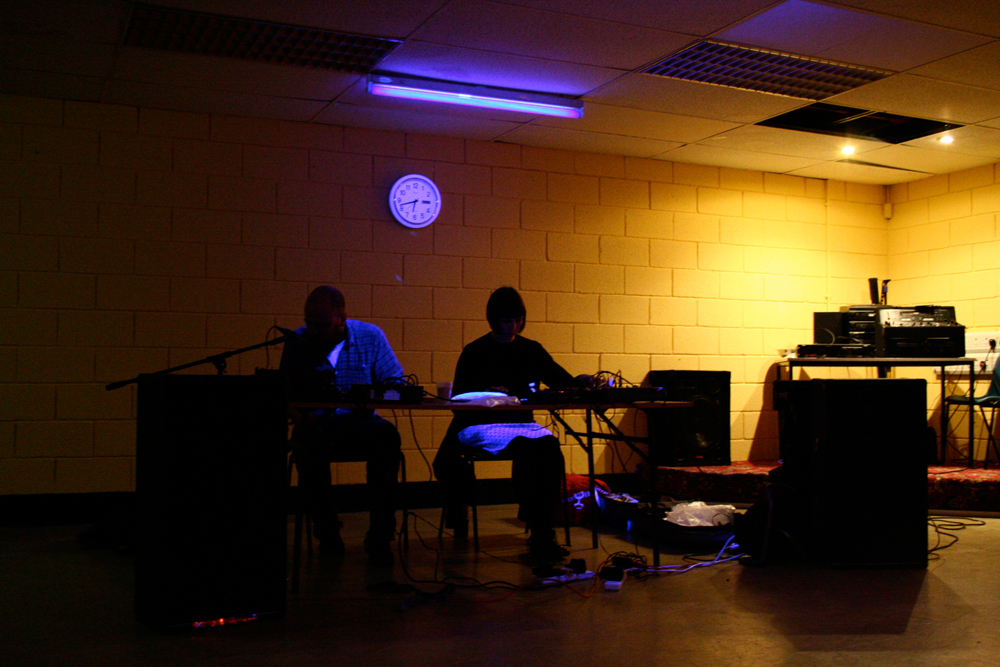
Avant-wrongdoers Blood Stereo performing in Garthamlock the town spawned them.
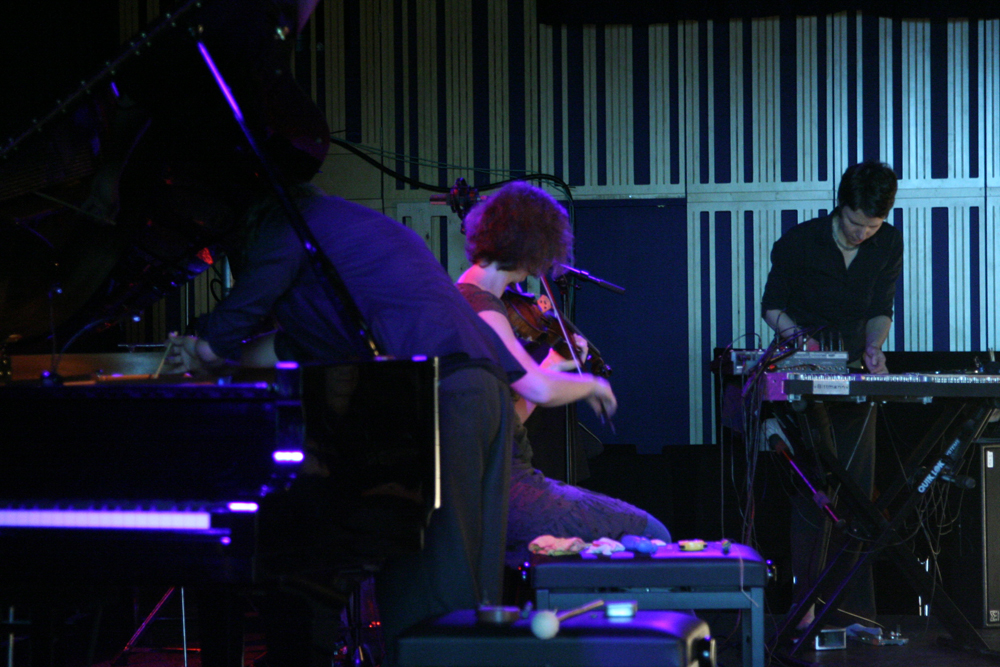
Improvising violinist Angharad Davies performing with pianists Tisha Mukarji and Andrea Neumann.
Final workshop exploring work, care and class. Does the ‘care industry’ summon forth its own class? Can this ‘affective class’, in their ability to care for others, militate against the carelessness of self-interest?