Tetsuya Umeda
Tetsuya Umeda
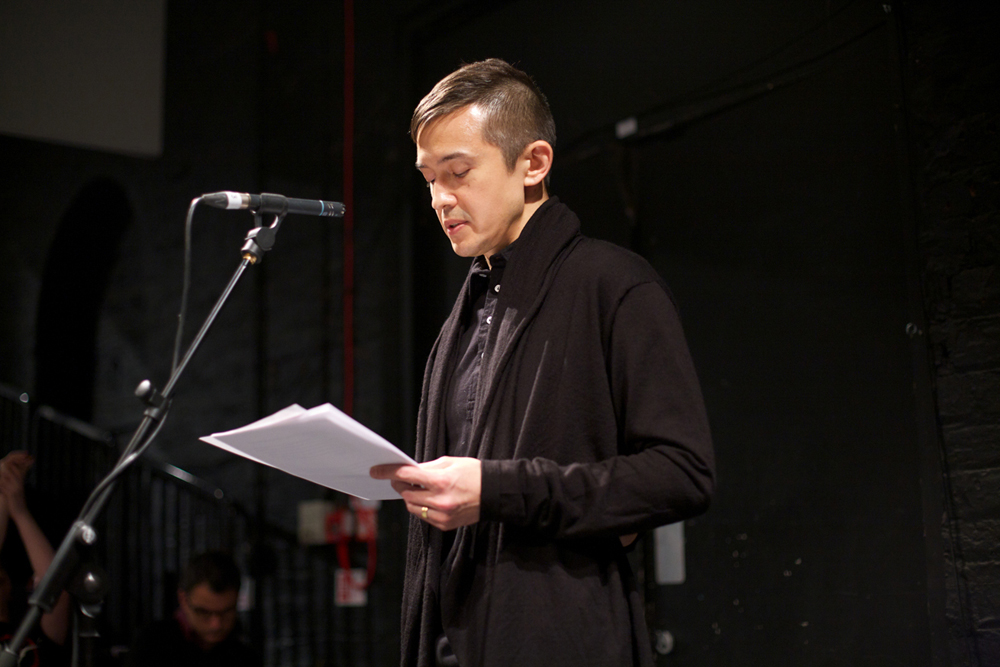
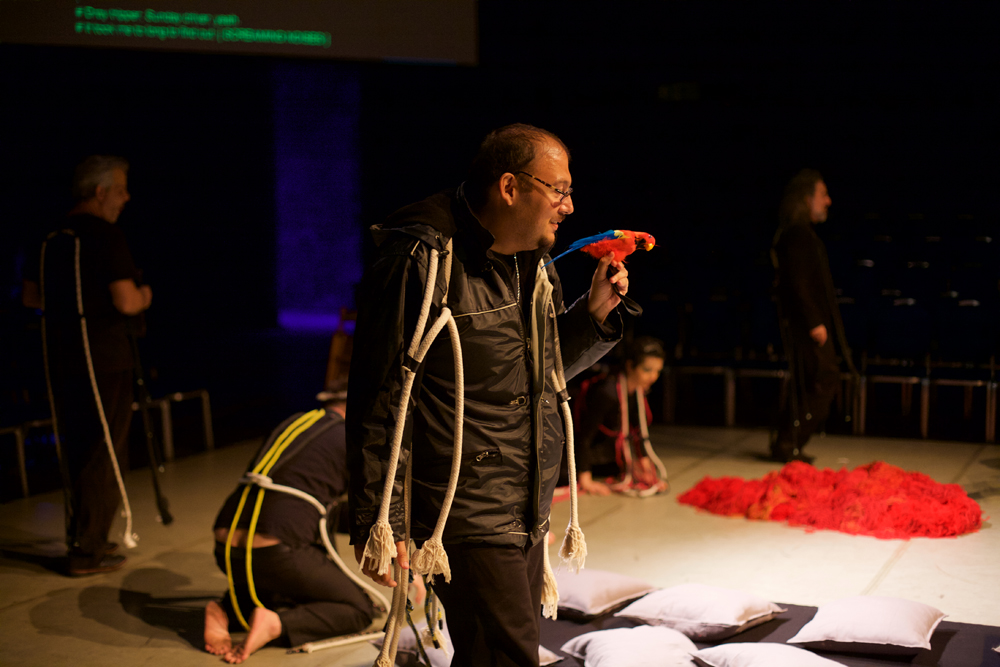
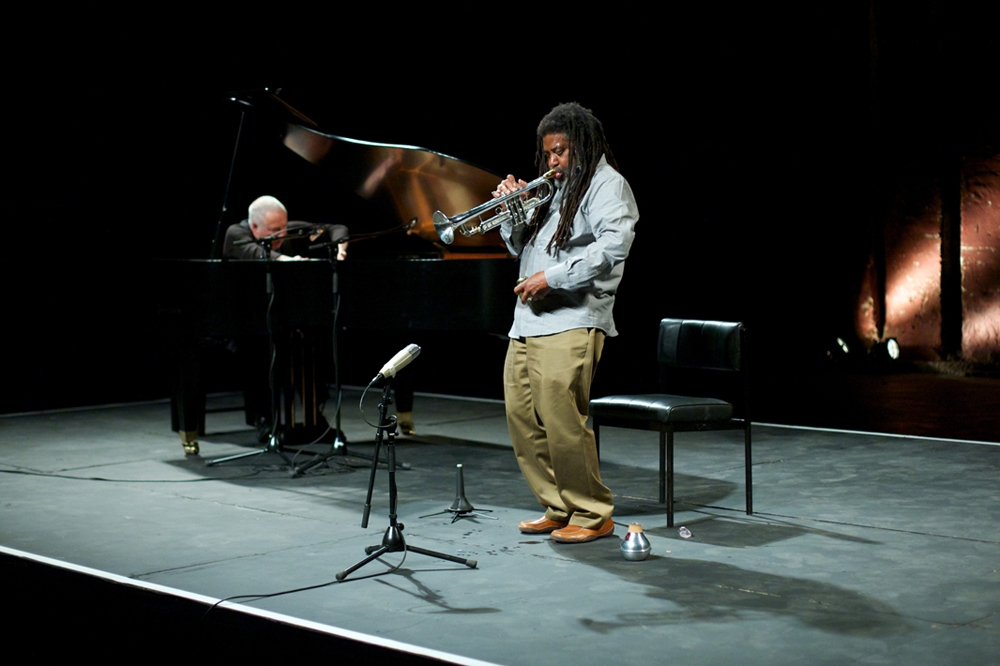
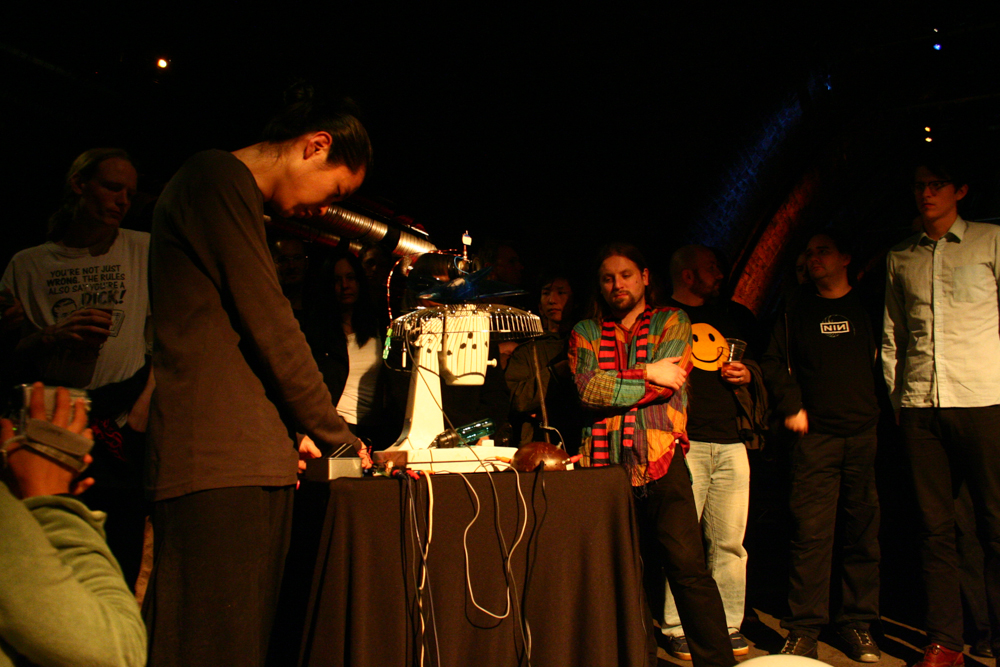
Umeda is a Japanese artist who is as fascinated in setting up interesting situations to observe, as he is in creating performances.
Arika have been creating events since 2001. The Archive is space to share the documentation of our work, over 600 events from the past 20 years. Browse the archive by event, artists and collections, explore using theme pairs, or use the index for a comprehensive overview.
Umeda is a Japanese artist who is as fascinated in setting up interesting situations to observe, as he is in creating performances.
A chat with Eugene Thacker. Can we rethink the world as unthinkable, and without us?
Inhabiting a different kind of energy, Ueinzz’s open rehearsals reveal a glimpse into their ongoing daily theatrical modes of caring – multiplying the ways in which their plays are meant to be felt, rather than understood.
An extravagant debauch of plush toys and ritual. Palestine performed a version of Strumming Music, a trance inducing investigation into overtone systems achievable on a Bosendorfer Imperial Piano.
How might two of the great musicians working within contrasting traditions of freedom collaborate? What might this produce: musically, socially, allegorically?
Thinking against the monoculturalism of Western thought—of faith, affection, sexuality and gender—which completely lacks any utility to, or descriptive value of Indigenous worldviews.
A conversation about the movement for prison abolition and refusing the logic of race and sex that underpins the criminalisation and mass incarceration of communities.
A Festival supporting the struggle for Sex Workers’ Rights: share knowledge, discuss, dance and strategise!
A conversation of intergenerational trans-resistance and anti-racist fierceness between two of the most inspiring public speakers we know.
Bruno’s liberated improvisational approach stretches beyond the lyrical, tough as nails rhythmic bursts and expressive, swinging attack of his drumming.
Performances at St Giles in the Fields, London by Jandek, Rhodri Davies & Angharad Davies, Rauhan Orkesteri.
Relative patterns of occlusion and exposure occupy two screens. Each exposure fires a stroboscopic flash of colour: yellow for one screen; blue for the other, filling the centre of both screens with colour, haloed with after-images.