Paragon Ensemble
Paragon Ensemble
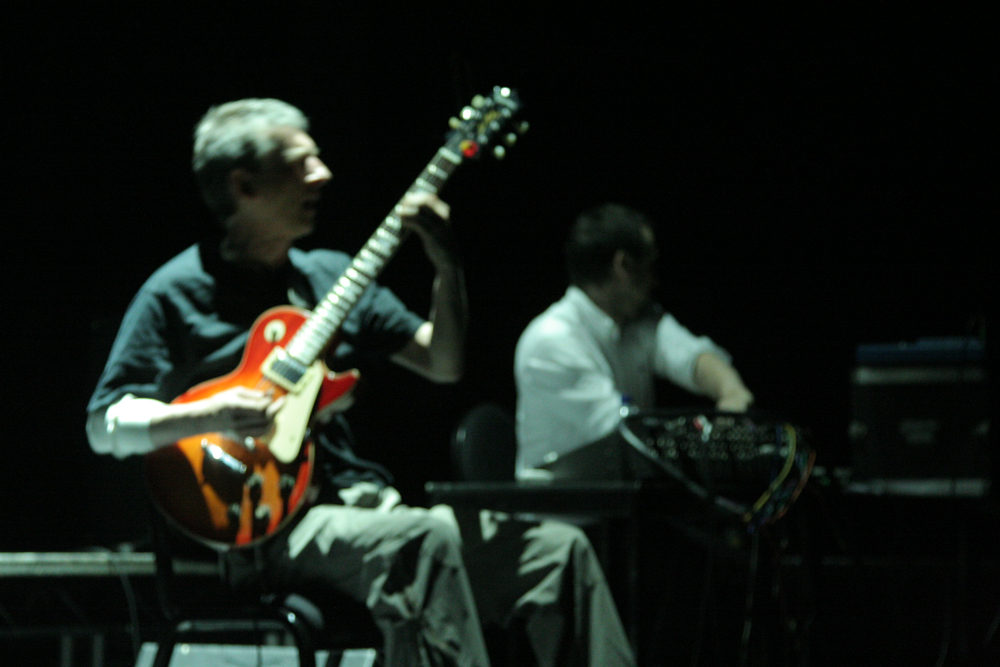
The program of composed music including Feldman’s Instruments III, Ligeti’s piece for 100 Metronomes Poeme Sympathetique, and Rebonds B by Iannis Xenakis.
Arika have been creating events since 2001. The Archive is space to share the documentation of our work, over 600 events from the past 20 years. Browse the archive by event, artists and collections, explore using theme pairs, or use the index for a comprehensive overview.
The program of composed music including Feldman’s Instruments III, Ligeti’s piece for 100 Metronomes Poeme Sympathetique, and Rebonds B by Iannis Xenakis.
A performed reflection on Malin’s previous re-enacting of a super influential landmark of performance art from the French feminist and artist Gina Pane.
What’s the best way to spend time with a musician when they visit a city to perform? And when the musician in question has a great deal to say, what sort of concert do you organise to do justice to that?
The mutability of the body and the mobility of identity: queered pop culture, drag, lip-sync and performance.
Nikos played every note that it’s possible to play on the cello, all played back as a one hour drone, while the cello was turned to powder and bottled.
Do art forms like black radical poetry, free jazz and improvisation create a space for the performance of freedom? Did they ever? And can they still do so now?
Adamantly analogue, inspiring and frequently chaotic in performance, Metamkine draw no distinction between image and sound; during their intuitively improvised performances music and images are created simultaneously and equitably.
Where we join Nackt Insecten’s disembodied spectral howls and heavyweight locomotive drones about SPT’s Subway.
Munehiro Narita’s Kyoaku No Intention (Worst Intentions) fired out some of the most compelling no-wave improvised rock of the 80s.
Poems are kisses, fists, and underground rivers. For all these reasons and many more, I am a poet.
A kind of performed installation of searing noise and silence, where we’re not sure who the performer is, when it starts or ends or even who it’s for.
Can we use sound, repetition and difference to personally and collectively engage with space, time and labour?