Genocide’s Wake & To See In The Dark
Genocide’s Wake & To See In The Dark
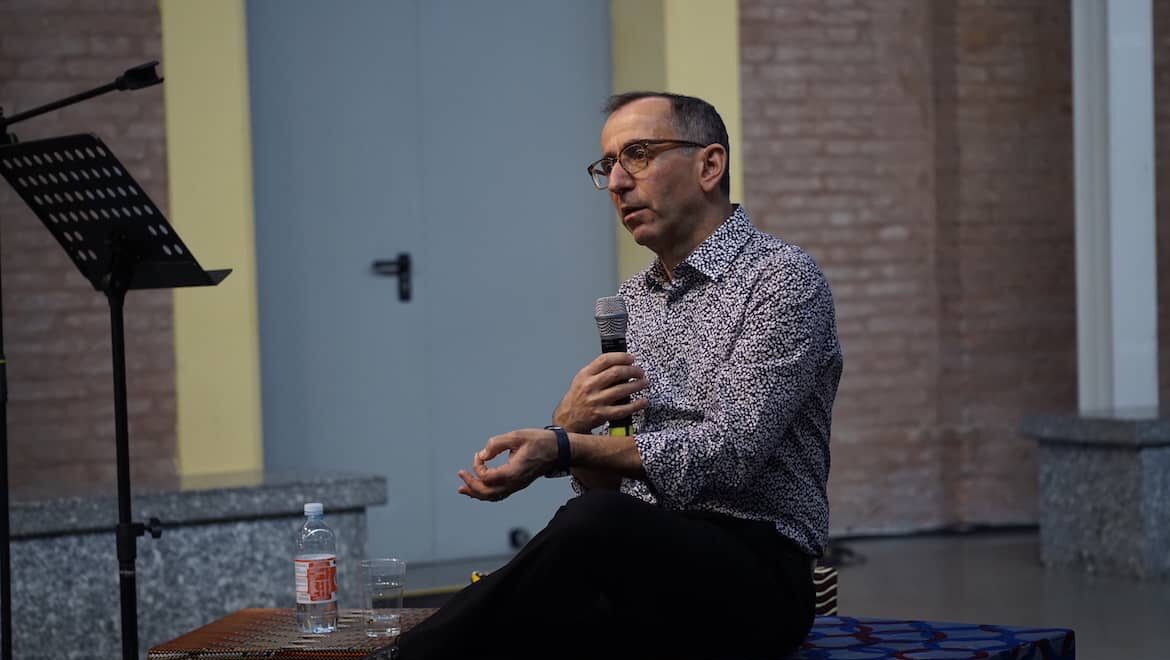
Nick is one of the founders of the interdisciplinary practice of visual culture. He’ll talk to us about his most recent writing, which explores the contemporary visibility of the war on Gaza, and how this enabled global solidarity.
David will present some of the thinking in his incredible book Under Representation, which unpicks how both postcolonial thinking has failed to properly think about race, and how critical race theory fails to address aesthetics.
The event will feature a short talk by Nick, followed by one from David, and then a conversation together with members of the Beniba Centre and the Scottish Universities Jewish Staff Network.
Overview
To See in the Dark – a conversation with Nick Mirzoeff
Presented with the Scottish Universities Jewish Staff Network
Nick will discuss his most recent book: To See in the Dark.
To see Palestine is to see the world. Since October 7th 2023, the forces of racial capitalism and settler colonialism have become all too visible in Israel’s genocidal war on Gaza. In To See In the Dark, Nicholas Mirzoeff explores how images, and especially video, viewed outside Palestine enabled a dramatic switch in public opinion, leading to a global uprising against the genocide. In this groundbreaking analysis, he connects the personal and the political through his own anti-Zionist Jewishness and its histories of violence. The result is a new collective and anti-colonial way of seeing, intersecting online and embodied experience.
“If ever we ever needed a contemporary rejoinder to John Berger’s Ways of Seeing, this is the book. Timely and clearly written, To See in the Dark is a manifesto to solidarity, a foraging, salvaging and a way to unset alongside the opaque lives of Palestinians, who struggle under organized, genocidal state violence. Through engaging visual works of Palestinian and other artists, Mirzoeff leads us past the “colonial visual screen” and over the rubble, to see new solidarities that arise from associating with the oppressed by dissociating with systems of oppression whose surveillance, checkpoints, prisons, and drones appear in the “white sight” of genocide.”
Stephen Sheehi, co-author of Camera Palaestina: Photography and Displaced Histories of Palestine
Genocide’s Wake – a conversation with David Lloyd
Presented with the Beniba Centre for Slavery Studies
“Genocide aims to abolish the life in common in which the atomized self-for-itself was unknown. What remains is the diminished fragment of shattered life, the wreckage cast up on the shore after the storm. Its loneliness is the longing for a collectivity that its very survival in the form of the individual forecloses. And beyond the terror of awaiting at every moment the sudden arrival of one’s own death is the abyss in which every person, every relation, every document or dwelling, every loved and shared place that might have borne witness to one’s existence and one’s passing will have been obliterated.”
This is a quote from Genocide’s Wake , one of a series of crucial articles David has written recently for Communis Press. For us, this quote stands in for so much of David’s thought, combining anti-colonial, anti-Zionist Palestinian solidarity—‘fragmented’ indexes his engagement with Nadera Shalhoub-Kervorkian and her writing—along with a critique of the regimes of the ‘atomised self’; the solitary confinement of individuation, the person, the proper and property, drawn from David’s entanglements with Black Studies thinkers and friends of Arika like Fred Moten, Hortense Spillers, Denise Ferreira da Silva.
David will speak about and share some of the thinking from these vital pieces during this talk.
ReadBIOS
Nicholas Mirzoeff is Professor and chair of the Department of Media, Culture and Communication.
Among the founders of the interdisciplinary practice of visual culture, he has published more than a dozen books and many articles. His most recent book is To See In The Dark: Palestine and Visual Activism Since October 7th (Pluto, 2025), which is the subject of a dossier at Social Text journal. It has now appeared in Italian and Spanish translations.
In 2023, he published White Sight: Visual Politics and Practices of Whiteness (MIT Press), also available in Italian and Spanish translations. and An Introduction to Visual Culture (Third edition, Routledge). How To See The World was published by Pelican in the UK (2015) and by Basic Books in the US (2016). It has been translated into eleven languages and was a New Scientist Top Ten Book of the Year for 2015. His book The Right to Look: A Counterhistory of Visuality (2011) won the Anne Friedberg Award for Innovative Scholarship from the Society of Cinema and Media Studies in 2013.
A frequent blogger and writer, his work has appeared in The Nation, Hyperallergic, Frieze, the New York Times, the Guardian, Time and The New Republic.
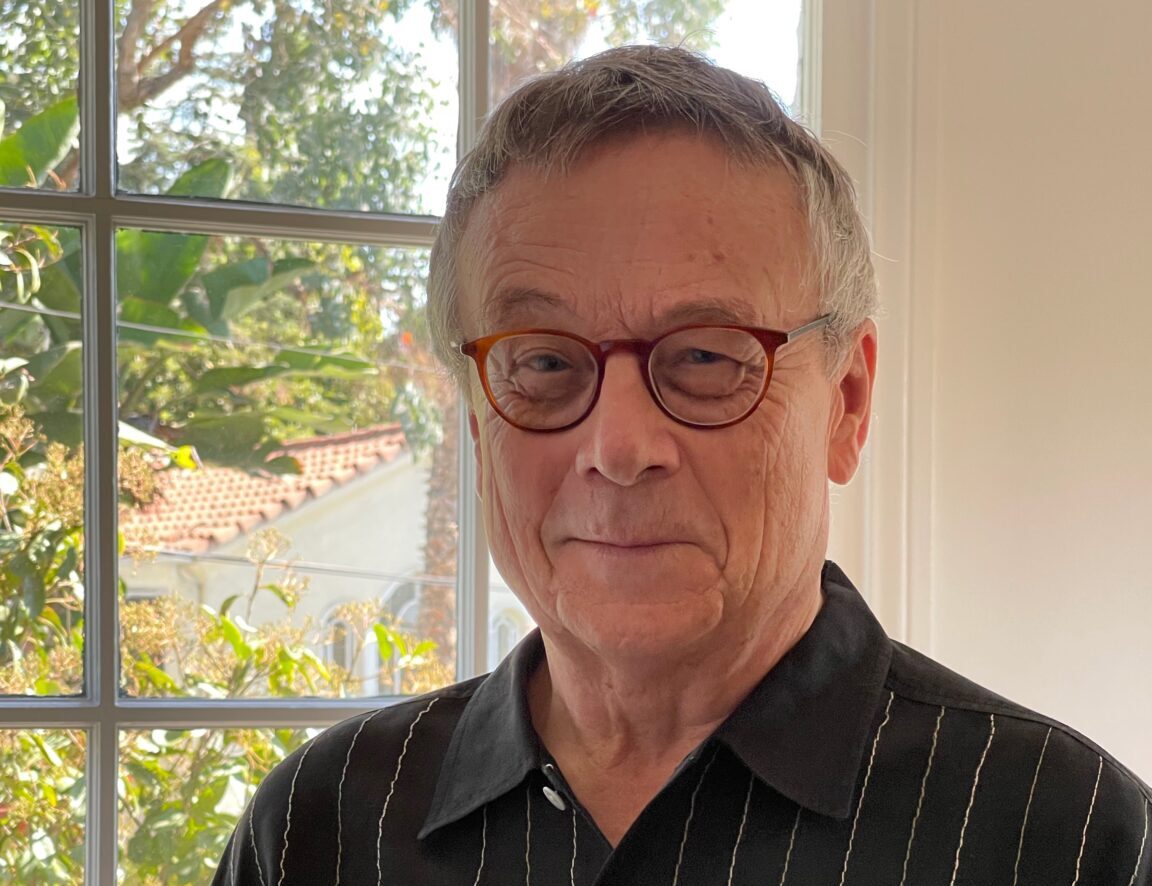
David Lloyd is and Irish-born critic, poet and dramatist, and has worked on postcolonial and settler-colonial theory and cultural critique, race and aesthetics, and poetics. Recent critical books include Under Representation: The Racial Regime of Aesthetics (2019), Irish Culture and Colonial Modernity, 1800-2000 (2011), and Rage, Shame and Dread (Seagull Books, 2026). Poetry and drama collections include Arc & Sill: Poems 1979-2009 (2012); The Harm Fields (2022); The Bone Wine (2025); Archepelago (2026) and The Press, Shelter and The Pact: Three Plays (2025). He is a founding member of USACBI, and his articles on Palestine include “Settler Colonialism and the State of Exception: The Example of Israel/Palestine,” Settler Colonial Studies 2.1 (2012); “Redemptive Constellations: Irish-Palestinian Relays in Emily Jacir’s ‘Notes for a Cannon’”, Third Text (2020); “From the Critique of Violence to the Critique of Rights,” Critical Times, 3.1 (April 2020), and “Israel’s Cultural Bomb”, Social Text 43.2 (2025). He is Distinguished Professor of English Emeritus at the University of California, Riverside.
The Scottish Universities Jewish Staff Network brings together Jewish staff and researchers in HEI across Scotland who share core commitments to justice and equality.
Seeks to nurture thoughtful approaches to addressing antisemitism and interconnected anti-racist struggles, while fostering intercommunal solidarity.
Recognizes that antisemitism needs to be addressed as a form of discrimination alongside other forms of discrimination including anti-Palestinian racism and Islamophobia, and tackled with socially and historically informed approaches.
Agrees with scholars, Rabbis, Holocaust survivors, leading universities, Jewish organisations, human rights and legal experts, the lead author of the “IHRA definition” himself, that the IHRA definition should not be adopted by institutions, is counter-productive, discriminates against many including Jews, and/or has led to a range of deeply concerning negative impacts.
Grieving with all those impacted by the genocide in Israel/Palestine, the JSN is alarmed by the conflation of Jews and Judaism with radical ultra-Zionism in order to justify extreme state violence, killing, dehumanisation and racism against Palestinians. It is also alarmed by the unprecedented repression against those who stand in solidarity with Palestinians. Challenging unfounded and politically weaponised allegations of antisemitism, and opposing any manifestation of actual antisemitism, the JSN seeks to encourage joint political reflection and action against any form of racism and related atrocities and crimes.
The Beniba Centre‘s mission is to support public events, academic research, and education initiatives which focus on the study and critical analysis of the history of slavery and its legacies in the modern world. Since inception, our focus has expanded to also include other areas of Black and Indigenous studies as well as for advocating for people in the Global Majority. We are a group of researchers and educators working on a range of different facets of the history of slavery, critical heritage and cultural studies, and the legacies of race and empire. Working across history, archaeology, literature, music, museums and material culture, we are dedicated to adopting an interdisciplinary approach to slavery studies.
Artists
David Lloyd