In the Time of Intifada: From Palestine to the Planetary
Peter Makhlouf Sherena Razek
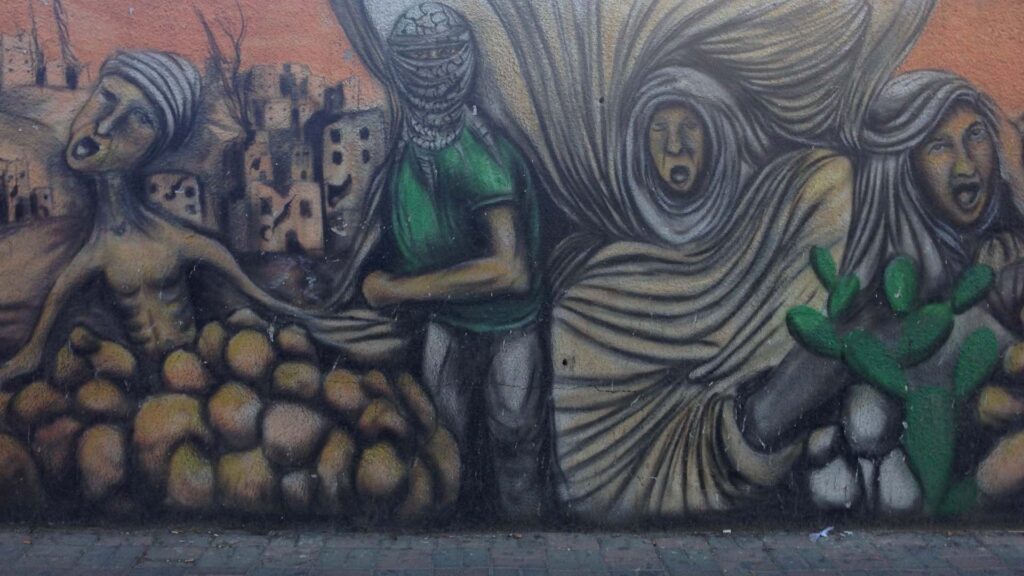
How does Palestinian anticolonial resistance struggle against the colonisation of our concept of time?
Arika have been creating events since 2001. The Archive is space to share the documentation of our work, over 600 events from the past 20 years. Browse the archive by event, artists and collections, explore using theme pairs, or use the index for a comprehensive overview.
With these theme we want to set work that doesn’t seem to fit close to or in any category at all alongside work that deals explicitly with category and practices of categorising, or escaping category. A couple of suggestions for starting to investigate this theme could be Teresa Maria Diaz Nerio’s performed film lecture about Caribbean cinema and Fred Moten and Saidiya Hartman disucssing what it might mean to be fugitive.
How does Palestinian anticolonial resistance struggle against the colonisation of our concept of time?
Join world-renowned Puerto Rican decolonial thinker and activist as he unpicks the Eurocentric lie of linear time, and shares anti-colonial temporalities that arise out of, and in light of the life ways, suffering, dignity, and creative drive of oppressed communities around the world.
Centring performance within a host of concepts crystallised from Black worldmaking and religious frameworks, Leda Maria Martins is one of the most influential thinkers of Afro-Brazilian experience today.
How has the idea of innocence been weaponised to conceal the crimes of colonisation? Three leading anti-colonial thinkers will explore its history and examine how it continues to facilitate colonial systems today.
Palestinian Feminist scholar Nadera Shalhoub-Kervorkian sits down with psychoanalyst and author Lara Sheehi to discuss some of Nadera’s other vital concepts including the ideas of ‘overkilling’ and ‘unchilding’, which are fundamental to understanding Palestinian experience today.
A conversation between preeminent Palestinian feminist, Nadera Shalhoub-Kevorkian and poet and theorist David Lloyd. Nadera has coined two incredibly profound concepts to understand Palestinian life today. Ashlaa’—the violent fracturing of Palestinian bodies and lamlameh—the defiant collecting of a loved one’s body.
Ecstatic, intensely joyous experimental club music: like “the sound of our water ceremonies…40 bands playing their melodies at once to recreate the cacophony of the first aurora and the call of the morning star Venus”.
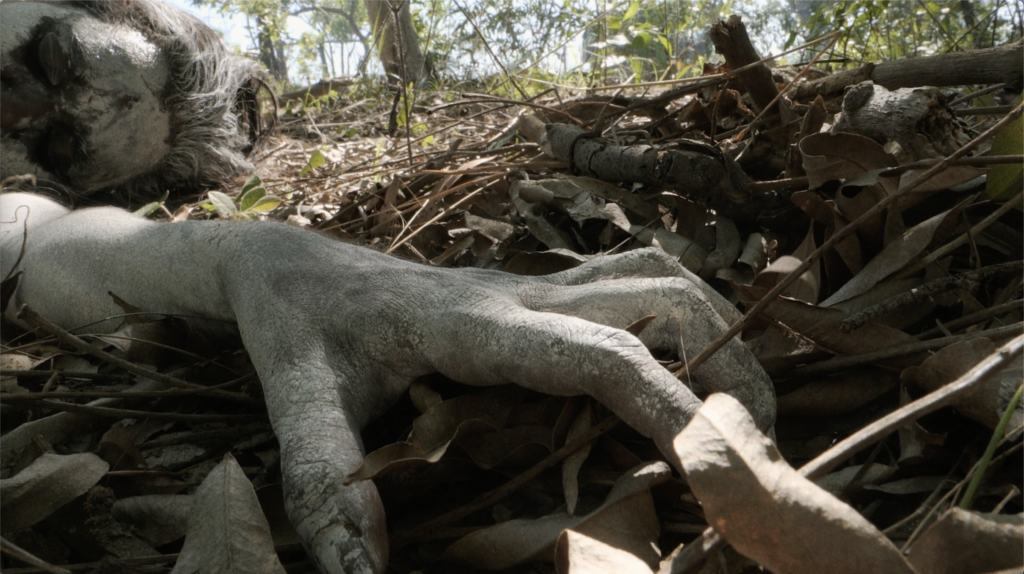
Watching films and chatting with Karrabing members about those films: as they attend to the memory and practice of the ancestral present and the ancestral catastrophe that Karrabing and their more-than-human world find themselves facing.
A Study Session focused on the thinking of Ailton Krenak – one of the great leaders of the Brazilian indigenous movement – led by curators and artists Amilcar Packer Arissana Pataxó.
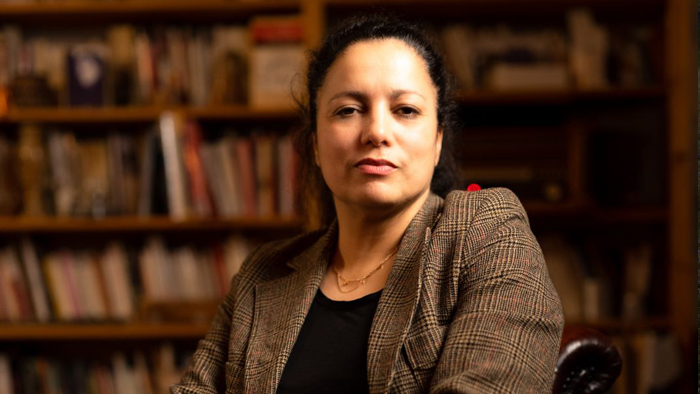
The practice of North African Indigenous revolutionary love, in the face of European capitalist violence and settler colonialism, with one of the most vital anti-colonial thinkers in Europe.
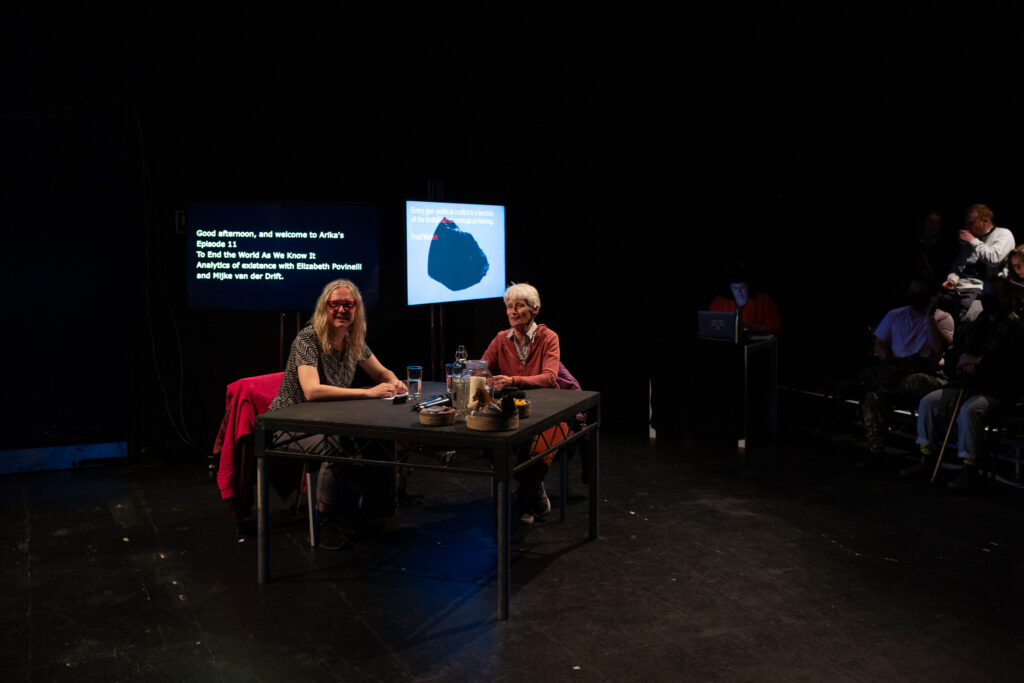
Elizabeth’s writing pulls apart toxic settler colonialism and the worldview used to justify it; working towards an alternative distribution of powers, so that ways of being otherwise can endure.
Thinking against the monoculturalism of Western thought—of faith, affection, sexuality and gender—which completely lacks any utility to, or descriptive value of Indigenous worldviews.