No Total
What kind of listening and acknowledging do we offer each other? What is it to listen to an ‘elsewhere’, and do we ever do anything else when we listen to music?

Arika have been creating events since 2001. The Archive is space to share the documentation of our work, over 600 events from the past 20 years. Browse the archive by event, artists and collections, explore using theme pairs, or use the index for a comprehensive overview.
What kind of listening and acknowledging do we offer each other? What is it to listen to an ‘elsewhere’, and do we ever do anything else when we listen to music?
Do ideas emerging from particle physics help to re-think of blackness as a mode of life in which it’s possible to practice difference without separation?
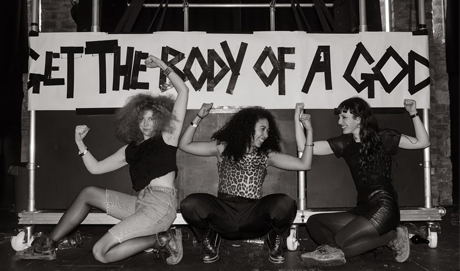
A movement-based workshop on Krump and the politics of how we teach, learn and listen with our bodies. Move with us!
Screening of films by Duvet Brothers, David Critchley, David Hall, John Latham, Judith Goddard, Mike Leggett, Tony Sinden
A film as a translation of Monique Wittig’s landmark feminist novel Les Guérillères, in which a plural protagonist of militant feminists inhabit a fantastical, enigmatic and hallucinatory miasmatic space-time of post Hurricane Maria Puerto Rico.
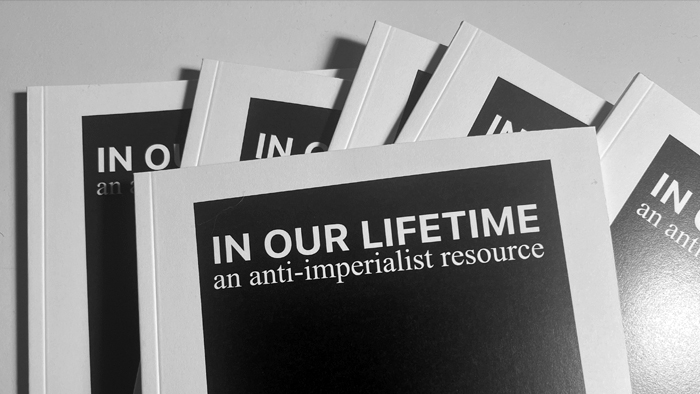
IN OUR LIFETIME, is an anti-imperialist resource, edited by Hussein Mitha, produced by Arika for Episode 11, featuring poetry, essays, questions, prompts, letters and works of anti-colonial imaginary.
A system in which oscillators shake The Arches, seismographs pick up the harmonics that are then amplified through massive sub-bass PA.
One of the most compelling Indigenous voices of her generation discusses practices of Indigenous Resurgence drawn from Nishnaabeg poetic knowledge.
What happens when you are engaged in a deep and extended artistic practice that intersects between literature and music, notation and improvisation, sight and sound?
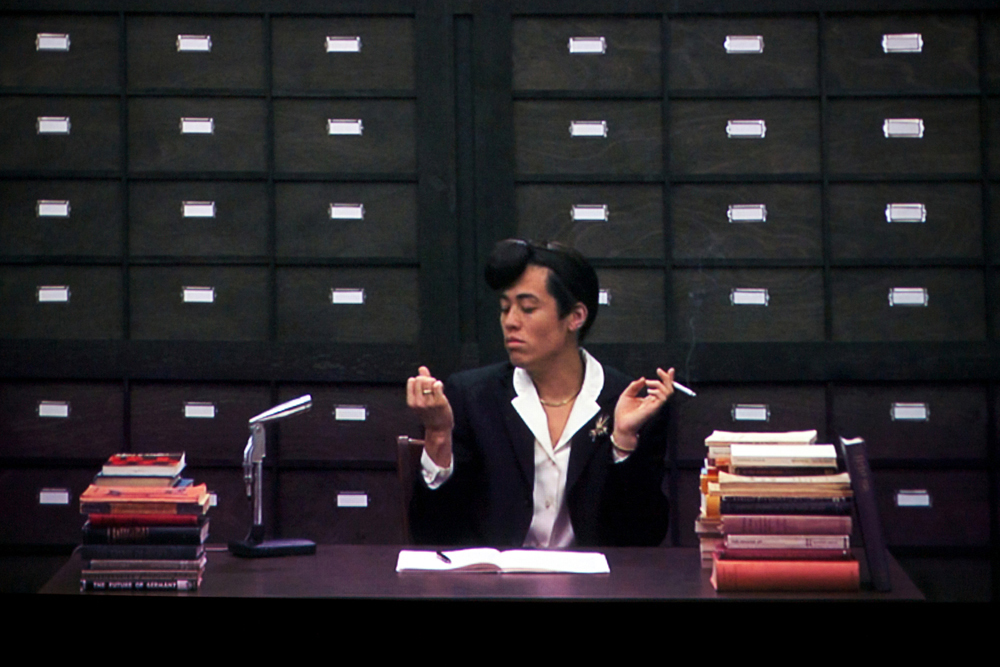
A performed installation by one of Germany’s most interesting visual artists, based on edited transcripts of the 1961 trial of Adolf Eichmann in Jerusalem and the writings of Hannah Arendt
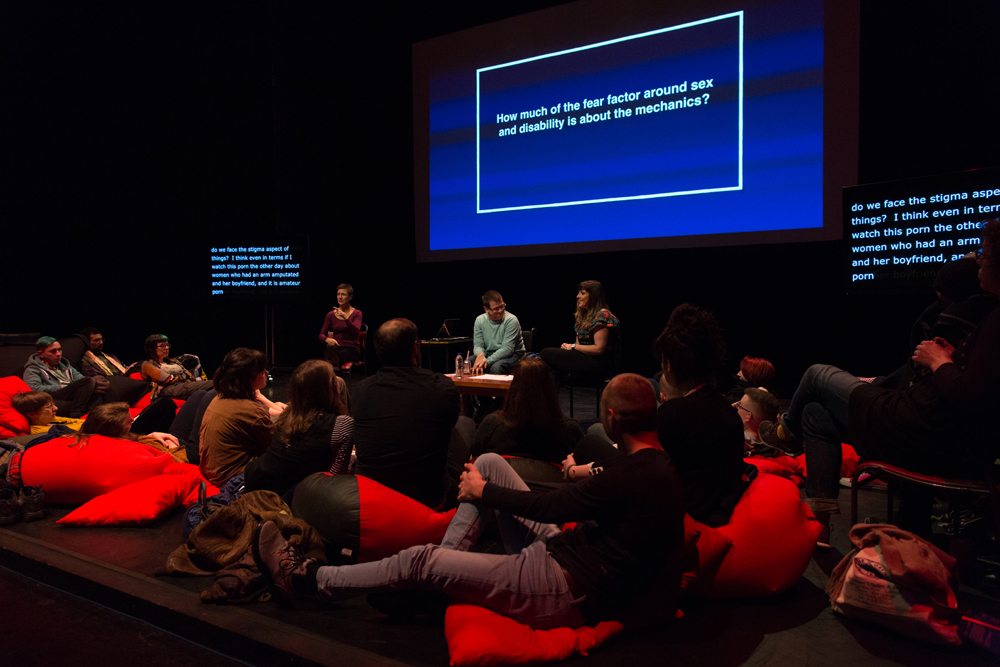
How do people living with disability see themselves in today’s sexualised culture? How do we imagine our crip sexual selves despite society wanting to reduce us to non-erotic bodies?