All the Colours of the Dark, Except Black
Evan Calder Williams
A chat, with examples (Zola, H. P. Lovecraft, Hammer Horror), about blackness and the sheer stupid thickness of what has no profundity whatsoever.
Arika have been creating events since 2001. The Archive is space to share the documentation of our work, over 600 events from the past 20 years. Browse the archive by event, artists and collections, explore using theme pairs, or use the index for a comprehensive overview.
A chat, with examples (Zola, H. P. Lovecraft, Hammer Horror), about blackness and the sheer stupid thickness of what has no profundity whatsoever.
Inspired by Delany’s Aye, and Gomorra. A spookily filmic world where asexual bodies live in the contradiction of their unarousable loneliness and desire for intimacy and contact.
Each of these films addresses place, landscape or location and the personal reaction to their magical or concrete properties. Watch out for Kren’s structural, throbbing investigation of a forest and Baillie’s intimate and humble essay on a blind guitarist and the relationship between songs of Mexican revolutionaries and the people and places they looked to inspire.
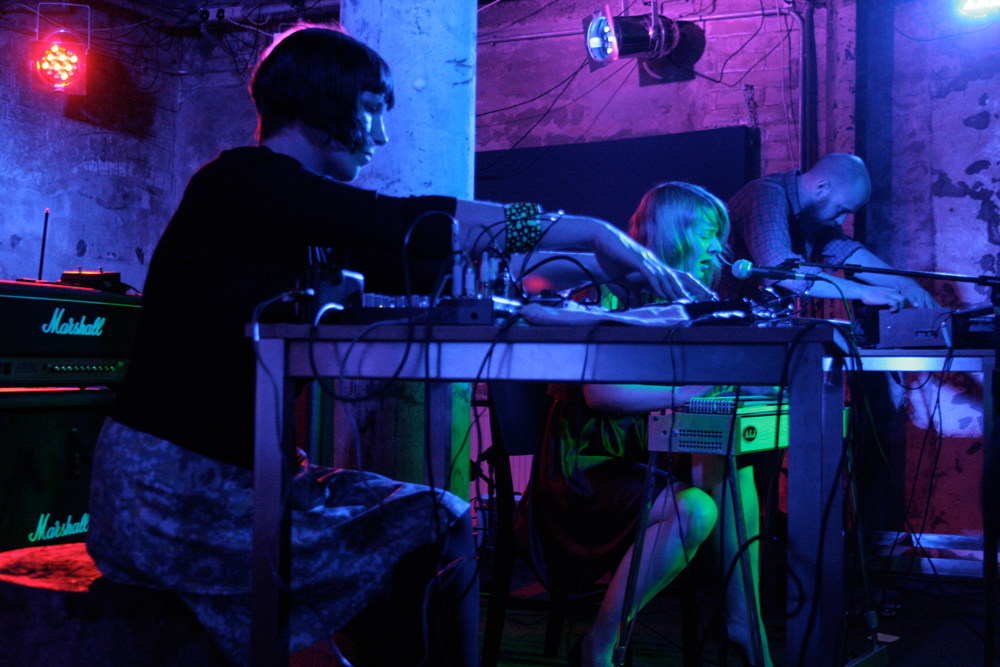
Goofily deformed, deeply thought vocal jams: like the sound of your own breath rushing through your head.
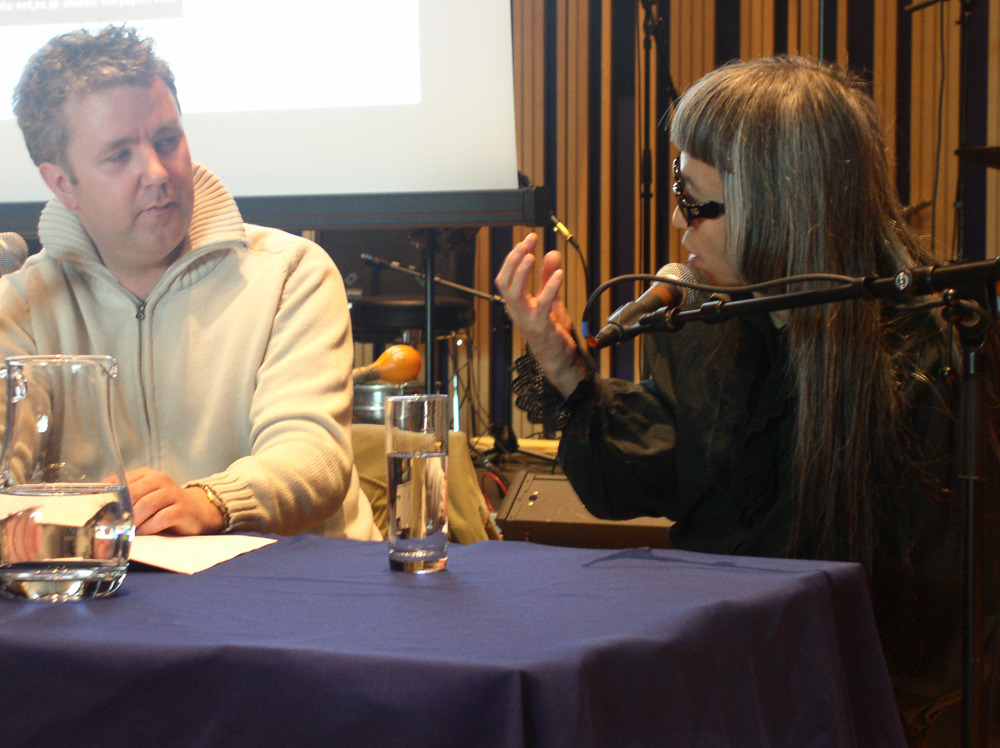
Journalist and underground music champion Alan Cummings talks to Keiji Haino about his career and his performance the previous evening.
John Mullarkey sets in a wider context our understanding of Alain Badiou and Francois Laruelle, two of the most radical philosophers in Europe today.
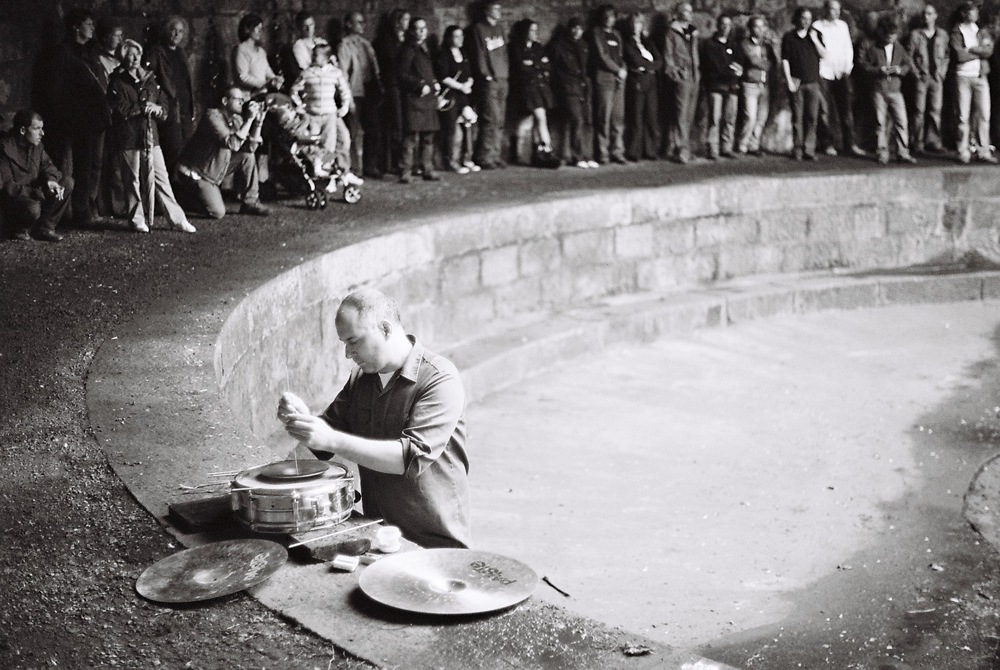
Disused railway turning circle at east end of Union Terrace Gardens, a historically public space at the centre of a regeneration land-grab for the private gain of a local petro-chemical magnate.
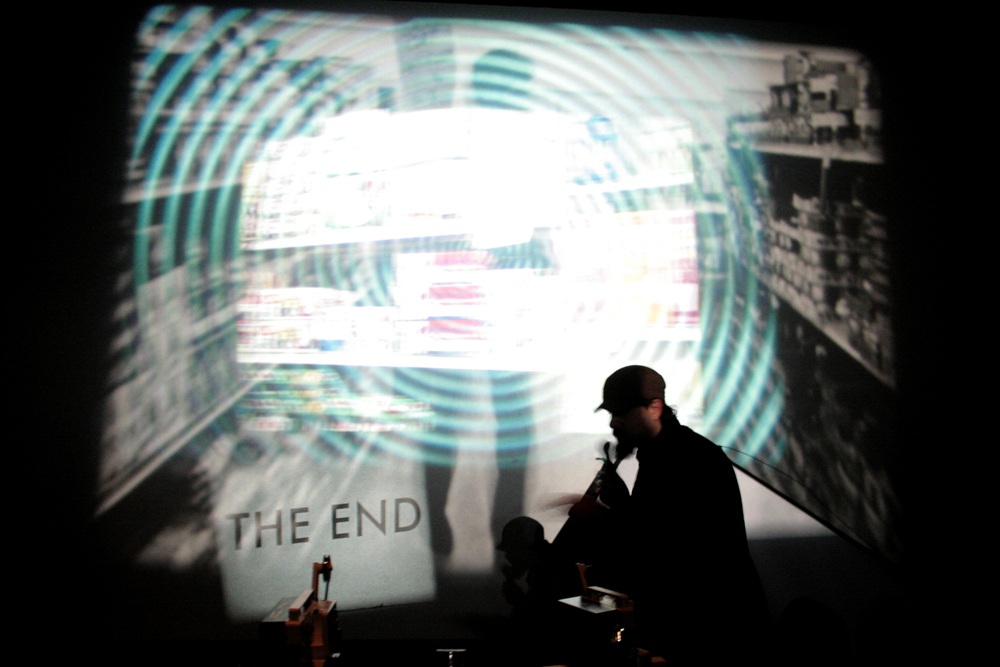
Quasi-theatrical multiple-projector pieces play with the relationship between performers, art and audiences.
Tiny fragments of sound recombined and woven into spare and precise, violent yet beautiful pieces
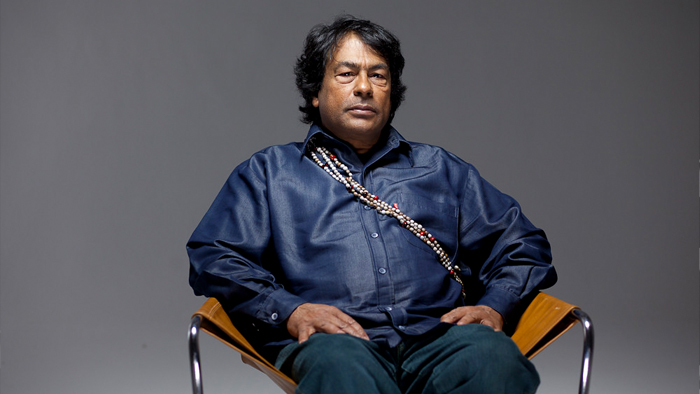
A recorded a conversation that grounds the Episode, exploring Ailton Krenak’s thinking and distinct poetics of life; as it work against capitalism and fascism, as a denunciation of political alliances, and maybe even of ‘politics’.
Databases carry the same seeds of creativity that early documentary makers saw in film. Both can empower people by helping them to master information, both can be claimed to represent some kind of reality or truth.
How do communities formed under the duress of violent othering and the joy of solidarity – such as ballroom culture, Black diasporas, Zapatistas – reform bonds of kinship?