MICRO 1
Takehisa Kosugi
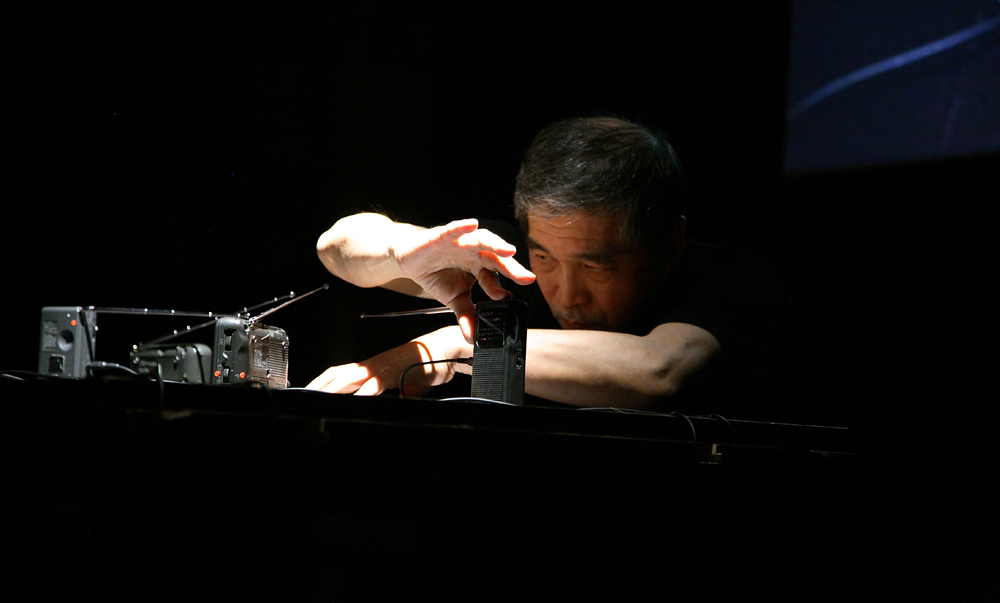
MICRO 1 – Wrap a live microphone with a very large sheet of paper. Make a light bundle. Keep the microphone live for another 5 minutes. T. Kosugi – (1961)
Arika have been creating events since 2001. The Archive is space to share the documentation of our work, over 600 events from the past 20 years. Browse the archive by event, artists and collections, explore using theme pairs, or use the index for a comprehensive overview.
MICRO 1 – Wrap a live microphone with a very large sheet of paper. Make a light bundle. Keep the microphone live for another 5 minutes. T. Kosugi – (1961)
Music is full of refracted brass and wind tones, distorted tape loops, dead silent air and the occasional piercing shard of sound.
A celebration of our overabundant social entanglement and complicity, that remind us of how we can see ourselves, stripped of powers’ attempts to grasp us.
A three-day celebration surveying all manner of diverse musical activities, which at their core share a basic kinship: one of exploration and the discovery of musical expresssion.
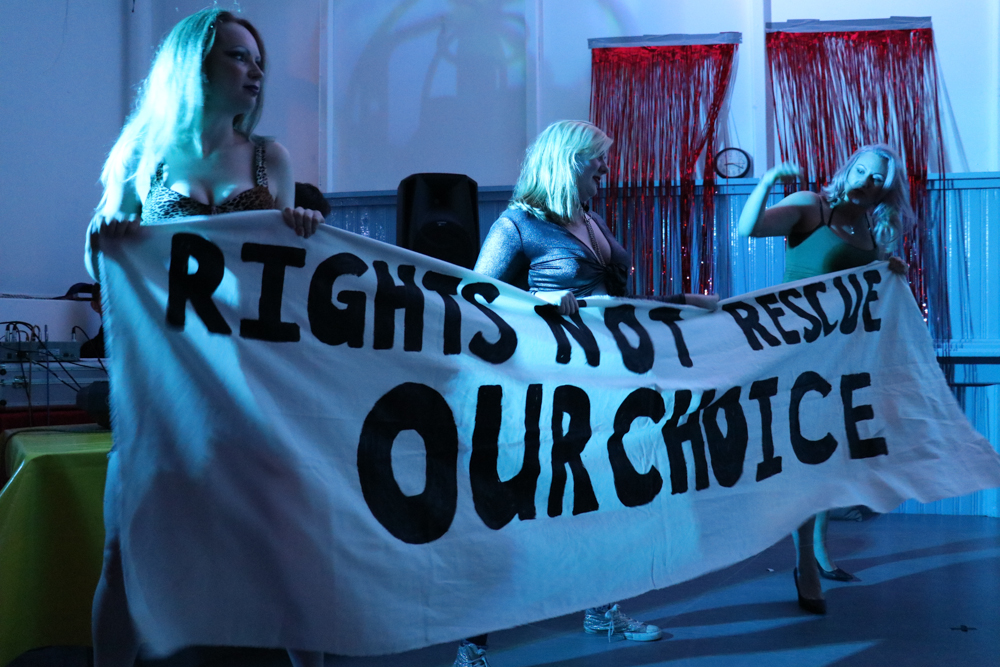
Three panels offering opportunities to discuss how to build stronger alliances between the sex workers’ rights, migrants rights and reproductive justice movements and how to face, together, an increasingly punitive and reactionary system.
A community of those without community, for a community to come. A schizo-scenic video-collage of the disturbing ‘normality’ of Moby Dick.
Dave will lead a session created for teenagers and designed to stimulate a supportive environment for artistic exploration through music improvisation.
UK conceptual/ drone/ noise artist, who is seriously posing what might seem to be unanswerable questions of music.
Glasgow based artist Defaalt invites the audience to collaborate fully in his performance by means of a generative graphical interface.
Andrew Chalk & Christoph Heemann return with their diaphanous, impressionistic drone duo; their slowly evolving and enthralling works flutter and quiver with elegantly restrained, miniature sound events.
Emotional fantasies, towers of cakes, identity troubles, collapsed distance and time and Samuel R. Delany’s rarely seen 1971 film The Orchid.
How does this practice, that simultaneously resists and honours the distinctions between these genres, materials and senses, determine the inhabitation of another: a convergence of aesthetic and social experimentation?