Free-form hook up
Aileen Campbell Dylan Nyoukis Phil Minton
GIO’s bottomless throat, Blood Stereo’s slobber gobbler and the Mouth Of The South tangle tonsils over Steve McCaffrey’s Carnival
Arika have been creating events since 2001. The Archive is space to share the documentation of our work, over 600 events from the past 20 years. Browse the archive by event, artists and collections, explore using theme pairs, or use the index for a comprehensive overview.
GIO’s bottomless throat, Blood Stereo’s slobber gobbler and the Mouth Of The South tangle tonsils over Steve McCaffrey’s Carnival
A queer black operatic requiem for piano and voice that asks us to stay in the hold of the slave ship, that tries to understand the connection from the slave ship to the prison.
Akio Suzuki and John Butcher performing by the Stones of Stenness, instead of the Ring of Brodgar, because of bad weather.
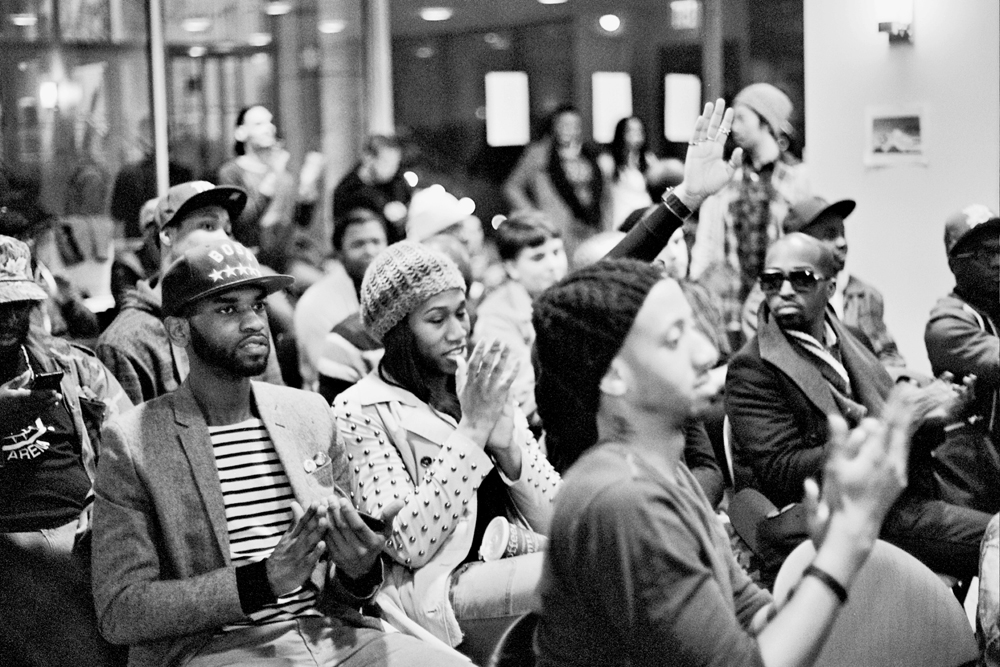
Open community meeting to discuss some of the prevalent concerns impacting the ballroom community.
Goofily deformed, deeply thought vocal jams: like the sound of your own breath rushing through your head.
Kanta is a young Japanese artist with a home-made, short circuited take on electronics and physical phenomena which he uses in performance to produce close circuit systems of audio / video feedback.
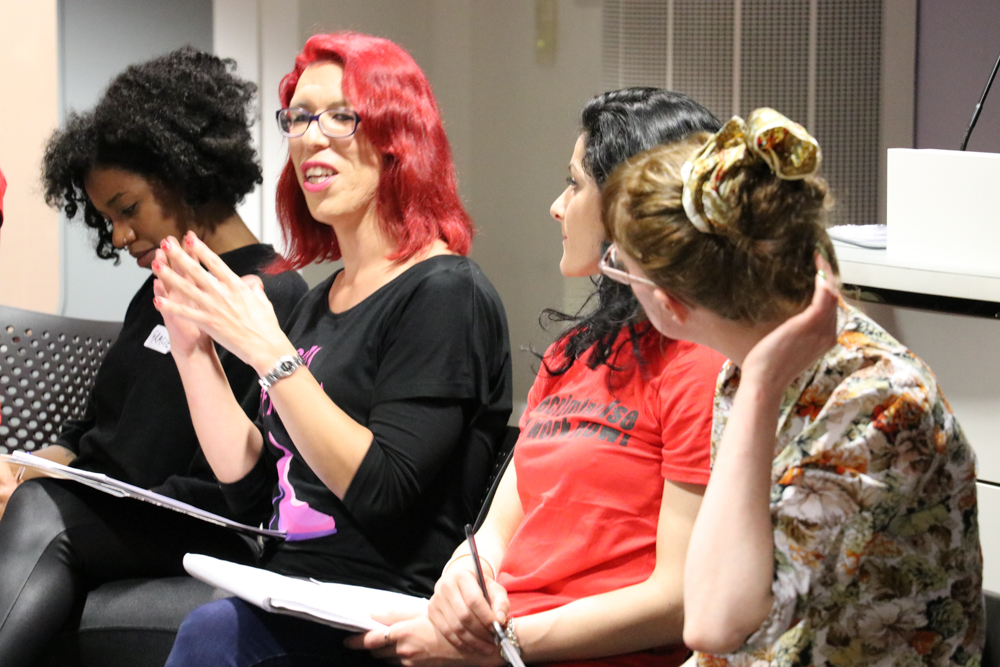
Three panels offering opportunities to discuss how to build stronger alliances between the sex workers’ rights, migrants rights and reproductive justice movements and how to face, together, an increasingly punitive and reactionary system.
We wanted to ask a bunch of the best high-energy-improvisers around; can musical form really taking shape via a group energy? Can individual concentration lead to a group consciousness?
A performed reflection on Malin’s previous re-enacting of a super influential landmark of performance art from the French feminist and artist Gina Pane.
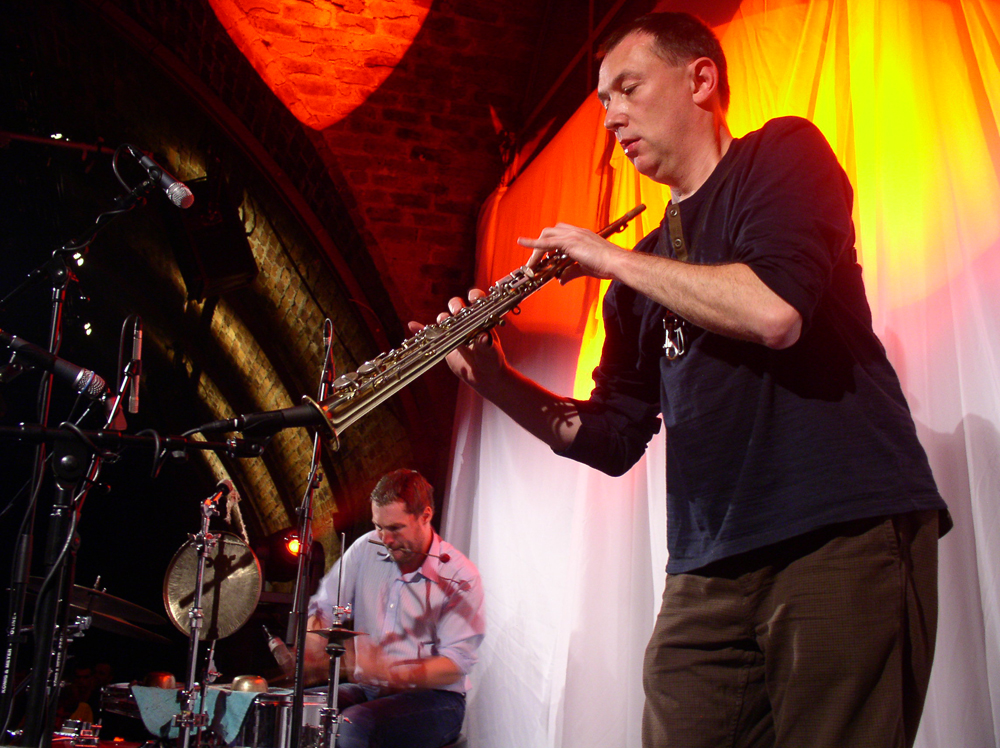
Originally billed as a duo of Ingar Zach and Derek Bailey, John Butcher stood in for Bailey at the last minute.
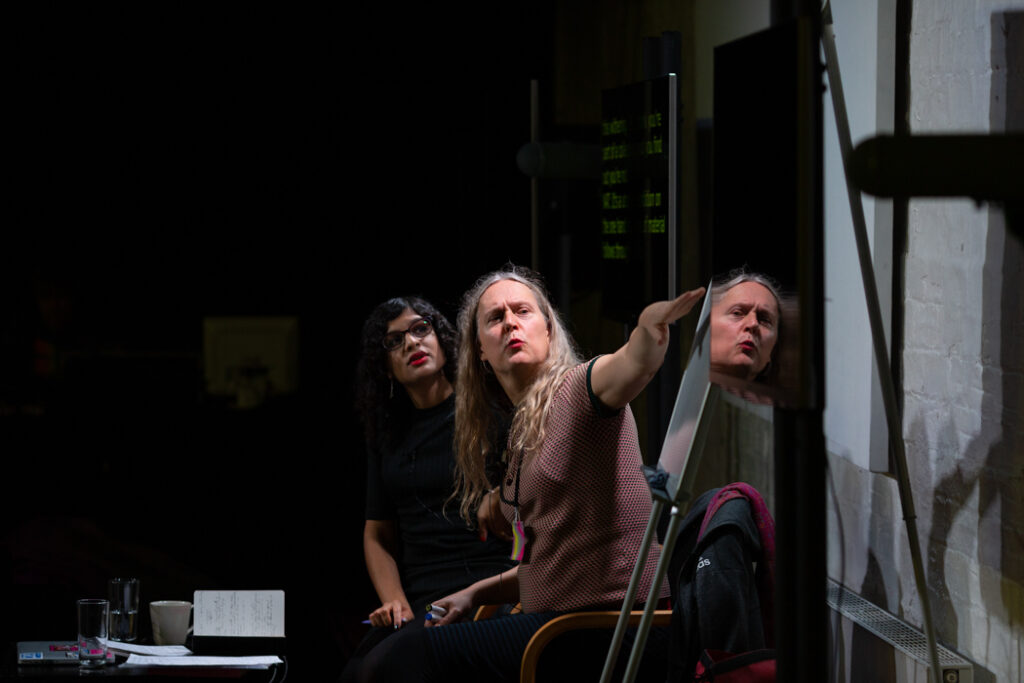
Underlying radical transfeminism, as an urgent critique of binary essentialism and fixed identities, is the call for a new kind of thinking that can move between and integrate the truths of all lives in their transformations.
What might Carter and Parker’s collaboration tell us about our own performances of responsibility and liberty, whether individual, social or musical?