


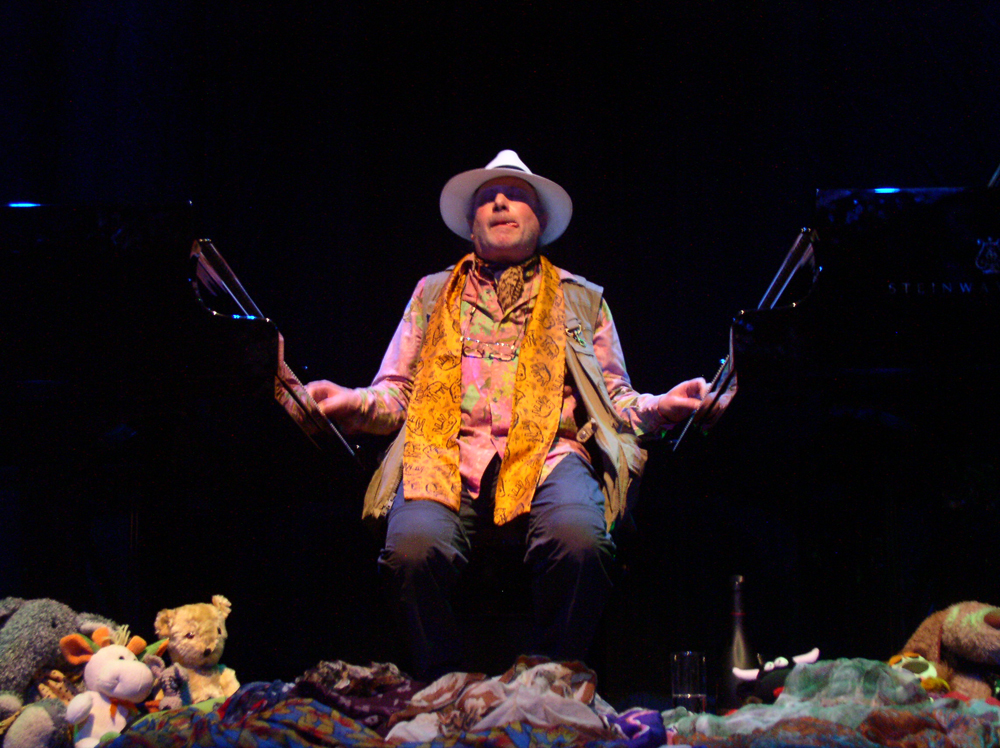
21 May 2005
The Golden Mean
Charlemagne Palestine
An extravagant debauch of huge pianos, plush toys, cognac and ritual.
Music Lover’s Field Companion 05
Arika have been creating events since 2001. The Archive is space to share the documentation of our work, over 600 events from the past 20 years. Browse the archive by event, artists and collections, explore using theme pairs, or use the index for a comprehensive overview.
An extravagant debauch of huge pianos, plush toys, cognac and ritual.
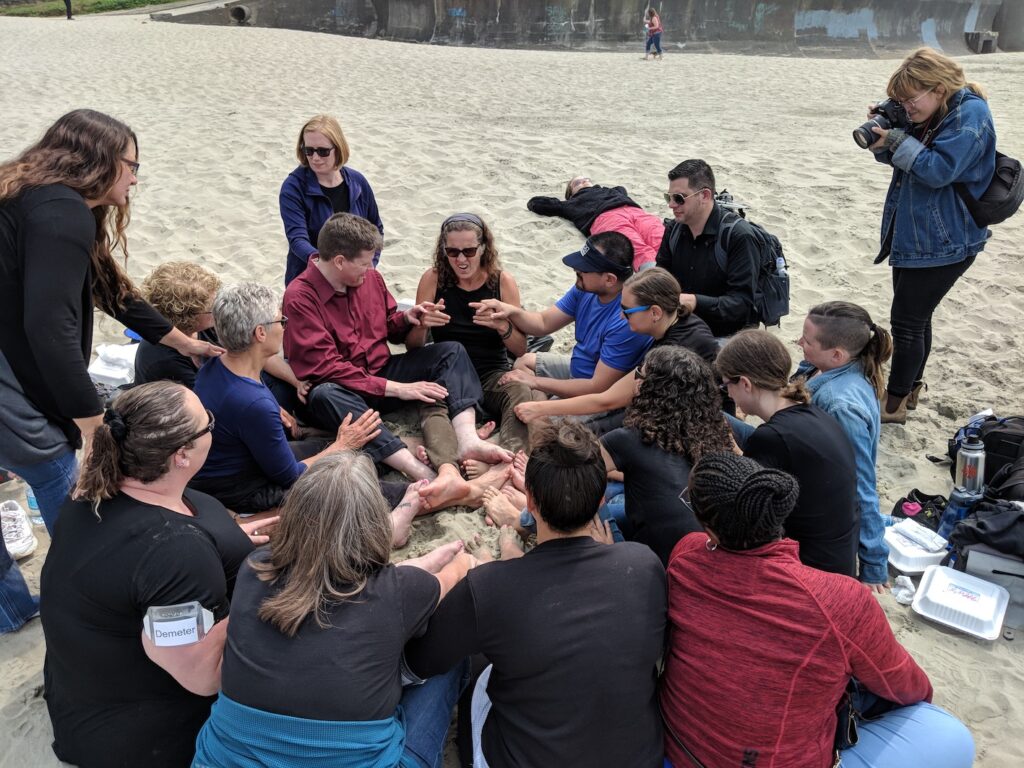
“Introduction to Protactile Theory” is a legendary seminar that facilitator John Lee Clark has designed to bring diverse communities into conversation with the Protactile movement.

An event exploring anarchic and communal situations of musical creation with MV, EE and The Cherry Blossoms.

Ken presents his Nervous Magic Lantern, wherein film itself is forsaken for an investigation of hypnotic and trancelike crystaline forms. Eric La Casa works with recordings of everyday occurrences: the background hum of place.

A 3-day exploration – through performance, screenings and discussion – of the art and politics of wayward communities who refuse to be bound by the fictions of race and sex.

Killer of Sheep is an undisputed masterpiece of African-American filmmaking and one of the most poetic, perceptive dramas ever made about family and community.
Work that focuses in on the static hiss and background noise of recording and pushes it to the fore.
Ever changing coven of feedback worshipping witches led by Blood Stereo/ Smack Music 7 shrieker Karen Constance spit audio hexes through yr skulls.
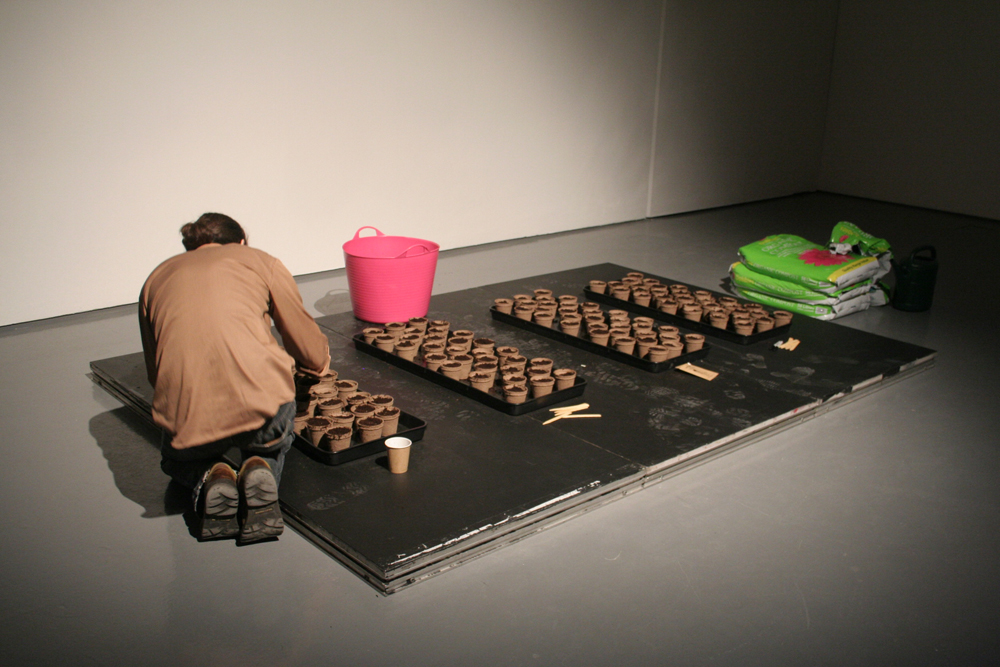
What is the radical concept at the core of ‘rhythm’, expanded from simply musical or mathematical notions to encompass personal, social, collective rhythms?
Screening of films by Duvet Brothers, David Critchley, David Hall, John Latham, Judith Goddard, Mike Leggett, Tony Sinden

In many ways, this Episode is our attempt to engage with Fred’s incredible writing: with his proposal that all black performance (culture, politics, sexuality, identity, and blackness itself) is improvisation.

What might Carter and Parker’s collaboration tell us about our own performances of responsibility and liberty, whether individual, social or musical?