Sound Cuts
Guy Sherwin
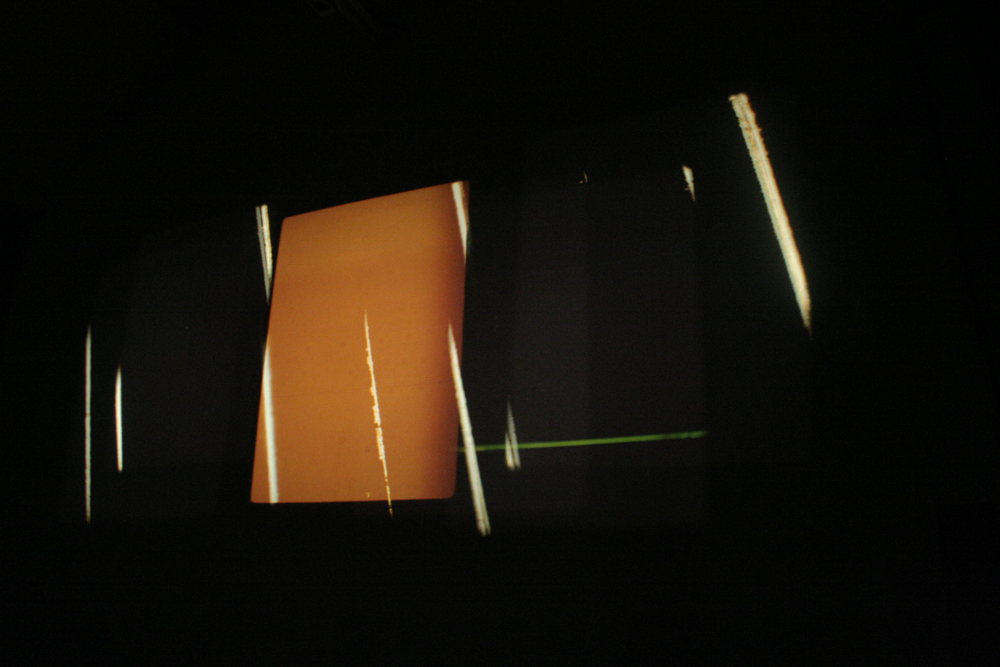
Noise music for the eyes. A 6 screen 16mm projection performance of intense audio and visual stimulus.
Arika have been creating events since 2001. The Archive is space to share the documentation of our work, over 600 events from the past 20 years. Browse the archive by event, artists and collections, explore using theme pairs, or use the index for a comprehensive overview.
Noise music for the eyes. A 6 screen 16mm projection performance of intense audio and visual stimulus.
Jean-Luc Guionnet will be giving a talk as part of the music department’s ongoing series of colloquia.
Duo performance by two great French musique concrète improvisers using feedback, contact mics, tape, an old Revox tape machine, a vintage synth…
A parody of a (Manhattan) road movie and meditation on bifurcation, in paths traveled between the seen and the heard; a road trip played over and over from different perspectives.
A recording session for BBC Radio Scotland under the M74 ‘Ski Jump’ extension ramp, a secion of motorway that doesn’t go anywhere, one of several such structures that populate the motorway system in the centre of Glasgow.
A sound of buzzing and flickering metallic drones, glottal stops and guttural growls, and also an explosiveness and purity of sound that reminds you as much of Bill Dixon as anyone else.
Droner responsible for Fordell Research Unit, Muscletusk’s murk manipulator and Metzian concrete-mixer cement international relations and yr heids.
In this workshop we will imagine ourselves as time travellers from a glorious and chaotic neurodivergent-led future.
A recently reanimated Ascension, with mighty Leeds drum hero Paul Hession bringing a dense polyrhythmic torrent into play with Jaworzyn’s reinvigorated piercing guitar.
During Episode 9 we made this clip with Storyboard P at Kinning Park Complex. Video by Ash Reid.
In many ways, this Episode is our attempt to engage with Fred’s incredible writing: with his proposal that all black performance (culture, politics, sexuality, identity, and blackness itself) is improvisation.
Rather than asking the state for services, what kinds of change are made possible when we prioritise people supporting each other?