What is the Sound of Freedom?
Ultra-red Vogue’ology
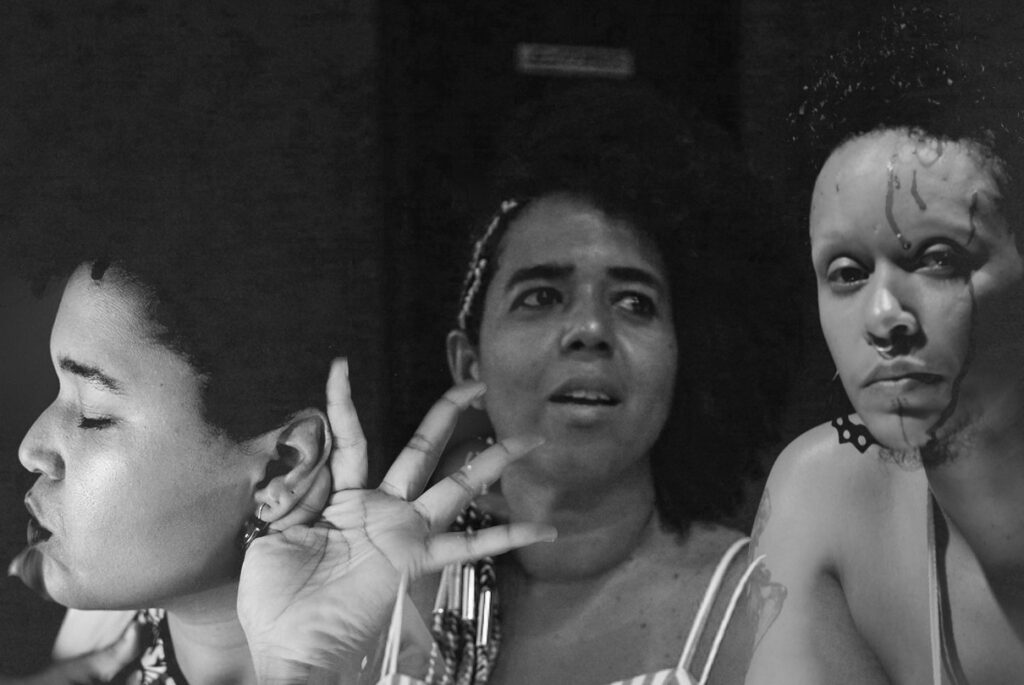
For day two of Ultra-red’s project, the investigation will take up protocols for listening to the sound of freedom composed and facilitated by the Vogue’ology collective.
Arika have been creating events since 2001. The Archive is space to share the documentation of our work, over 600 events from the past 20 years. Browse the archive by event, artists and collections, explore using theme pairs, or use the index for a comprehensive overview.
For day two of Ultra-red’s project, the investigation will take up protocols for listening to the sound of freedom composed and facilitated by the Vogue’ology collective.
For day one of Ultra-red’s project, the investigation will take up protocols for listening to the sound of freedom composed and facilitated by George E. Lewis.
A parody of a (Manhattan) road movie and meditation on bifurcation, in paths traveled between the seen and the heard; a road trip played over and over from different perspectives.
Miniscule free-noise hissy-fits and broken instrument scrape/ squeal jams from the fools what brought you Giant Tank.
Paul Sharits’ Shutter Interface is a multi screen installation born of an intent to reveal the material substance of cinema in its purest form: spatially.
IN OUR LIFETIME, is an anti-imperialist resource, edited by Hussein Mitha, produced by Arika for Episode 11, featuring poetry, essays, questions, prompts, letters and works of anti-colonial imaginary.
A chat with Rashad about the communist, conceptual methodology that informs his ground-breaking synthetic music—a form of speculative sonic fiction writing to produce hyperreal non-representational auditive experiences.
What might Carter and Parker’s collaboration tell us about our own performances of responsibility and liberty, whether individual, social or musical?
Transfeminist, communist, revolutionary poetry that refuses to flinch. Nat Raha presents new work in the nine.
A festival hewn from passions for experimental music, film and visual art and for a passion in figuring out how they can relate to, cross-fertilise and inspire and each other.
Autobiographical detail becomes a lens to reflect and refract the deepest aspects of personal and social life in Delany’s ground-breaking non-fiction writing.
Recently rediscovered but still very pertinent, Kino Beleške presents a series of speech acts and performative gestures by protagonists of the new artistic practice in former Yugoslavia: each a personal take on the role of art in society.