The Echo Project
Brandon LaBelle
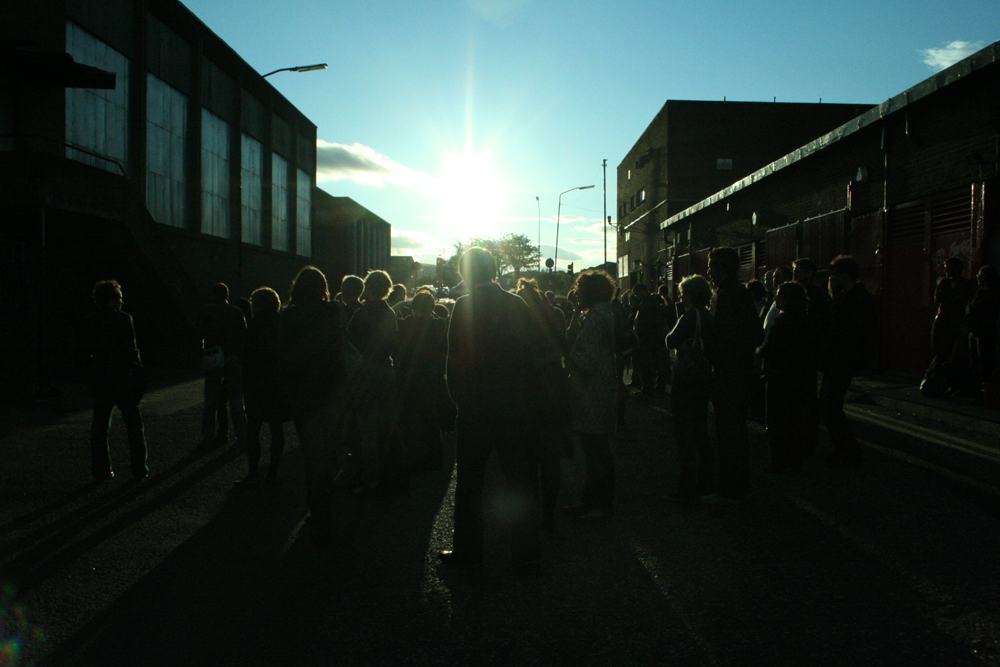
The Echo project is an installation as audio guide for a crowd. And at the same time it’s a private conversation: with you, as one of 20 people in a room, a sort of public intimacy.
Arika have been creating events since 2001. The Archive is space to share the documentation of our work, over 600 events from the past 20 years. Browse the archive by event, artists and collections, explore using theme pairs, or use the index for a comprehensive overview.
The Echo project is an installation as audio guide for a crowd. And at the same time it’s a private conversation: with you, as one of 20 people in a room, a sort of public intimacy.
A historical narrative of the black and latino/a transgender, bisexual, lesbian, and gay House and Ballroom Scene in relation to its artistic practices.
Underlying radical transfeminism, as an urgent critique of binary essentialism and fixed identities, is the call for a new kind of thinking that can move between and integrate the truths of all lives in their transformations.
The first of two workshops that highlight correspondence as a way of working. Somewhere between song, speech, and logistical arrangement, these workshops invite participants to consider care as infrastructure.
Chip will read some of his great literary pornography, which pushes sexuality to the point of extremity and exhaustion.
Two bottomless brunch writing workshops—with readings—speculating the relationship between space, infrastructure, technologies and sex.
What might Carter and Parker’s collaboration tell us about our own performances of responsibility and liberty, whether individual, social or musical?
Radu plays a trombone, Klaus creates pure sine waves: they sound on their own, or sometimes together and often with considerable space and silence.
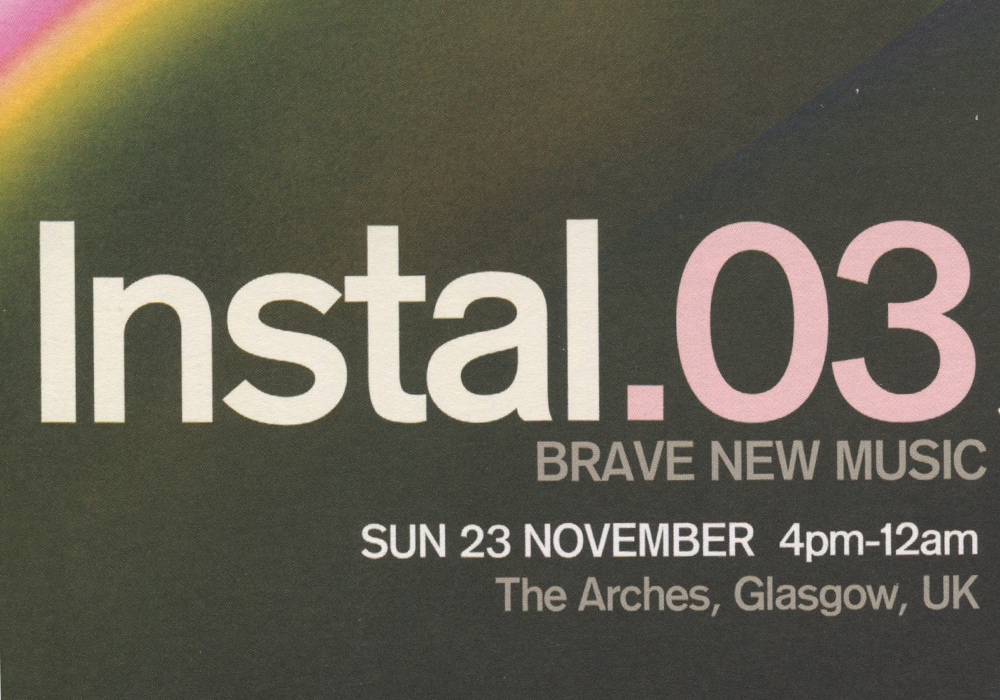
The first INSTAL festival (programmed by Barry Esson of Arika and Tiernan Kelly) featured a line-up including Robert Lippock, Philip Jeck, Fennesz, Paragon Ensemble, Icebreaker International, Defaalt and Rhomboi.
What is the radical concept at the core of ‘rhythm’, expanded from simply musical or mathematical notions to encompass personal, social, collective rhythms?
Seven women recite monologues composed from texts from the vibrant years of the Weimar Republic. A kind of cultural echo: an experience of histories brought to the present.
Copying without Copying is 3 evenings of events that are about what happens when we speak, or when we hear someone speak on our behalf, when we share a collective moment of hearing and maybe understanding.