Paper Piece: Secrets
Brandon LaBelle
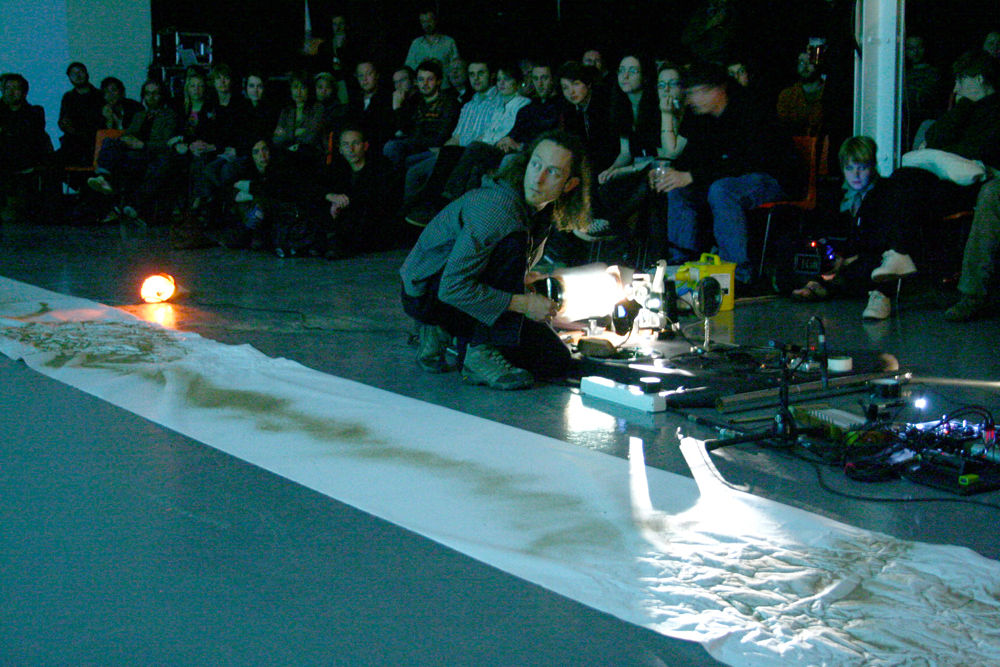
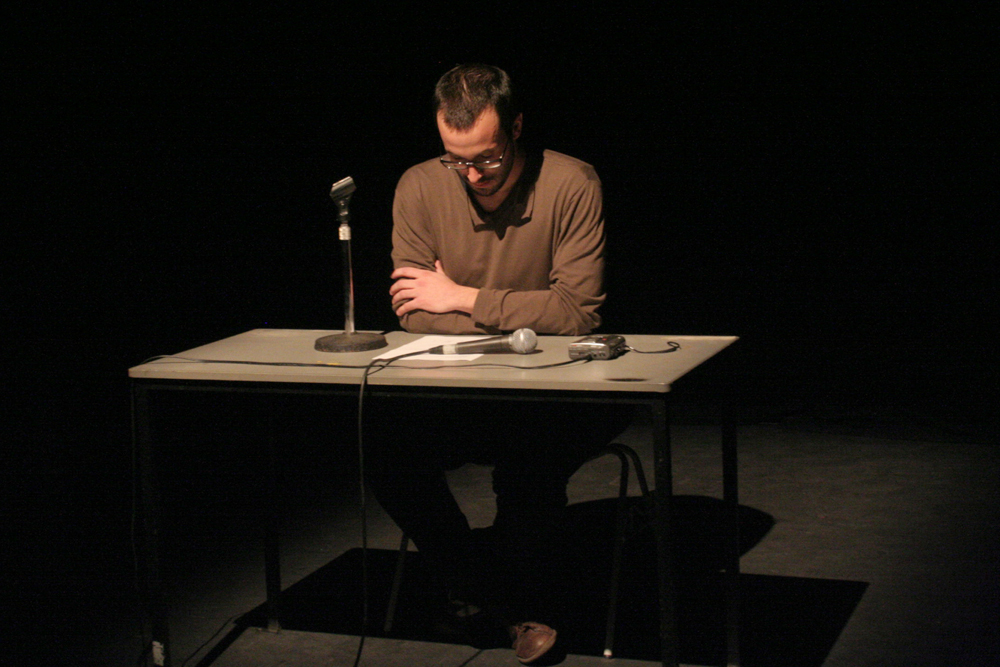
Paper Piece: Secrets is a performance for and with the whole audience, using paper, text, secrets, being in the crowd
Arika have been creating events since 2001. The Archive is space to share the documentation of our work, over 600 events from the past 20 years. Browse the archive by event, artists and collections, explore using theme pairs, or use the index for a comprehensive overview.
Paper Piece: Secrets is a performance for and with the whole audience, using paper, text, secrets, being in the crowd
Can we find ideas of queer anarchism, failure and low theory in popular culture?
How do we gesture to the invisible, the trans or the obscure? A performative conversation between boychild and Fernando, a sharing of gestures, and a bodily back and forth between mathematician and dance artist.
A recreation of one of Gustav Metzger’s celebrated auto destructive performances.
John Butcher plays and manipulates a feeding back saxophone. Benedict Drew on electronics, broken cables and standing waves.
AVVA sees the internal feedback of Toshi’s no-input mixing desk is fed to Billy, and transformed into bright and variegated patters, striations and blooming colour, before being fed back to Toshi and manipulated on route to the PA.
Can our favourite Vegas-born poet of prophetic blackness and a South Central transmuter of social rage into beauty feel through each other?
Miniscule free-noise hissy-fits and broken instrument scrape/ squeal jams from the fools what brought you Giant Tank.
Whether drawing their own fractured, abstract narrative, or re-contextualising, chewing up and spitting out someone else’s, each of the films here take a dramatic arc as their starting point and throw it to the wind.
For musical chameleon Richard Youngs both his creative and family life are focused in the room that many of us consider the centre piece of our lives.
Why won’t the idea of the particle or individual go away? Is the measurement problem in physics a documentary film issue? What can a human be without its crutches of life-time and measure?
Discussion: If we approach “care as an event” rather than as a “contract of exchange” then what becomes possible in how we know, care for, and appreciate each other?